






How CIOs can reduce technical debt while accelerating innovation in 2026 comes down to treating legacy systems and quick fixes as a silent tax on your future. Stop paying endless interest on old code, brittle integrations, and sprawling data messes. Instead, turn that burden into fuel for faster decisions, smarter AI plays, and real business agility.
Here’s the straightforward reality in 2026:
- Technical debt now splits into two buckets: legacy monoliths dragging you down and shiny new cloud/AI setups that quietly pile up risks from deprecated libraries or poor governance.
- Smart CIOs measure it, prioritize ruthlessly, and bake reduction into daily workflows rather than launching massive overhaul projects that stall everything.
- The payoff? Freed-up budgets, quicker feature releases, and the ability to actually scale AI without it crashing into outdated foundations.
- You don’t have to choose between cleanup and progress. Done right, they reinforce each other.
This isn’t theory. It’s what separates organizations that grind through maintenance from those launching pilots that actually ship value.
What Technical Debt Really Looks Like in 2026
Picture your IT estate as an old house. The foundation has cracks from years of patches. The wiring works but sparks if you plug in anything new. And now you’re trying to install a high-speed EV charger—AI agents, real-time analytics, whatever the board wants next.
That’s technical debt. It shows up as:
- Maintenance eating 70-80% of your IT budget in many organizations, leaving scraps for growth.
- Slower time-to-market because every change risks breaking something hidden.
- Security and compliance headaches that multiply with every unpatched legacy component.
- Developer frustration and burnout from wrestling undocumented spaghetti code.
The kicker? Newer systems aren’t immune. Modern technical debt piles up fast in cloud-native apps through hasty integrations or AI-generated code without proper guardrails.
In my experience, the organizations that win treat debt like any other business risk: visible, quantified, and managed continuously.

Why the Old Playbook Fails Now
Big bang modernization? Often turns into a multi-year money pit with little to show. Pure “pay down debt” sprints? They kill velocity and annoy the business side.
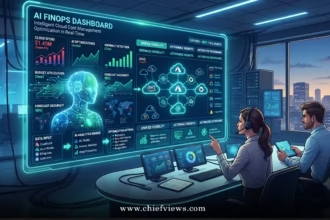
2026 demands a smarter balance. AI tools can scan codebases in minutes. AIOps platforms help remediate incidents automatically. But only if your foundations support them.
The winning move? Incremental, risk-based reduction that actually speeds up delivery. Refactor high-impact areas during feature work. Automate testing and documentation so changes feel safe. Use visibility tools to spot problems early instead of after they explode.
Think of it like compound interest in reverse. Small, consistent payments on the principal free up cash flow for innovation instead of just servicing the debt.
How CIOs Can Reduce Technical Debt While Accelerating Innovation in 2026: Core Strategies
Start by making the invisible visible.
Assess and quantify. Map your applications, code quality, dependencies, and business impact. Tools that provide real-time insights help here—no more guessing which systems hurt most. Prioritize based on risk, change frequency, and strategic fit, not just age.
Separate the debt types. Legacy technical debt (old custom apps, on-prem monoliths) needs phased migration or decommissioning. Modern technical debt (gaps in cloud setups or AI pipelines) requires governance baked into development from day one.
Embed reduction into workflows. Don’t create separate “debt sprints” that compete with business priorities. Instead:
- Allocate 10-20% of capacity to refactoring as part of normal sprints (the boy scout rule: leave the code better than you found it).
- Use automated code analysis, refactoring suggestions, and test generation.
- Shift to “Everything as Code” with strong CI/CD pipelines that enforce standards.
Leverage AI intelligently. AI isn’t magic, but it accelerates audits, generates documentation for legacy systems, suggests safer refactor paths, and even creates test cases. Just apply governance so you don’t create fresh debt with sloppy AI output.
Rationalize the portfolio. Review applications for redundancy, business value, and technical health. Consolidate or retire low-value systems to free budget and simplify the estate. Application Portfolio Management approaches give you the data to make these calls confidently without unintended breakage.
Modernize foundations selectively. Move targeted workloads to cloud platforms. Adopt microservices or composable architectures where they deliver clear speed gains. But only after understanding dependencies—rushed moves create new problems.
Here’s a quick comparison of common approaches:
| Approach | Pros | Cons | Best For | Speed of Innovation Impact |
|---|---|---|---|---|
| Big Bang Modernization | Clean slate, potential big wins | High risk, long timeline, budget drain | Rare; only when systems are critically broken | Slow initially, then fast |
| Debt Sprints Only | Focused cleanup | Competes with features, business pushback | Short-term risk reduction | Neutral or negative |
| Incremental + Automation | Continuous improvement, low disruption | Requires discipline and tools | Most organizations in 2026 | Positive and compounding |
| AI-Assisted Refactoring | Fast insights, scalable | Needs human oversight | Code quality and documentation | Accelerates significantly |
This table isn’t exhaustive, but it shows why the incremental path wins for most CIOs balancing both goals.

Step-by-Step Action Plan for Beginners and Intermediate Teams
You don’t need a perfect setup to start. Here’s a practical plan you can adapt:
- Get leadership alignment. Frame technical debt in business terms: lost revenue from slow features, higher breach risk, talent retention issues. Tie reduction to specific outcomes like “cut time-to-market by 30%” or “free 15% of budget for AI initiatives.”
- Build visibility. Inventory key systems. Score them on technical health, business criticality, and maintenance cost. Use simple dashboards—many tools now offer this out of the box.
- Prioritize ruthlessly. Focus first on high-risk, high-change areas that block innovation. Ask: What breaks most often? What slows our top priorities?
- Implement governance. Set coding standards, require code reviews, and integrate automated checks into pipelines. For AI-generated code, add extra validation layers.
- Allocate capacity. Dedicate a consistent percentage of sprint time to debt reduction. Track it like any other metric.
- Automate where it hurts. Start with testing, documentation, and basic refactoring. Measure before-and-after metrics: deployment frequency, failure rates, developer time on maintenance.
- Review and iterate quarterly. Celebrate wins. Adjust based on what actually moved the needle. Involve business stakeholders so they see the connection to faster value delivery.
What I’d do if I were stepping into a new CIO role tomorrow? Run a rapid 30-day assessment focused on the top three systems impacting strategic initiatives. Then pilot automation on one painful area. Small proof points build momentum better than grand announcements.
For deeper reading on federal approaches to similar challenges, check the insights from U.S. government modernization efforts that emphasize asset registries and technology-as-a-service models to reduce unsupported legacy components.
Gartner offers structured methods for infrastructure technical debt that many enterprises adapt successfully.
And IBM shares practical guidance on using AI for code understanding and automated refactoring.
Common Mistakes (and How to Fix Them)
- Treating all debt equally. Fix: Use a risk-impact-cost matrix. Ignore low-risk items strategically.
- Starting without metrics. Fix: Define success upfront (fewer incidents, faster releases, lower maintenance ratio).
- Going dark on business stakeholders. Fix: Translate everything into dollars, speed, or customer impact. Show the “before and after” story.
- Over-relying on tools without process. Fix: Tools amplify good habits; they don’t replace culture or governance.
- Creating new debt while paying down old. Fix: Enforce standards on every new project and AI use case from the start.
The fix is almost always better visibility plus consistent habits. No heroic efforts required.
Key Takeaways
- Technical debt in 2026 includes both legacy and modern varieties—manage them differently but consistently.
- Visibility and prioritization beat massive rewrites for most organizations.
- Automation and AI can accelerate cleanup without halting progress when governance is in place.
- Bake debt reduction into daily work rather than treating it as a separate project.
- Tie every effort to clear business outcomes so you keep stakeholder support.
- Measure what matters: maintenance spend, deployment speed, incident rates, and innovation throughput.
- Start small, prove value quickly, then scale the discipline.
- The organizations pulling ahead treat technical health as a strategic enabler, not just a maintenance chore.
Conclusion
How CIOs can reduce technical debt while accelerating innovation in 2026 isn’t about perfection. It’s about building momentum through visibility, smart prioritization, and habits that make better code the default.
Do this well and your team spends less time firefighting and more time creating. Your budget stretches further. Your AI and digital initiatives actually land instead of stalling on brittle foundations.
Next step? Pick one high-impact system or process. Run a quick assessment this quarter. Implement one automation that saves real hours. Build from there.
The house won’t renovate itself overnight. But you can stop the leaks and start upgrading the wiring while the lights stay on. That’s how you win in 2026.
FAQs
1. What is technical debt, and why is it a growing concern for CIOs in 2026?
Technical debt refers to the hidden cost of outdated systems, rushed development, and poor architectural decisions. In 2026, it’s a bigger problem than ever because rapid AI adoption and cloud expansion are piling new complexity onto already fragile legacy systems—making innovation slower and riskier.
2. How can CIOs reduce technical debt without slowing down innovation?
The key is parallel modernization, not a full stop. CIOs are using strategies like incremental refactoring, microservices architecture, and API-first development to clean up legacy systems while still shipping new features. Think evolution, not overhaul.
3. What role does AI play in managing technical debt?
AI is becoming a powerful ally. CIOs are leveraging AI-driven code analysis tools to identify inefficiencies, automate refactoring, and predict system failures. This allows teams to fix problems faster and focus more on innovation instead of maintenance.
4. How does cloud adoption help reduce technical debt?
Modern cloud platforms enable scalability, modular design, and faster deployment cycles. By migrating legacy systems to cloud-native environments, CIOs can eliminate outdated infrastructure and reduce long-term maintenance burdens while accelerating product development.
5. What organizational changes are needed to balance innovation and debt reduction?
CIOs must foster a “debt-aware culture.” This includes embedding technical debt metrics into KPIs, aligning IT and business teams, and dedicating a fixed percentage of every sprint to debt reduction. Without cultural buy-in, even the best strategies fail.