





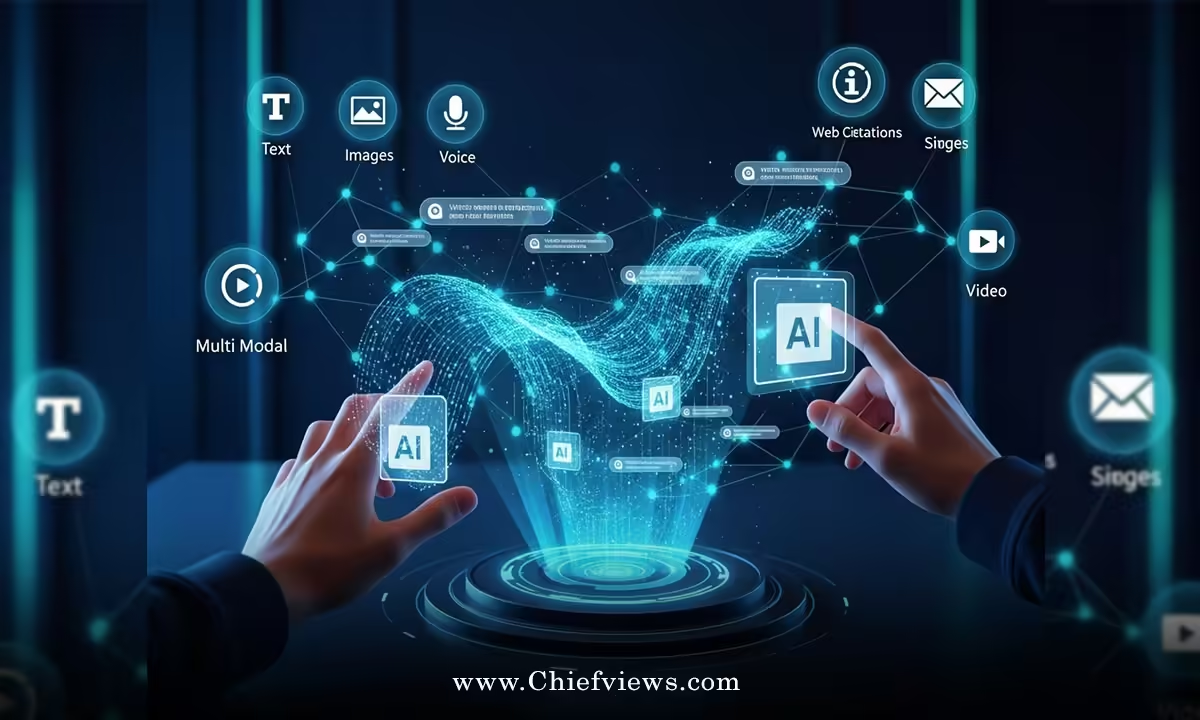
How CMOs use AI for customer experience and growth in 2026 centers on agentic systems that predict needs, personalize at scale, and drive measurable revenue. They orchestrate seamless journeys while cutting waste. The result? Brands that feel human yet move at machine speed.
- Hyper-personalization now happens in real time using memory-rich AI that recalls past interactions across channels.
- Agentic AI handles routine tasks autonomously, freeing teams for strategy and creativity.
- Predictive analytics spots growth opportunities before customers even signal intent.
- Content production accelerates dramatically, with better quality and lower costs.
- ROI focus rules everything—CMOs tie every AI play directly to retention, acquisition, and lifetime value.
This shift matters because buyers expect instant, relevant experiences. Those who deliver win loyalty and wallet share. Those who lag watch competitors pull ahead.
Why AI Became Non-Negotiable for CMOs
Picture this: A customer abandons a cart at 2 a.m. Old-school marketing sends a generic email tomorrow. In 2026, AI notices the signal, understands context from prior behavior, and triggers a tailored nudge—maybe a discount on the exact item or a quick video demo. Conversion jumps.
CMOs lean on AI because data volumes exploded while attention spans shrank. Manual segmentation? Dead. Broad campaigns? Ignored.
What usually happens is teams drown in insights but starve for action. AI bridges that gap. It processes signals in milliseconds and acts. In my experience, the biggest wins come when AI augments humans rather than replaces them. You still need sharp judgment on brand voice and ethics.



Core Ways CMOs Deploy AI for CX and Growth
Real-Time Personalization Engines
CMOs build systems that adapt every touchpoint. AI analyzes browsing history, purchase patterns, and even sentiment from support chats. Then it serves dynamic content—product recommendations, email subject lines, website layouts—that feel made for one person.
The kicker? This drives both experience and revenue. Personalized journeys boost engagement without creepy overreach when done right.
Agentic AI for Journey Orchestration
Forget basic chatbots. Agentic AI takes actions. It qualifies leads, books meetings, resolves issues, and even updates orders autonomously. CMOs use these to create “AI-first, human-available” support that delights rather than frustrates.
One retailer example: AI handles 70% of routine queries while escalating complex ones seamlessly. Customer satisfaction climbs. Support costs drop.
Predictive Analytics for Proactive Growth
Smart CMOs don’t wait for problems. AI spots at-risk customers early and triggers retention plays. It identifies high-potential prospects and warms them with relevant content. Growth teams love this because it shortens sales cycles and improves close rates.
Here’s the thing. Data alone doesn’t grow revenue. Clean, connected data fed into responsible AI does.
| AI Use Case | Typical Impact | Time to Value | Best For |
|---|---|---|---|
| Hyper-Personalization | 15-40% lift in engagement | 3-6 months | E-commerce, D2C brands |
| Agentic Support | 20-30% cost reduction | 2-4 months | High-volume service teams |
| Predictive Lead Scoring | 25% shorter sales cycles | 4-8 months | B2B enterprises |
| Automated Content | 3x faster production | 1-3 months | All teams |
| Journey Orchestration | 10-25% retention boost | 6-9 months | Subscription models |
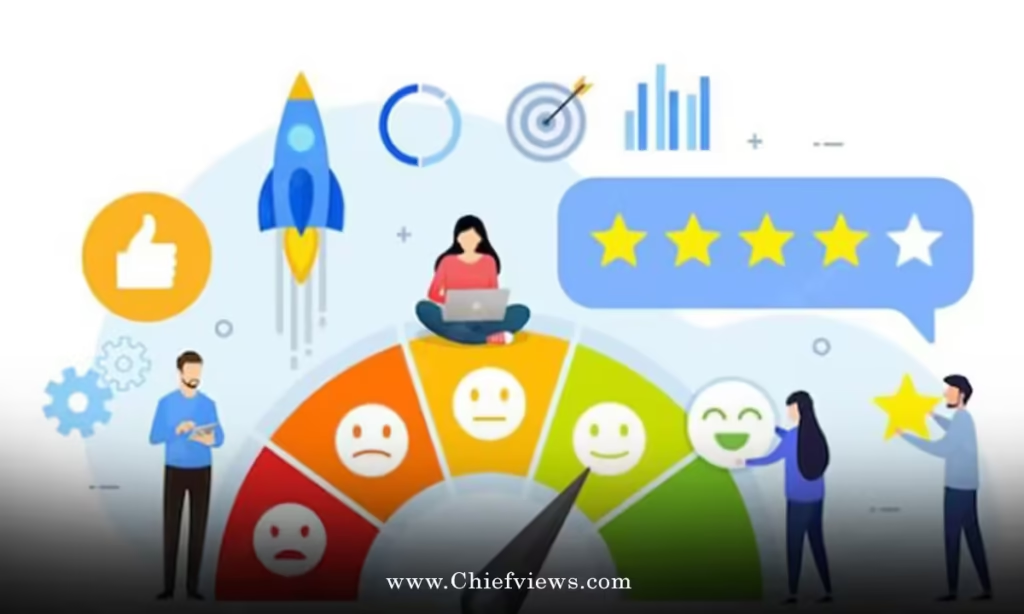
How CMOs Use AI for Customer Experience and Growth in 2026: A Beginner’s Action Plan
New to this? Start simple. Scale smart.
Step 1: Audit your data house. Map customer touchpoints. Identify silos. Clean and unify data sources. Bad data poisons AI results.
Step 2: Pick one high-pain, high-impact use case. Maybe cart abandonment or post-purchase onboarding. Pilot with a tool that integrates easily. Measure everything.
Step 3: Implement with guardrails. Set clear rules for data privacy and human oversight. Test rigorously. Train teams on prompting and reviewing outputs.
Step 4: Scale what works. Expand to adjacent areas once you prove ROI. Connect systems so AI gains context across marketing, sales, and service.
Step 5: Review quarterly. What drives real growth? Double down. What feels gimmicky? Kill it fast.
What would you do if you only had budget for one AI initiative? I’d start with personalization. It touches everything.
Common Mistakes & How to Fix Them
CMOs trip over the same hurdles.
- Chasing shiny tools without strategy. Fix: Tie every pilot to a specific KPI like retention rate or customer acquisition cost.
- Ignoring ethics and trust. Customers bolt when personalization feels invasive. Fix: Be transparent. Offer opt-outs. Prioritize consent.
- Treating AI as a cost-cutter only. This kills creativity. Fix: Balance efficiency with human-led innovation. Use AI for grunt work, humans for heart.
- Poor data foundations. Garbage in, garbage out. Fix: Invest in CDP or clean integration first.
- No measurement framework. Fix: Define success metrics upfront. Track both CX scores and revenue impact.
Advanced Tactics That Separate Leaders
Top CMOs integrate AI across the full funnel. They use generative tools for rapid content testing while agentic systems optimize delivery in real time. Multimodal AI handles voice, text, and visual interactions seamlessly.
They also focus on “memory-rich” experiences. The AI remembers your preferences across sessions and devices. No more repeating yourself.
For growth specifically, AI powers dynamic pricing tests, lookalike audience expansion, and even creative that adapts to cultural nuances in different regions.
How CMOs Use AI for Customer Experience and Growth in 2026: Measuring What Matters
Forget vanity metrics. Track customer effort score, net promoter score alongside revenue per user and churn rate. Leading CMOs build dashboards that connect AI actions directly to business outcomes.
McKinsey research on personalized marketing shows clear revenue upside when done right.
Adobe’s CMO trends report highlights how agentic AI reshapes engagement.
Gartner’s marketing predictions offer solid benchmarks for channel shifts.
Key Takeaways
- AI lets CMOs deliver hyper-relevant experiences that drive loyalty and revenue simultaneously.
- Agentic systems handle execution so humans focus on strategy and empathy.
- Success requires clean data, clear governance, and relentless measurement.
- Start small, prove value, then scale across the customer lifecycle.
- Balance automation with human touch—AI amplifies, doesn’t replace, great marketing.
- Privacy and transparency aren’t optional; they’re competitive advantages.
- The brands winning in 2026 treat AI as a core capability, not a bolt-on experiment.
- Continuous testing beats perfection. Iterate fast based on real customer signals.
CMOs who master this blend of intelligence and humanity won’t just survive 2026. They’ll define the next decade of customer relationships. Pick one initiative today. Run a small test next week. The data will tell you what to scale.
FAQs
How do CMOs use AI for customer experience and growth in 2026 without losing the human element?
They deploy AI for speed and scale on routine tasks while keeping humans in the loop for empathy-driven moments. Clear escalation paths and oversight ensure technology serves people, not the other way around.
What skills should marketing teams build to support how CMOs use AI for customer experience and growth in 2026?
Focus on prompt engineering, data literacy, ethical AI use, and strategic thinking. Technical execution matters less than knowing when and why to apply AI.
Can small businesses compete using how CMOs use AI for customer experience and growth in 2026?
Absolutely. Start with accessible tools for personalization and automation. Many platforms offer starter tiers that deliver quick wins in engagement and efficiency without enterprise budgets.