


Omnichannel customer journey mapping is what we use when we want to understand how a customer moves across your website, app, store, email, social media, and support channels without losing the thread. If you have ever wondered why people drop off after showing interest, repeat the same question twice, or buy on one channel and complain on another, this is usually where the answer starts.
For business owners, this matters because customers do not experience your business in neat little boxes. They experience one brand, one buying decision, and one service journey. In this article, we’re going to be taking a look at omnichannel customer journey mapping, and how you can use it to improve customer experience, reduce friction, and create better results across every channel. If you would like to find out more, feel free to read on.
Pic – CC0 License
What omnichannel customer journey mapping really means
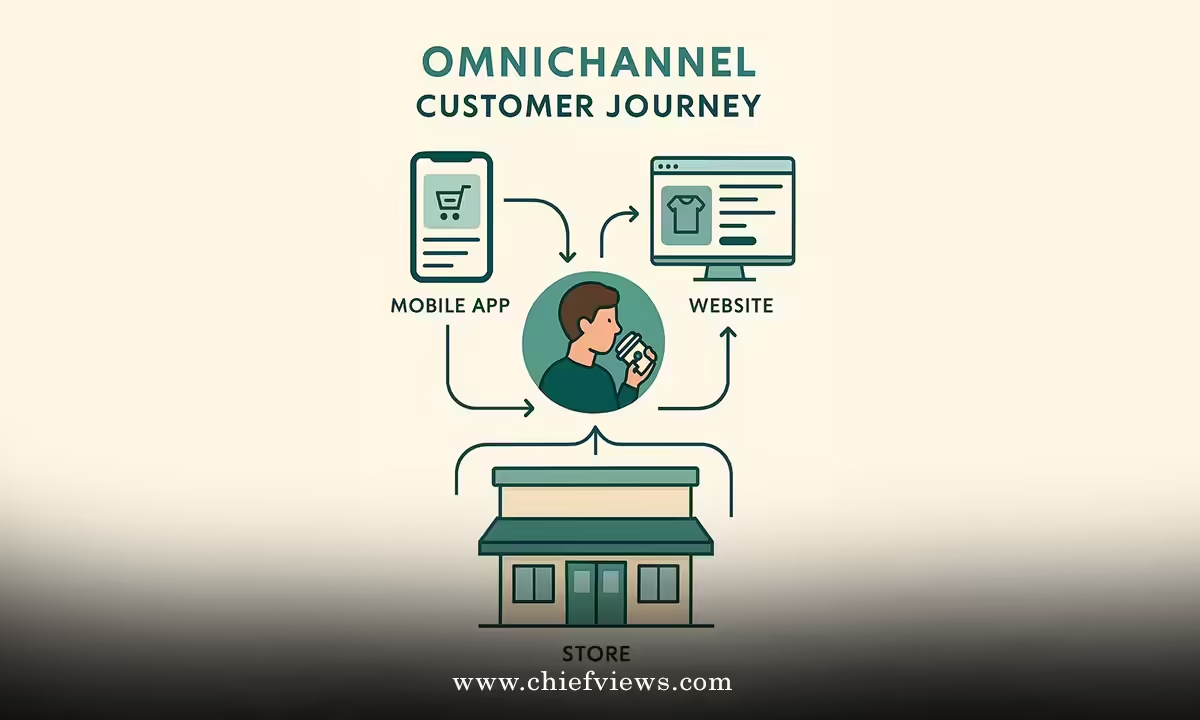
Omnichannel customer journey mapping is the process of tracing every step a customer takes before, during, and after buying from you. It shows where they first discover your brand, how they compare options, where they ask questions, and what happens after the sale.
This is not just a marketing exercise. It helps sales, support, operations, and leadership see the same customer story. When everyone understands the journey, you stop guessing and start fixing the right problems.
The goal is simple. Make it easy for customers to move from one channel to the next without confusion, repetition, or delays.

Why it matters for growing businesses
A lot of businesses think they already know their customer journey. In reality, they know only part of it. Maybe they see website traffic, ad clicks, and sales numbers, but they do not see the handoff between channels.
That missing view can cost you leads, loyalty, and repeat business. If your website promises one thing, your email says another, and your support team handles questions differently again, customers feel the disconnect right away.
This is where omnichannel customer journey mapping becomes powerful. It helps you spot friction points, improve consistency, and make your customer experience feel much more natural. It also supports stronger CXO strategies for omnichannel customer experience design by giving leaders a clear picture of where the experience breaks down.
How to map the journey step by step
Start with a real customer, not an imaginary one. Pick one common buyer type and trace their path from awareness to purchase and beyond.
Ask simple questions:
- How did they first hear about us?
- What made them trust us?
- What questions did they ask before buying?
- Which channel did they use to contact us?
- Where did they hesitate or drop off?
- What happened after purchase?
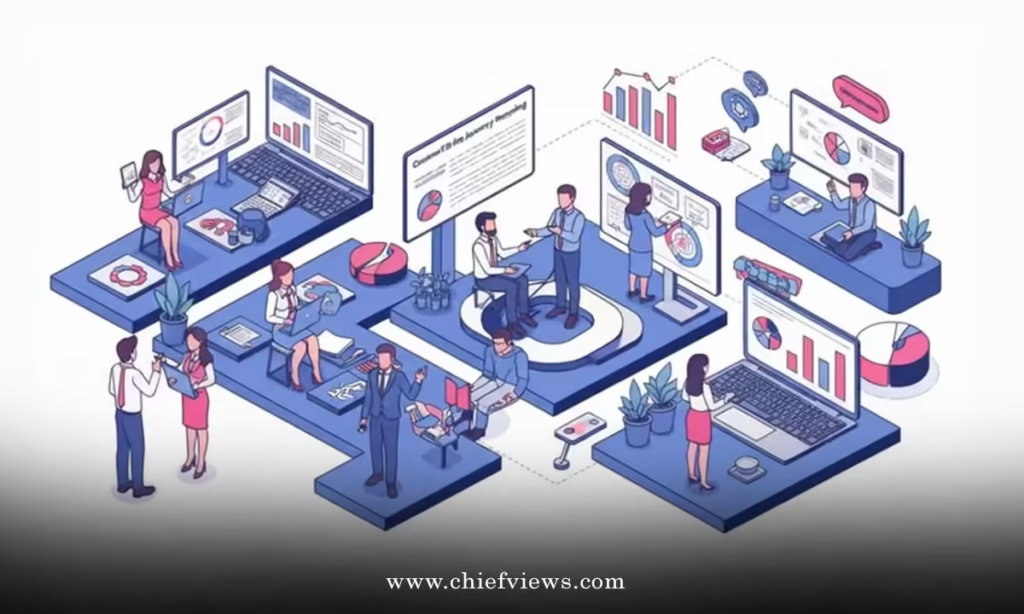
Once you answer these questions, write the journey down in plain language. You do not need fancy software to begin. A whiteboard, spreadsheet, or simple document is enough to show the main touchpoints and pain points.
Then look for gaps. Did the customer have to repeat information? Was the next step unclear? Did one channel feel disconnected from the others? Those are the moments that matter most.
Common touchpoints you should include
When you build an omnichannel journey map, do not focus only on the sale. Include the full experience.
Typical touchpoints include:
- Social media ads and posts
- Website landing pages
- Search results
- Chatbots and live chat
- Email follow-ups
- Phone calls
- In-store visits
- Delivery updates
- Returns or support requests
- Review and referral moments
Each one shapes how the customer feels about your business. If any of them is slow, confusing, or inconsistent, the whole journey suffers.
Where businesses usually get it wrong
Many companies make the mistake of mapping what they want the journey to be instead of what actually happens. That is a big difference.
Another common problem is keeping the map in marketing alone. If support, sales, and operations are not involved, you end up with an incomplete picture. A good journey map should reflect the real customer experience, not just the ideal version.
Some businesses also overcomplicate the process. You do not need fifty stages and color-coded charts to make progress. Start with the most important paths and build from there.
How journey mapping improves customer experience
Once you can see the full journey, it becomes much easier to improve it. You can shorten wait times, clean up messages, fix broken handoffs, and remove repeated steps that annoy customers.
That often leads to better conversion rates, stronger retention, and fewer support complaints. It also helps your teams work together more smoothly because everyone is looking at the same journey.
If you want to go one step further, journey mapping can also inform product updates, content planning, service design, and team training. That is why it is such a strong foundation for broader CXO strategies for omnichannel customer experience design.
Tools and habits that make mapping easier
You do not need expensive software to get started, but a few tools can help.
Useful options include:
- A simple journey mapping template
- Customer surveys
- Support ticket reports
- Website analytics
- Call and chat transcripts
- Sales notes from your CRM
The best habit is to review the journey regularly. Customer behavior changes, channels change, and expectations change. A map that was useful last year may already be out of date.
If possible, involve people from different parts of the business. Frontline staff often see problems that leadership never hears about. Their input makes the map more honest and more useful.
Final thoughts
Omnichannel customer journey mapping gives you a clearer view of how people really move through your business. Once you can see the full path, you can remove friction, improve service, and create a more connected experience across every channel.
We hope that you have found this article enlightening in some way, because the real value of journey mapping is not the map itself. It is what you do with it. When you use it well, you can turn scattered touchpoints into a smoother experience that feels easy for your customers and more effective for your business.