




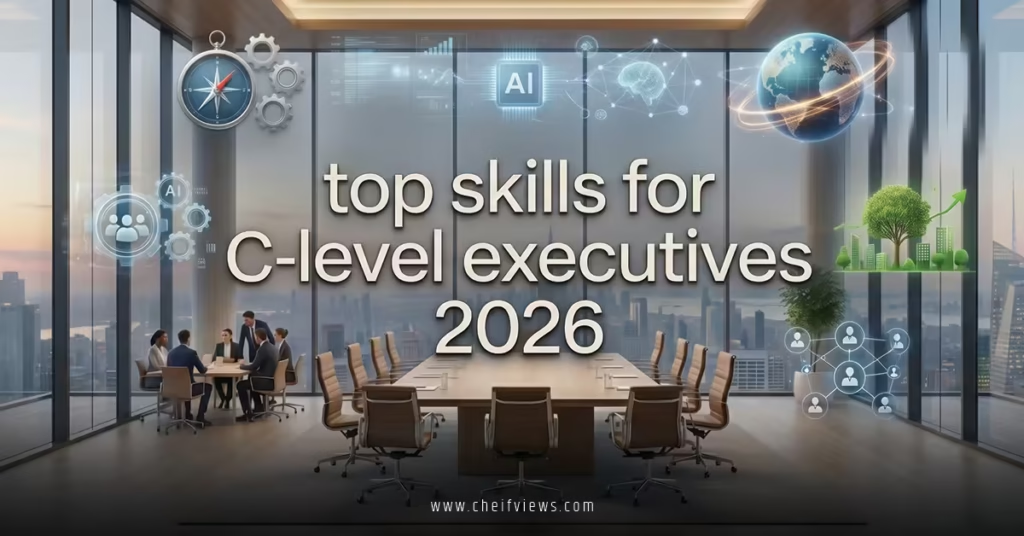
Top skills for C-level executives 2026 blend sharp business instincts with the ability to steer through AI disruption, economic swings, and talent wars. Boards now hunt leaders who don’t just manage—they anticipate, adapt, and multiply impact fast.
Here’s what stands out right now. These aren’t nice-to-haves. They separate executives who thrive from those who get sidelined.
- AI fluency and governance: Understanding how to deploy agents, manage risks, and drive real ROI without blind spots.
- Strategic agility: Building flexible plans that pivot with market shocks while keeping teams aligned.
- Emotional intelligence and empathy: Reading people, building trust, and leading humans in an AI-augmented world.
- Data literacy and decision velocity: Turning insights into fast, confident calls.
- Talent scaling and culture building: Attracting, developing, and retaining top performers amid constant change.
These skills matter because 2026 rewards leaders who turn uncertainty into advantage. Companies with executives strong in these areas scale faster and retain talent longer.
Why Top Skills for C-level Executives 2026 Have Shifted So Dramatically
The game changed. AI moved from experiment to core operating system. Geopolitical tensions and talent shortages added pressure. Executives who leaned only on traditional strategy now find themselves outpaced.
In my experience, the biggest gap shows up in implementation. Plenty of leaders talk AI. Few make it deliver measurable edge while keeping their people engaged. What usually happens is executives over-index on tech and under-invest in the human side. That mismatch kills momentum.
The kicker? Boards notice. They promote and hire those who balance both.


Core Technical and Strategic Skills Leading the Pack
AI Governance and Fluency tops nearly every list. Executives must evaluate AI tools, set ethical guardrails, and integrate them into workflows without creating new vulnerabilities.
This goes beyond prompts. It means understanding agentic systems that handle end-to-end processes and knowing when human judgment must override automation.
Strategic Thinking with Agility comes next. Five-year plans feel quaint. Top performers build scenarios, test assumptions quickly, and adjust.
Data-Driven Judgment ties it together. Leaders translate complex metrics into clear action. They spot patterns others miss.
One analogy hits home: Think of these skills like piloting a supersonic jet. You need instruments (data and AI), vision for the horizon (strategy), and steady hands on the controls (judgment under pressure).
The Human Edge: Soft Skills That Deliver Hard Results
Pure tech chops won’t cut it.
Emotional Intelligence and Empathy rank incredibly high. Leaders who create psychological safety see better innovation and retention. Teams stay loyal when they feel understood.
Communication and Influence matter more than ever. You must align stakeholders across hybrid teams, explain complex changes simply, and inspire action.
Adaptability and Resilience separate survivors from thrivers. Markets shift overnight. Strong executives model calm pivots and help their organizations do the same.
Rhetorical question: How many brilliant strategies died because the leader couldn’t bring people along?
Top Skills for C-level Executives 2026: Quick Comparison Table
| Skill | Why It Matters in 2026 | Beginner Level | Intermediate Level | Time to Build |
|---|---|---|---|---|
| AI Fluency & Governance | Drives efficiency and competitive edge | Basic tool usage | Strategy integration & risk management | 6-12 months |
| Strategic Agility | Handles volatility | Scenario planning basics | Real-time pivots with team buy-in | 9-18 months |
| Emotional Intelligence | Boosts retention and culture | Self-awareness | Empathy in high-stakes decisions | Ongoing |
| Data Literacy | Informs faster decisions | Reading dashboards | Predictive insights | 4-8 months |
| Talent Development | Scales organizations | Hiring fundamentals | Building high-performance cultures | 12+ months |
This table shows clear progression paths. Most executives start uneven—strong in one area, weak in others.
Step-by-Step Action Plan for Beginners and Intermediate Leaders
Ready to level up? Here’s what I’d do if I were stepping into a senior role today.
- Audit your gaps – Spend one week mapping your current skills against the table above. Get honest feedback from peers.
- Build AI fluency daily – Dedicate 30 minutes each morning to experimenting with new tools. Read one report from McKinsey’s AI insights or similar each week.
- Practice strategic scenarios – Run monthly “what if” sessions with your team. Simulate market disruptions and test responses.
- Develop people skills deliberately – Schedule regular one-on-ones focused on listening. Take a short course on emotional intelligence from a reputable provider like Wharton or similar.
- Track measurable progress – Set quarterly goals tied to business outcomes. Revenue impact, team retention, project velocity—pick your metrics.
- Seek stretch opportunities – Volunteer for cross-functional initiatives that force you outside your comfort zone.
Consistency beats intensity. Small daily habits compound into executive presence.
Common Mistakes & How to Fix Them
Many leaders chase trends without depth. They learn surface-level AI but ignore governance. Result? Expensive failures.
Others over-rely on charisma and neglect data. Decisions feel good but lack substance. Fix this by pairing intuition with evidence.
A big one: Ignoring culture during transformation. Tech implementations flop without people alignment. Address it by involving teams early and communicating relentlessly.
The fix for most mistakes? Ruthless prioritization and feedback loops. Don’t try mastering everything at once. Pick two skills and go deep.
Top Skills for C-level Executives 2026 in Practice: Real-World Application
Picture a CEO navigating supply chain chaos. Strong data literacy spots risks early. AI tools model solutions. Empathy keeps teams motivated through uncertainty. That’s the winning combination.
Leaders who excel here drive sustainable growth. They don’t just react—they shape what’s next.
Key Takeaways
- Top skills for C-level executives 2026 center on AI fluency paired with human-centered leadership.
- Strategic agility and data judgment deliver speed in volatile markets.
- Emotional intelligence builds the trust that powers execution.
- Continuous learning isn’t optional—it’s your edge.
- Balance technical skills with people skills for maximum impact.
- Start small, measure progress, and scale deliberately.
- Boards reward executives who turn disruption into opportunity.
- Action today compounds into executive advantage tomorrow.
Master these and you don’t just survive 2026. You define it.
Next step: Pick one skill from the table and commit to one concrete action this week. Momentum starts with that single move.
FAQs
What are the top skills for C-level executives 2026 that beginners should focus on first?
Start with AI basics and emotional intelligence. These create quick wins in decision-making and team dynamics while building a foundation for more advanced capabilities.
How do top skills for C-level executives 2026 differ from previous years?
AI governance and decision velocity rose sharply. Human skills like empathy gained new importance as technology handles routine tasks, making leadership judgment the true differentiator.
Can mid-level managers develop top skills for C-level executives 2026 effectively?
Absolutely. Through targeted projects, mentorship, and deliberate practice, managers can close gaps fast. Many current C-suite leaders built these competencies before reaching the top.