




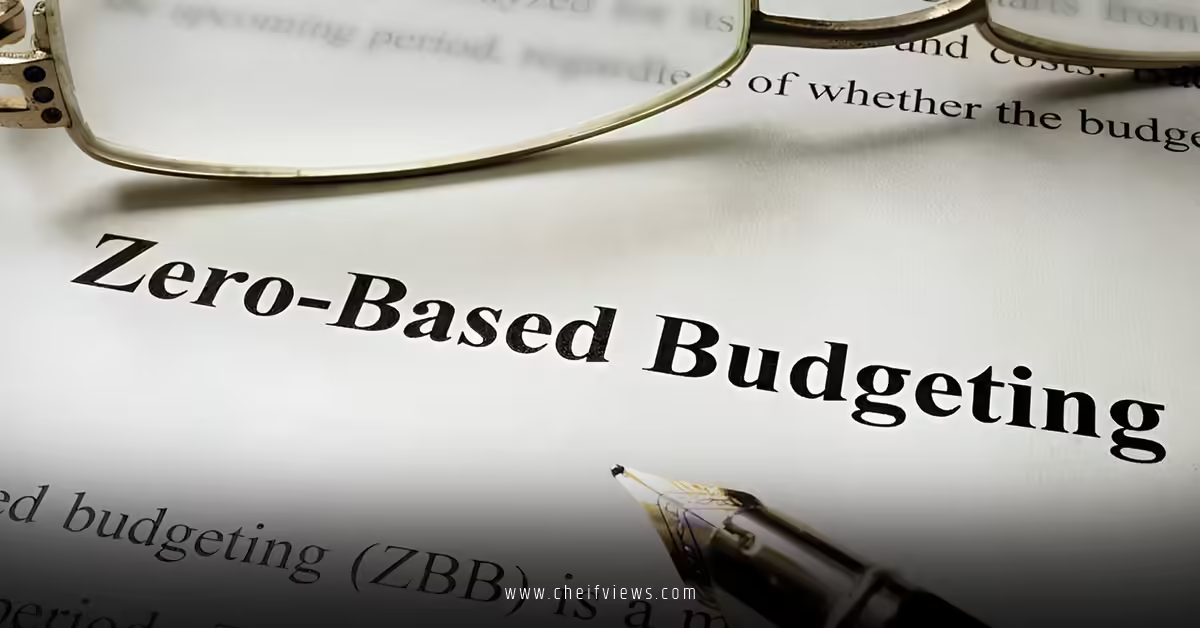
Zero-Based Budgeting 2026 Guide resets how organizations justify every single expense from scratch. No automatic rollovers. No sacred cows. Just pure alignment between spend and current strategic priorities.
In 2026, with persistent uncertainty and pressure to fund AI initiatives while protecting margins, Zero-Based Budgeting 2026 has surged back into CFO playbooks. It forces tough conversations that incremental budgeting dodges.
- Zero-Based Budgeting 2026 demands managers build budgets from zero, justifying every cost based on necessity and expected value rather than last year’s numbers.
- It drives 10-20% cost reductions in many implementations while freeing capital for high-growth areas.
- Perfect fit inside broader CFO strategies for cost optimization and resource allocation 2026, where leaders cut waste surgically and reallocate aggressively.
- Why now? Economic volatility, AI transformation costs, and demand for transparency make traditional budgeting look outdated.
The method isn’t new. But the tools and urgency in 2026 make it far more practical than in past cycles.
Why Zero-Based Budgeting 2026 Matters More Than Ever
Traditional incremental budgets carry forward legacy waste. A 5% increase here, a tweak there. Markets don’t work that way anymore.
Zero-Based Budgeting 2026 flips the script. Every line item starts at zero. Teams must defend its existence and value. This creates ruthless prioritization.
Gartner notes many CFOs now use ZBB principles to rightsize budgets and elevate accountability. Companies gain sharper focus on what truly drives results.

What happens when you skip this discipline? Resources stay locked in yesterday’s priorities while tomorrow’s opportunities starve.
Think of it like cleaning out a packed garage. You don’t just rearrange boxes. You decide what stays, what goes, and where new tools belong.
How Zero-Based Budgeting Works in Practice
Start with a clean sheet. Departments submit requests for every activity, cost, and headcount. Each proposal includes:
- Business justification tied to strategic goals
- Expected outcomes and metrics
- Alternative options and costs
- Risk assessment
Leadership ranks these across the organization. Fund the highest-value items first until money runs out.
This isn’t blanket cost cutting. Smart implementations protect and even grow critical areas like AI, analytics, and talent development while slashing low-value spend.
It integrates beautifully with CFO strategies for cost optimization and resource allocation 2026. The visibility from ZBB makes reallocation decisions evidence-based instead of political.
Pros and Cons of Zero-Based Budgeting 2026
| Aspect | Advantages | Disadvantages | Mitigation Tips |
|---|---|---|---|
| Cost Control | Surfaces hidden waste; 10-20% savings possible | Time-intensive | Phase implementation by department |
| Strategic Alignment | Every dollar ties to priorities | Can feel bureaucratic | Link tightly to OKRs and strategy |
| Accountability | Builds ownership at all levels | Potential morale hit if mismanaged | Transparent communication |
| Agility | Easier to shift resources | Short-term bias possible | Combine with rolling forecasts |
| Implementation | Drives innovation in processes | High initial effort | Leverage AI tools for analysis |
Data patterns from sources like EY and Gartner show meaningful savings when executed well. Results vary by industry and commitment level.

Step-by-Step Implementation Guide for 2026
Step 1: Secure leadership buy-in. The CFO and CEO must champion it. Without tone from the top, it becomes another failed initiative.
Step 2: Define decision criteria. Agree on scoring framework upfront — strategic fit, ROI, risk, urgency. Make it transparent.
Step 3: Pilot one area. Start with SG&A or a single department. Learn lessons before full rollout.
Step 4: Build detailed activity lists. Break operations into discrete activities. Require justification packages with data.
Step 5: Rank and decide. Hold ranking sessions. Be ruthless. Kill or reduce low-ranked items.
Step 6: Monitor execution. Track actuals against the new budget monthly. Adjust as needed.
Step 7: Institutionalize. Move to annual or rolling ZBB cycles supported by modern FP&A platforms.
What I’d do if leading the charge? I’d spend extra time on change management. Frame it as “funding the future” rather than “cutting costs.” People respond better when they see the upside.
Technology That Makes Zero-Based Budgeting 2026 Feasible
AI changes everything. Modern tools analyze historical data, flag anomalies, and even suggest justifications. Cloud FP&A platforms enable real-time collaboration and scenario modeling.
Automation handles the heavy lifting on data collection. Finance teams focus on analysis and strategy instead of spreadsheet drudgery.
Explore Gartner’s guidance on using Zero-Based Budgeting.
Read Deloitte insights on ZBB and finance transformation.
See practical CFO perspectives on budgeting.
Common Mistakes and How to Fix Them
Mistake 1: Going too big, too fast. Organization-wide rollout without preparation leads to chaos. Fix: Pilot and scale.
Mistake 2: Focusing only on cuts. Teams game the system by under-requesting. Fix: Balance with growth funding mandates.
Mistake 3: Poor communication. People fear job losses. Fix: Over-communicate the “why” and celebrate reallocated wins.
Mistake 4: One-and-done mentality. Savings erode without follow-through. Fix: Embed ZBB thinking into quarterly reviews.
The real kicker? Many failures come from treating ZBB as a pure cost exercise instead of a strategic reallocation engine.
Key Takeaways
- Zero-Based Budgeting 2026 delivers unmatched visibility and alignment when done right.
- It forms a powerful foundation for CFO strategies for cost optimization and resource allocation 2026.
- Technology reduces traditional pain points around time and complexity.
- Success depends on leadership commitment and clear strategic ties.
- Combine with rolling forecasts for maximum agility.
- Focus on value creation, not just reduction.
- Pilot first. Measure everything. Iterate fast.
- Cultural shift matters as much as the process itself.
Zero-Based Budgeting 2026 isn’t about austerity. It’s about precision. Organizations that master it waste less and achieve more with the resources they have.
Ready to move? Pull together your top 5 cost categories and run a mini ZBB exercise on them this month. The insights alone will be worth it. Then link those findings directly into your broader resource allocation decisions.
FAQs
What makes Zero-Based Budgeting 2026 different from traditional approaches?
It starts every budget at zero, forcing justification for all expenses based on current needs and strategy rather than historical spending patterns. This creates better alignment and eliminates automatic carryovers.
How does Zero-Based Budgeting support CFO strategies for cost optimization and resource allocation 2026?
ZBB provides the granular visibility and prioritization framework needed to cut low-value activities confidently and redirect funds into AI, growth initiatives, and high-ROI projects.
Is Zero-Based Budgeting 2026 suitable for small and mid-sized companies?
Yes. Scale the process to your size. Start with key departments or discretionary spend. Modern affordable tools make it far more accessible than in previous decades.