





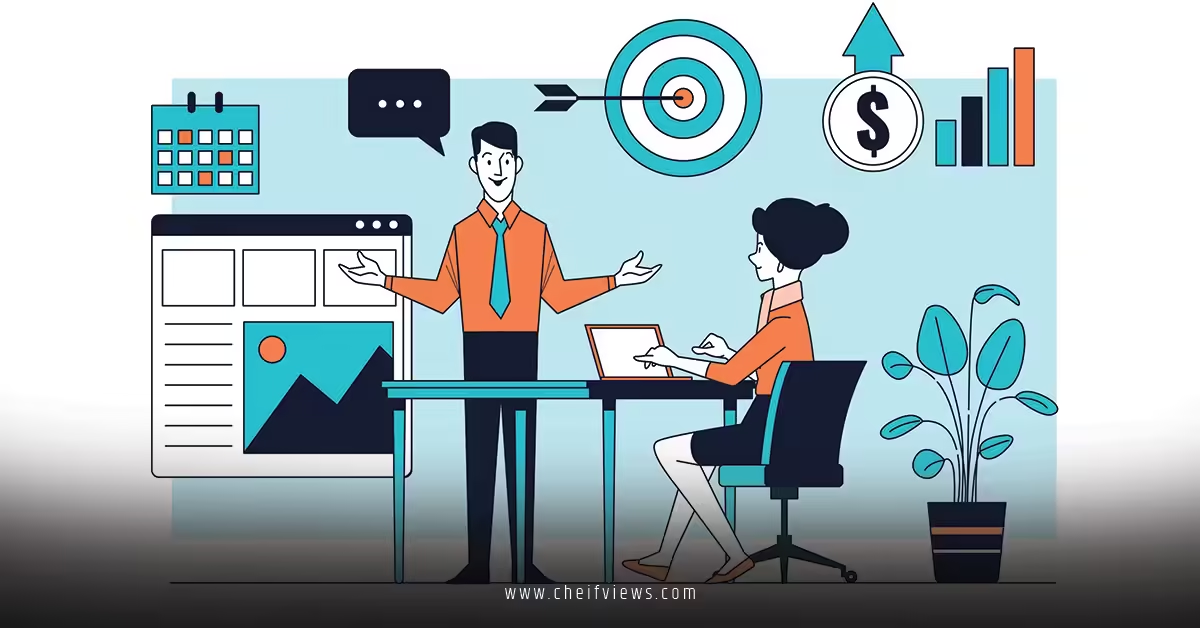
How CMOs align with CEO on brand strategy and revenue ownership starts with ditching the old split between “brand people” and “numbers people.” It demands shared language, joint metrics, and real accountability. CEOs want growth that sticks. CMOs control the customer signals that make it happen. Get this right, and marketing stops being a cost center. It becomes the engine.
- Shared ownership: CMOs move beyond campaigns to co-own revenue targets and brand equity as business assets.
- Metric alignment: Link brand health directly to pipeline velocity, customer acquisition cost (CAC), and lifetime value.
- Regular cadence: Joint planning sessions replace quarterly check-ins.
- Unified scorecard: One dashboard both leaders watch for brand-driven revenue impact.
- Why it matters: Companies with strong CEO-CMO alignment on growth roles see up to 2.3x higher growth.
This alignment isn’t nice-to-have in 2026. Economic pressure, AI tools, and shorter CMO tenures make it survival.
Why the Gap Exists—and Why It’s Costing Revenue
How CMOs Align with CEO on Brand Strategy and Revenue Ownership CEOs track year-over-year revenue and margins. Many CMOs still lean on awareness or engagement. McKinsey research highlights this disconnect: 70% of CEOs measure marketing by revenue growth and margin, but only 35% of CMOs prioritize those same metrics.
The result? Budget battles. Eroded trust. Missed opportunities.
Here’s the thing. Brand strategy without revenue ownership feels fluffy. Revenue targets without brand discipline create fragile growth. Smart CMOs bridge both.
What usually happens is a weekly war of interpretations. Marketing shows great engagement numbers. The CEO asks why pipeline lags. Tension builds.



How Top CMOs Build Alignment from Day One
Start with the conversation. Don’t wait for the CEO to demand proof.
In my experience, the strongest partnerships begin with a simple question: “What does success look like for the business in 12 months—and how does brand directly move those needles?”
Then do this:
Frame marketing as a growth asset, not an expense. Use brand valuation to show its impact on enterprise value. Kantar and others provide frameworks that translate preference and consideration into financial terms.
Co-create the strategy. Joint workshops beat top-down mandates. Bring customer insights that inform product, sales, and finance decisions.
Speak their language. Translate creative wins into ROMI, payback periods, and contribution to margin.
Key Alignment Levers
| Lever | CEO Priority | CMO Action | Expected Outcome |
|---|---|---|---|
| Metrics | Revenue growth, margins | Link brand health scores to sales velocity and win rates | Unified dashboard, fewer surprises |
| Budget | ROI justification | Revenue influence models with attribution | Protected or increased marketing investment |
| Timing | Short-term results | Balanced 60/40 brand vs performance mix (adjusted for stage) | Sustainable pipeline + equity |
| Accountability | Business outcomes | Partial P&L or revenue ownership | Seat at strategy table |
| Reporting | Clarity and simplicity | Monthly joint reviews with one scorecard | Faster decisions, higher trust |
This table cuts through noise. Print it. Use it in your next exec meeting.
Step-by-Step Action Plan for Beginners and Intermediate CMOs
How CMOs Align with CEO on Brand Strategy and Revenue Ownership Ready to move? Here’s what I’d do if stepping into the role tomorrow.
Step 1: Audit the current disconnect. Review last year’s reports. Note where marketing metrics diverge from business ones. Interview sales, finance, and the CEO directly. What keeps them up at night?
Step 2: Map brand to revenue. Build models showing how brand metrics (consideration, preference) predict revenue outcomes. Tools and clean data make this possible in weeks, not months.
Step 3: Schedule recurring alignment rituals. Monthly one-on-ones focused on strategy, not status. Quarterly joint planning with finance in the room.
Step 4: Pilot revenue ownership. Take accountability for a specific revenue stream or customer segment. Deliver results, then expand.
Step 5: Invest in shared visibility. Unified analytics that both leaders trust. No more dueling dashboards.
Step 6: Communicate wins in business terms. “This campaign lifted brand consideration by X, which correlated to Y% pipeline growth.”
Do this consistently and alignment compounds.
Common Mistakes and How to Fix Them
Mistake 1: Leading with vanity metrics. Fix: Kill the awareness-only reports. Always tie them to downstream revenue impact.
Mistake 2: Waiting for the CEO to initiate alignment. Fix: Own the agenda. Come with proposals, not problems.
Mistake 3: Treating brand and performance as enemies. Fix: Adopt performance branding. One unified approach. Many leaders now target roughly 60% brand-building investment for peak effectiveness, tuned to company stage.
Mistake 4: Poor data storytelling. Fix: Practice presenting to a skeptical CFO. One clear visual beats ten slides.
Mistake 5: Ignoring cross-functional power. Fix: Build alliances with sales and product leaders. Marketing alone can’t own revenue.
Advanced Tactics for Revenue Ownership
Progressive CMOs now push for formal revenue responsibility. Some manage customer P&L. Others run integrated demand engines that span brand, performance, sales enablement, and loyalty.
This shift demands new skills: financial fluency, attribution mastery, and comfort with AI-driven insights.
The kicker? When you own outcomes, budget conversations flip. You discuss growth multipliers instead of cost cuts.
How CMOs align with CEO on brand strategy and revenue ownership accelerates here. Joint bets on initiatives create shared skin in the game.
Read more on McKinsey’s research on CEO-CMO partnerships for deeper benchmarks. Check IDC’s midmarket CMO priorities for sector-specific expectations. And explore Russell Reynolds insights on commercially driven CMOs.
Key Takeaways
- Alignment starts with shared metrics that connect brand strength to revenue results.
- Treat brand as a measurable business asset, not a creative sidebar.
- Regular joint planning beats ad-hoc updates.
- Revenue ownership elevates the CMO from executor to strategist.
- Data transparency builds trust faster than any presentation.
- Balance short-term wins with long-term equity—context matters.
- Mistakes are fixable when you own the conversation.
- Companies that get this right grow faster and with more resilience.
Nail this alignment and you don’t just survive 2026. You shape what comes next.
What’s your next move? Schedule that strategy session with the CEO this week. Bring one concrete proposal linking brand work to a revenue target. Small consistent actions beat grand plans.
FAQs
How do CMOs align with CEO on brand strategy and revenue ownership when priorities seem misaligned?
Start by mapping the CEO’s top three business goals, then show exactly how specific brand initiatives drive them. Use joint workshops and shared scorecards to close the gap quickly.
What metrics best support how CMOs align with CEO on brand strategy and revenue ownership?
Focus on connected metrics: brand consideration or preference scores tied to pipeline velocity, win rates, CAC payback, and customer lifetime value. One unified view beats separate reports.
Can intermediate marketers drive how CMOs align with CEO on brand strategy and revenue ownership without full P&L control?
Yes. Build influence through pilots, clear attribution models, and proactive communication. Demonstrate impact on revenue streams, then ask for expanded scope based on results.