




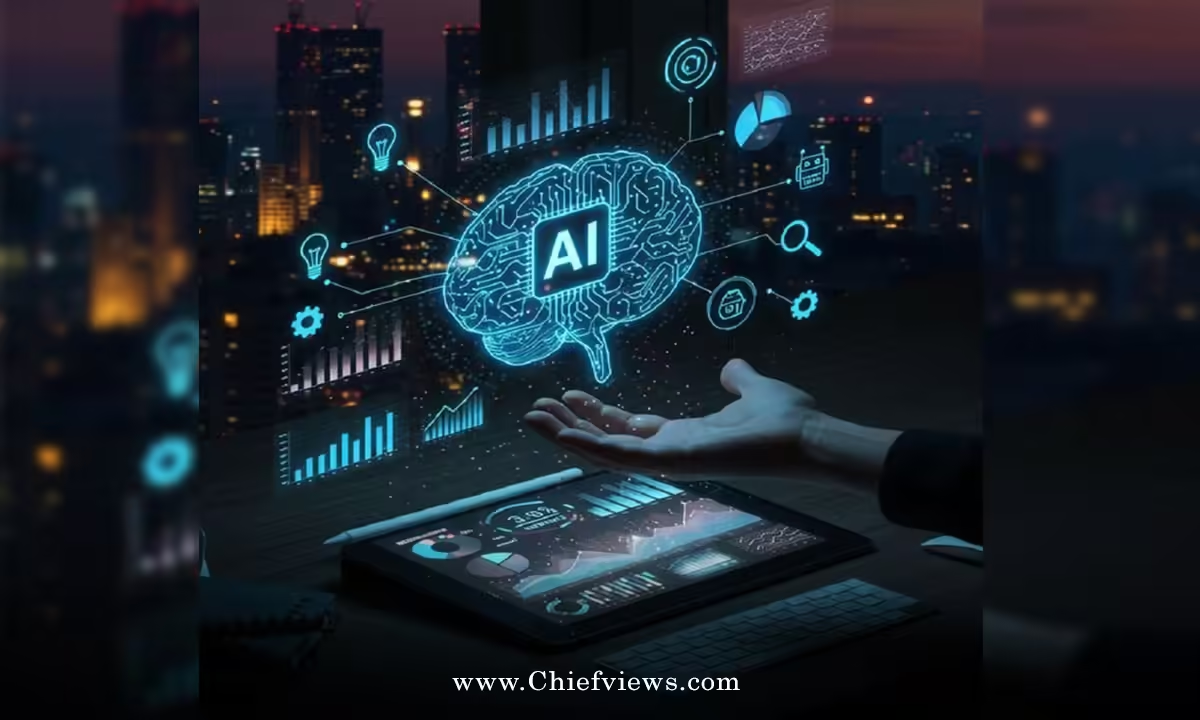
AI marketing trends 2027 shift from flashy experiments to hard-wired revenue machines. Marketers who treat AI as a sidekick lose ground. Those who embed it deeply win bigger slices of attention, loyalty, and wallet share.
The game has changed. Generic blasts? Dead. Static journeys? Ancient history. In 2027, systems run autonomous loops, predict moves before customers make them, and optimize across every touchpoint in real time.
Key shifts hitting boards in 2027:
- Multi-agent systems orchestrate full campaigns end-to-end
- Answer Engine Optimization (AEO) replaces traditional SEO as the discovery battleground
- Machine customers (AI agents buying on behalf of humans) demand new experience design
- Human-first authenticity becomes a premium differentiator
- Privacy-first data strategies unlock sustainable personalization
The best part? These trends build directly on foundations laid in 2026. Leaders who mastered how CMOs can use AI for revenue growth and personalized marketing in 2026 now scale those wins into autonomous, high-ROI systems.
Why 2027 Marks the Agentic AI Tipping Point
Single AI tools helped in 2025-2026. 2027 belongs to coordinated swarms of specialized agents.
One agent researches audience signals. Another crafts variations. A third tests, learns, and reallocates budget. They talk to each other. They adapt without constant human prompting.
Gartner predicts over 40% of early agentic projects get canceled by end of 2027 due to poor planning. The winners? Teams with clear governance and realistic scope.
Here’s the thing. This isn’t sci-fi. Multi-agent systems already handle complex workflows in leading organizations. They cut execution time dramatically while improving relevance.
Top AI Marketing Trends 2027
Multi-Agent Ecosystems Take Over Campaign Execution
Forget one-do-it-all tools. Specialized agents divide labor.
A strategy agent sets goals. Creative agents generate assets. Optimization agents monitor performance and tweak in real time. Compliance agents ensure brand safety.
This parallel processing accelerates everything. What took weeks now happens in hours.
The revenue impact feels immediate. Faster iteration means more tests, quicker learning cycles, and higher overall ROI.
Answer Engine Optimization Becomes Table Stakes
People (and their AI assistants) ask questions. AI summaries answer them.
Brands that structure content for these engines get recommended. Others disappear.
AEO demands clear, authoritative answers, strong entity signals, and helpful schema. Traditional keyword stuffing fails hard here.
Early movers report maintaining visibility even as zero-click searches rise.
Rise of Machine Customers
By 2027, a growing percentage of purchases happen through AI agents acting for consumers and businesses.
These agents compare options, negotiate, and transact based on predefined rules.
Smart brands build API-first experiences, clear value propositions, and machine-readable information. They optimize for agent preferences the same way they once optimized for human search.
Hyper-Personalization Meets Privacy Regulations
AI gets better at individual experiences. Regulations get stricter.
Winners unify first-party data intelligently and use privacy-preserving techniques. They deliver relevance without creepy overreach.
Personalization leaders continue seeing 15-30% lifts in engagement and conversions.
Human-First Content as Premium Positioning
Some brands lean into “No AI Used” labeling.
Gartner noted this shift coming: around 20% of brands will market their human touch as a feature by 2027.
The kicker? AI handles the grunt work so humans can focus on soul, strategy, and surprise. The best content feels crafted because it was—AI just removed the boring parts.
How to Prepare Your Stack for 2027 Trends
Start with data infrastructure. Clean, unified, real-time data powers everything else.
Then layer agentic capabilities on top. Test small multi-agent workflows before big commitments.
What I’d do in a new role tomorrow:
- Audit current martech for integration gaps
- Pilot one multi-agent process (like campaign optimization)
- Train teams on prompting, oversight, and AEO principles
- Build measurement frameworks tied to revenue, not just engagement
- Establish clear AI governance policies now
| Trend | Expected Impact | Readiness Level | Risk if Ignored |
|---|---|---|---|
| Multi-Agent Systems | 25-40% faster execution | Medium-High | Falling behind competitors |
| AEO | Maintain search visibility | High | Traffic collapse |
| Machine Customers | New revenue channels | Medium | Losing automated sales |
| Privacy-First Personalization | Sustainable 15-30% lifts | High | Regulatory fines + trust loss |
| Human-First Differentiation | Premium positioning | Low-Medium | Commoditization |
Common Pitfalls in 2027 AI Marketing
Chasing shiny tools without strategy tops the list. Many teams end up with fragmented systems that don’t talk.
Another killer: poor governance. Projects balloon in cost and get axed.
Fix it early. Tie every AI initiative to specific business outcomes. Start narrow, prove value, then expand.
Over-automation that strips personality also hurts. Customers spot generic AI slop instantly and tune out.
Building on 2026 Foundations
The leaders crushing it in 2027 aren’t starting from zero. They scaled what worked in personalized marketing and revenue systems the previous year.
They moved from basic automation to intelligent orchestration. From reactive campaigns to predictive, agent-driven journeys.
If you’re still catching up, focus there first. The 2026 playbook on driving growth through AI personalization gives you the perfect launchpad for these emerging trends.
Key Takeaways for AI Marketing Trends 2027
- Agentic and multi-agent systems become core infrastructure for competitive teams
- AEO joins (and sometimes surpasses) traditional SEO priorities
- Machine customers require proactive experience redesign
- Data quality and privacy practices determine who can actually personalize at scale
- Human creativity paired with AI efficiency creates unbeatable advantages
- Governance and realistic ROI expectations separate successful deployments from canceled projects
- Early movers who build on 2026 gains pull further ahead
The gap between AI-curious brands and AI-native ones widens fast in 2027.
Don’t just watch these trends. Pick one. Build a small test this quarter. Measure ruthlessly. Scale what works.
Your competitors already are.
FAQs
What makes multi-agent systems different from regular AI tools in 2027?
Multi-agent systems coordinate specialized AIs that collaborate on complex tasks. Single tools handle one job. These swarms plan, execute, and optimize entire workflows with minimal human input.
How important is Answer Engine Optimization compared to traditional SEO?
Extremely important. As AI summaries and agents handle more discovery, brands optimized for AEO stay visible while others vanish from consideration sets.
Should brands resist AI entirely to stand out in 2027?
Some will successfully market the “human-made” angle. Most benefit more from using AI for efficiency while keeping human oversight on strategy and creativity. The hybrid approach usually wins.