




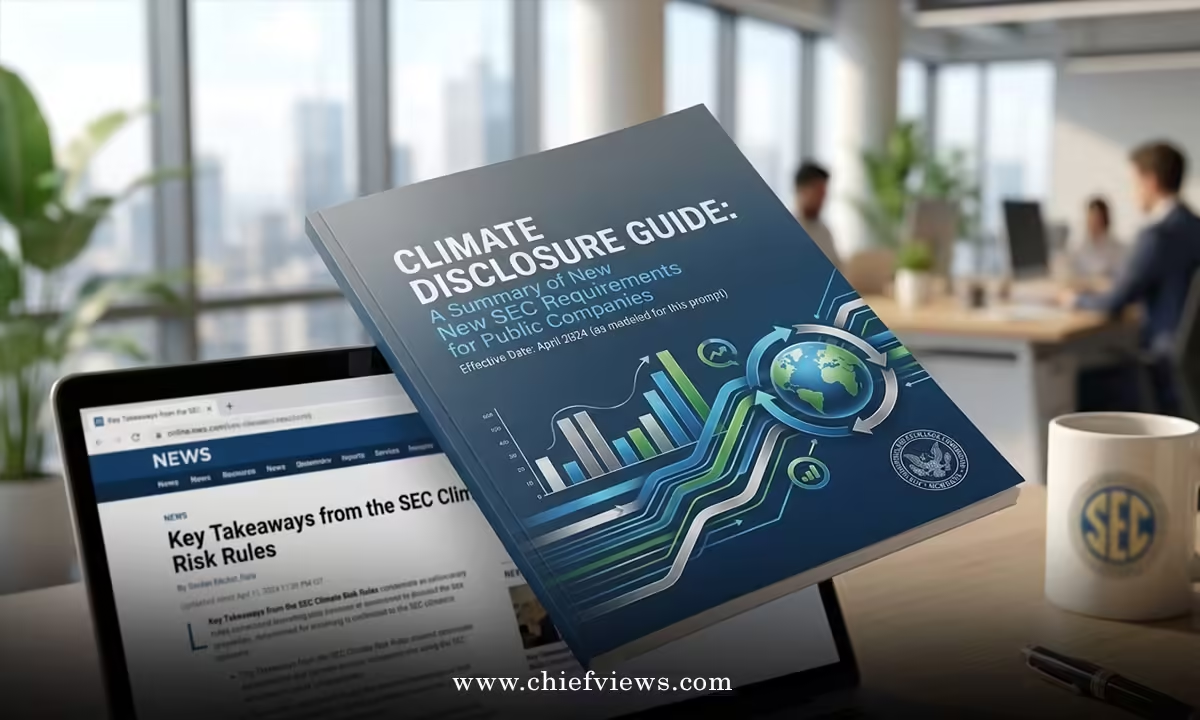
SEC climate disclosure guide just got a major rewrite in 2026. The federal rules that dominated headlines for years? Largely headed for the scrap heap. Yet the pressure to disclose climate risks hasn’t vanished. Smart CFOs treat this as an opportunity to streamline while staying ahead of investors and state mandates.
Public companies breathed easier when the SEC proposed rescinding its 2024 climate rules in late May 2026. Those rules never took effect thanks to legal stays and shifting priorities. But ignoring climate-related information entirely remains risky.
Here’s the quick hit:
- Current federal status: SEC proposed full rescission of the Enhancement and Standardization of Climate-Related Disclosures rules. Comments close August 3, 2026. Final action expected later this year or early 2027.
- What the old rules would have required: Material climate risks, governance, strategy, and Scope 1/2 GHG emissions with phased assurance.
- Why it still matters: State laws, global standards, and investor demands fill the gap.
- CFO angle: Connects directly to the CFO role in sustainable finance and ESG reporting 2026—finance owns the numbers that make disclosures credible.
The kicker is this: Rescission at the federal level simplifies one burden but amplifies the need for smart, voluntary transparency.
What Happened to the SEC Climate Disclosure Rules?
The saga started in 2022 with proposals, adoption in March 2024, immediate lawsuits, and a voluntary stay. By March 2025, the SEC stopped defending the rules in court. Fast forward to May 29, 2026: the Commission proposed rescinding them entirely, calling the requirements an overreach of statutory authority and poor policy.
No mandatory Scope 1 and 2 emissions reporting. No specific climate governance disclosures in 10-Ks. Back to principles-based materiality under existing rules.


Here’s the thing: Existing SEC rules already require disclosure of material risks, including climate-related ones if they could impact financial condition or operations. The 2024 rules tried to standardize and expand that. Now, the pendulum swings toward flexibility.
Key Elements of the Proposed Rescinded SEC Climate Disclosure Framework
Even though it’s on the way out, understanding the 2024 rules helps benchmark your current practices.
- Governance and Strategy: Board oversight, risk management processes, and how climate fits into business strategy.
- Risk Disclosures: Physical and transition risks deemed material.
- GHG Emissions: Scope 1 and 2 (phased in with assurance requirements for larger filers). Scope 3 was dropped early.
- Financial Impacts: Quantified effects of climate events and transition activities in financial statements.
- Targets and Transitions: Disclosure of any adopted climate goals.
Large accelerated filers faced the earliest deadlines, starting with fiscal years as early as 2025 filings. None of that applies now.
Comparison Table: Pre-2026 Expectations vs. 2026 Reality
| Aspect | 2024 SEC Climate Rules (Never Effective) | 2026 Post-Proposed Rescission | Practical Impact |
|---|---|---|---|
| GHG Emissions Reporting | Scope 1/2 required, assurance phased | Voluntary or driven by other rules | Lower immediate compliance cost |
| Materiality Standard | Enhanced standardization | Existing principles-based approach | More judgment required |
| Filing Location | 10-K and registration statements | Same, but less prescriptive | Simpler integration |
| Assurance Requirements | Limited then reasonable for large filers | None mandated federally | Focus on internal controls |
| Scope 3 | Not required | Not required | Relief for complex supply chains |
This table shows why many companies paused heavy investments in 2025.
Why Climate Disclosure Still Matters in 2026
Federal rollback doesn’t mean silence. California’s SB 253 and SB 261 march forward for companies doing business there with $1B+ revenue. International frameworks like ISSB influence global operations. Investors—especially large asset managers—continue asking tough questions in engagements and proxy votes.
What usually happens is finance teams that built capabilities for the SEC rule now repurpose them for state compliance and voluntary reporting. The CFO role in sustainable finance and ESG reporting 2026 becomes even more central here. You translate scattered data into investor-grade narratives without prescriptive federal mandates.
One analogy: Think of the SEC proposal like removing a rigid speed limit sign on a busy highway. Drivers (companies) still need to navigate safely—state troopers (California, EU) and traffic (investors) keep you honest.

Step-by-Step Action Plan: Building a Practical Climate Disclosure Approach
Beginners, start here. No panic required.
- Review Materiality
Conduct or refresh a climate risk materiality assessment. Focus on what could actually hit revenues, costs, or liabilities. - Map Existing Disclosures
Audit your current 10-K risk factors and MD&A for climate mentions. Strengthen where gaps exist. - Align with State and Voluntary Standards
If subject to California rules, prioritize Scope 1/2 tracking using GHG Protocol guidance. Consider TCFD or ISSB for broader alignment. - Strengthen Governance
Document board and management oversight. Link to enterprise risk management. - Integrate with Finance
Connect climate data to financial reporting systems. CFOs excel at controls and assurance readiness. - Engage Stakeholders
Test narratives with key investors. Prepare for questions even without mandates.
What I’d do if advising a mid-cap today: Build lean, auditable processes that scale. Avoid over-engineering for rules that may never return.
Common Mistakes & How to Fix Them
Treating the rescission as a full exit strategy. Fix: Maintain basic tracking—reputational and capital market risks remain real.
Boilerplate language in filings. Investors spot it instantly. Solution: Make disclosures company-specific and tied to strategy.
Siloing sustainability from finance. The CFO owns credibility. Integrate early.
Chasing every voluntary framework. Pick 1-2 that match your operations and investors. See SEC’s existing guidance on climate disclosures for principles.
Underestimating supply chain exposure. Start high-level Scope 3 estimates for internal use.
Advanced Tips for CFOs Navigating the New Landscape
Link climate strategy to sustainable finance opportunities—green bonds, sustainability-linked loans. Use data for competitive advantage in M&A or supplier talks.
Invest in technology that serves multiple purposes: risk management, reporting, and performance tracking. Real-time visibility beats annual snapshots.
In my experience, the strongest performers treat disclosure as storytelling backed by numbers. It builds resilience and trust.
Key Takeaways
- SEC climate disclosure rules face full rescission in 2026, reducing federal burden.
- State laws and investor expectations keep climate risk on the agenda.
- Finance leaders drive value by integrating ESG thoughtfully.
- Focus on materiality and credible data over perfection.
- Repurpose compliance investments for broader business intelligence.
- Stay agile—regulatory winds shift fast.
- Strong disclosure enhances access to capital and talent.
- The CFO role in sustainable finance and ESG reporting 2026 remains pivotal regardless of federal rules.
Mastering this space isn’t about checking boxes. It’s about positioning your company to thrive amid uncertainty. Pull your risk and finance teams in for a focused review. Identify material exposures and start telling a clear story. Those who act now gain the edge.
FAQs
What is the current status of the SEC climate disclosure rules in 2026?
The SEC proposed rescinding the 2024 rules entirely in May 2026. They never became effective, and companies currently follow existing materiality-based disclosure obligations.
Does the SEC rescission eliminate all climate reporting requirements?
No. California laws, international standards, and investor demands continue. Many companies voluntarily provide information aligned with frameworks like TCFD.
How should CFOs connect SEC developments to the CFO role in sustainable finance and ESG reporting 2026?
Use the lighter federal touch to build efficient, integrated systems that support sustainable finance decisions, risk management, and stakeholder trust without unnecessary costs.