





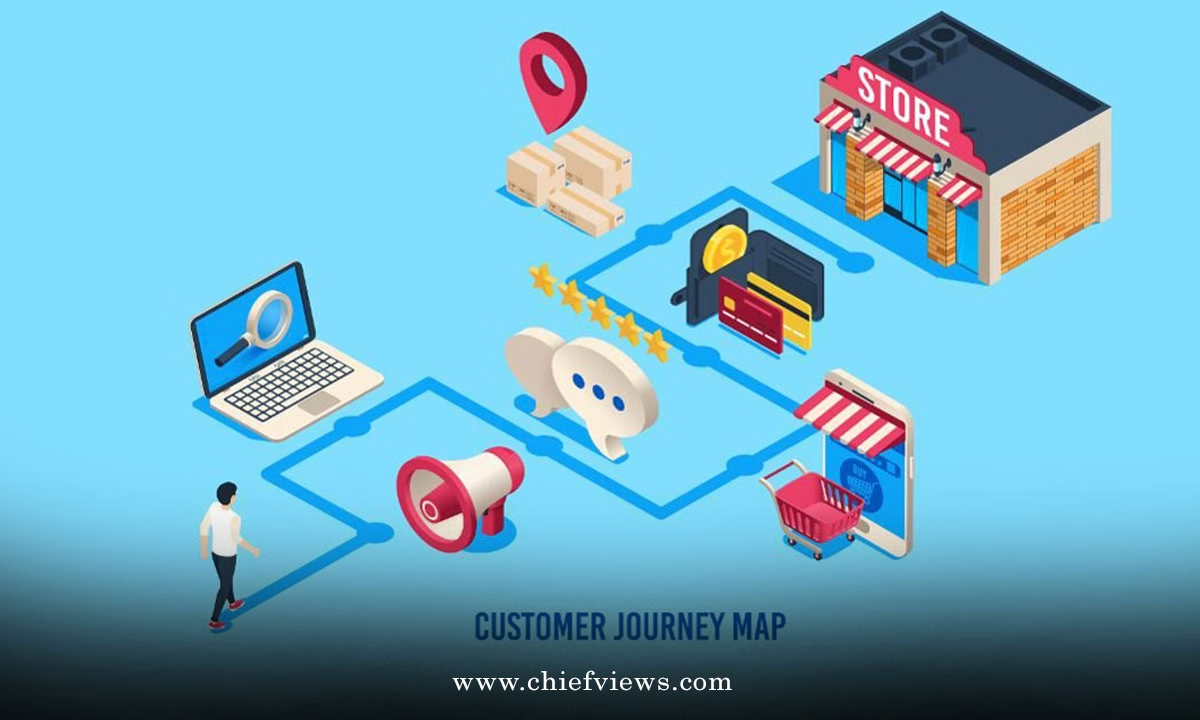
Customer journey mapping is one of the simplest ways to see your business the way your customers do. If you have ever wondered why people drop off, hesitate, complain, or buy again, this is where the answers usually start to show up. For entrepreneurs and business owners, it gives you a practical picture of every step people take from first contact to repeat purchase. If you also want to connect the journey to CXO strategies for measuring and improving NPS scores, this article will show you how to do both.
Pic – CC0 License
What customer journey mapping really means
Customer journey mapping is the process of creating a visual view of the customer’s experience with your brand, product, or service. It shows the steps people take, the touchpoints they use, the emotions they feel, and the friction they run into along the way.[1][2][3]
That matters because customers rarely judge your business on one moment alone. They judge it on the full experience: discovery, research, purchase, support, delivery, and follow-up. A good map helps you spot where customers feel confused, rushed, ignored, or delighted.[2][4]
Why customer journey mapping helps your business
A journey map turns customer experience from guesswork into something you can manage. IBM notes that businesses use customer journey maps to identify improvement areas, optimize processes, and create more customer-centric experiences.[2] That makes it useful for both startups and larger teams that want clearer growth.



It also helps you align teams. Sales may think the problem is lead quality, support may think it is product setup, and operations may think it is delivery speed. A journey map shows how those pieces connect, so you can fix the real issue instead of arguing about symptoms.[6][15]
How to build a useful customer journey map
Start with a clear goal. Harvard Business School Online and IBM both stress that journey mapping works best when you define what you want to learn, then gather customer data around that goal.[4][2]
Keep the process simple:
- Choose one customer type or persona.
- List the main stages of the journey.
- Identify every touchpoint, from ads to onboarding to support.
- Add what customers think, feel, and need at each step.
- Mark the pain points and the opportunities.
- Validate the map with real customer feedback.
- Act on the findings and review the map regularly.[2][5][9][11]
You do not need a complicated tool to begin. Even a basic whiteboard or spreadsheet can work if the thinking is clear. What matters is that the map reflects real customer behavior, not what your team assumes should happen.

Where customer journey mapping and NPS connect
Customer journey mapping becomes even more powerful when you link it to feedback data. That is where CXO strategies for measuring and improving NPS scores come in. NPS tells you how customers feel overall, while the journey map helps you understand why they feel that way.[2][6]
For example, if your NPS drops after onboarding, the map may show that setup takes too long or instructions are unclear. If detractor comments mention support delays, the map may reveal that customers are waiting too long at a specific touchpoint. This makes it much easier to turn survey scores into practical action.
If you want to go deeper on the score side, the Net Promoter System from Bain & Company is a useful reference for understanding how NPS is used as a customer loyalty measure. For the broader journey view, Salesforce’s customer journey mapping guide gives a helpful overview of touchpoints and experience design. IBM also offers a clear framework for setting objectives, gathering data, and acting on insights.[2][3]
Use journey maps to find the biggest friction points
The best journey maps do not just describe the customer path. They show where the path gets messy. That could be a confusing checkout, a slow approval process, a weak handoff between teams, or a support queue that takes too long to resolve.[2][7]
Once you know the friction points, you can prioritize them. Fixing the biggest pain point usually creates a bigger lift than making small changes everywhere. This is especially useful if you are running a lean business and need to put time and money where it will make the most difference.
Keep the map alive, not static
A customer journey map should not sit in a folder after one workshop. Customer behavior changes, products change, channels change, and expectations change with them. HubSpot and Adobe both recommend reviewing and updating journey maps regularly so they stay useful.[11][15]
Make the map visible to your teams. Use it in sales reviews, support training, product planning, and CX meetings. When everyone is working from the same view of the customer, decisions get sharper and customer experience improves faster.
We hope that you have found this article enlightening in some way, because customer journey mapping is not just a planning exercise. It is a simple way to understand your customers better, reduce friction, and support stronger growth. If you combine it with CXO strategies for measuring and improving NPS scores, you give your business a clearer path to better loyalty, better service, and better results.