





CMO strategy for AI visibility and generative engine optimization starts with treating AI answers as the new front door to your brand. Buyers no longer scroll ten blue links. They ask ChatGPT, Perplexity, Gemini, or Google AI Overviews a direct question and take the synthesized reply at face value. If your brand is missing from that reply, you are invisible at the exact moment of decision.
Here’s the quick snapshot of what that means in practice:
- Generative engine optimization (GEO) is the discipline of making your content extractable, citable, and trusted by large language models.
- Traditional rankings no longer guarantee mentions inside AI answers.
- The highest-impact levers are clear answer blocks, named evidence, entity consistency, and third-party validation.
- Measurement shifts from traffic and position to citation rate and share of model.
- CMOs who treat this as a systems problem, not a content experiment, pull ahead faster.
The rest of this piece walks through how to build that system without the usual marketing fluff.
Why Traditional SEO Alone Falls Short in 2026
CMO strategy for AI visibility and generative engine optimization Search still matters. Google’s own guidance confirms that pages eligible for AI features must still be crawlable, indexable, and useful. But the mechanism changed. AI engines pull discrete fragments—definitions, stats, expert lines—and reassemble them. A page that ranks number one for a keyword can still be ignored if the language is vague, the claims unattributed, or the brand entity inconsistent across the web.
In my experience working with marketing teams, the brands that keep showing up in answers do three things consistently. They write so a machine can lift a clean passage. They make the same factual claims everywhere their name appears. And they earn mentions on sites the models already trust. Everything else is secondary.
Core Pillars of a Working CMO Strategy for AI Visibility and Generative Engine Optimization
1. Make Content Extractable
Lead every important section with the direct answer. Keep those answer blocks short enough to stand alone—usually 40–70 words. Follow with supporting detail, not the other way around. Models prefer declarative sentences they can quote without heavy rewriting.
Add statistics with clear sources. Name the expert and their role when you quote someone. These tactics showed the strongest lifts in the original Princeton GEO research: expert quotations, statistics addition, and citing sources outperformed keyword-focused rewrites by meaningful margins.
2. Strengthen the Brand Entity
CMO strategy for AI visibility and generative engine optimization AI systems map the world through entities and relationships. Inconsistent NAP data, conflicting descriptions, or missing knowledge-panel signals create doubt. Claim and complete every official profile. Use Organization schema with sameAs links. Keep the brand description identical across owned sites, LinkedIn, and major directories. Narrative consistency is now a ranking signal for machines, not just a branding nicety.
3. Earn Mentions Where Models Already Look
Third-party coverage still carries more weight than self-promotion. Reddit threads, review platforms, analyst reports, and high-authority publications appear frequently in citations. A focused digital PR effort aimed at the sites that already surface in your category answers often moves the needle faster than another round of on-site rewrites.
4. Measure What Actually Matters
Traffic from AI referrals is still noisy and under-reported. Build a fixed set of 25–50 high-intent buyer questions. Run the same prompts monthly across the major engines. Track citation rate, brand mention rate, and share of voice. Tools are improving, but a simple spreadsheet and disciplined cadence still work.

Step-by-Step Action Plan for Beginners
- Audit current visibility. Pick 20 questions your sales team answers every week. Query them in ChatGPT, Perplexity, Gemini, and Google AI Mode. Note whether you appear, how you are described, and which competitors are named instead.
- Fix crawl access. Confirm OAI-SearchBot, PerplexityBot, and related agents are allowed in robots.txt and not blocked by firewalls or CDNs. Submit key URLs through IndexNow where relevant.
- Rewrite the top five revenue pages. Open with the answer. Insert two or three specific, dated facts with sources. Add one named expert or customer quote. Strip filler.
- Align entity signals. Update schema, Google Business Profile (if applicable), LinkedIn company page, and any Wikidata entry so the core description matches.
- Build a monthly prompt scorecard. Re-run the same questions. Record presence and sentiment. Adjust content or outreach based on gaps.
- Layer in authority work. Identify the three non-owned domains that appear most often in your category answers. Pitch or participate there.
Run this sequence for 90 days before expanding. Early wins usually come from the answer-first rewrites and entity cleanup.
Common Mistakes & How to Fix Them
Treating GEO as a keyword exercise. Stuffing the primary term more times does not help and can hurt. Focus on topical completeness and extractable claims instead.
Ignoring measurement. Many teams optimize blindly then claim success when a single answer mentions them. Without a fixed prompt set you have no baseline.
Over-investing in owned content while neglecting third-party signals. Models cross-check. A polished page that no one else references is easier to skip.
Letting content go stale. Freshness windows are shorter for AI answers than classic rankings. Schedule quarterly refreshes of the highest-value pages with updated numbers and dates.
Siloing the work inside SEO. GEO touches brand, PR, product marketing, and legal. The CMO has to own the coordination.
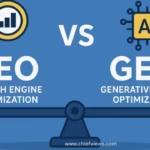
Comparison: Traditional SEO Habits vs GEO Requirements
| Area | Traditional SEO Focus | GEO Requirement |
|---|---|---|
| Primary Goal | Rank and drive clicks | Appear inside the answer |
| Content Structure | Keyword coverage, length | Answer-first passages, extractable units |
| Trust Signals | Backlinks | Named evidence + third-party mentions |
| Measurement | Rankings, organic traffic | Citation rate, share of model |
| Cadence | Quarterly content refreshes | Monthly prompt tracking + faster updates |
| Success Metric | Position and sessions | Being named as a source |
CMO strategy for AI visibility and generative engine optimization The table makes the shift concrete. You still need the technical foundations of SEO. You simply cannot stop there.
For deeper reading on the structural changes CMOs face, see IBM’s practical GEO playbook for marketing leaders. Ahrefs continues to publish large-scale studies on AI Overview behavior and citation patterns that are worth tracking. Google’s own May 2026 guidance on optimizing for generative AI features remains the clearest official statement available.
Key Takeaways
- CMO strategy for AI visibility and generative engine optimization is now a core growth lever, not an experimental side project.
- Answer-first structure, specific evidence, and entity consistency deliver the most reliable gains.
- Third-party mentions on trusted platforms still outweigh pure on-site optimization.
- Measurement must move from rankings to a fixed set of buyer questions tracked across engines.
- Start with an audit and five high-value page rewrites rather than a full content overhaul.
- Treat the work as cross-functional; SEO alone cannot carry it.
- Freshness and narrative consistency keep you in the model’s working set longer.
CMO strategy for AI visibility and generative engine optimization The brands that treat AI answers as a distribution channel rather than a threat are already compounding an advantage. Pick twenty real buyer questions this week. See where you stand. Then close the biggest gaps first. That single move turns theory into a working CMO strategy for AI visibility and generative engine optimization.
FAQs
What is the fastest way to improve a CMO strategy for AI visibility and generative engine optimization?
Start with the answer-first rewrite of your five highest-intent pages and a clean entity audit. Those two moves usually surface measurable citation gains within 60–90 days.
How does generative engine optimization differ from classic SEO for CMOs?
SEO still gets you indexed and ranked. GEO focuses on whether the model lifts and names your content inside the final answer. Both are required; neither is optional in 2026.
Should every piece of content be optimized for AI visibility?
No. Prioritize the questions closest to revenue—comparisons, “best for” queries, pricing objections, and implementation questions. Informational content can support the system but rarely drives the same pipeline impact.

