







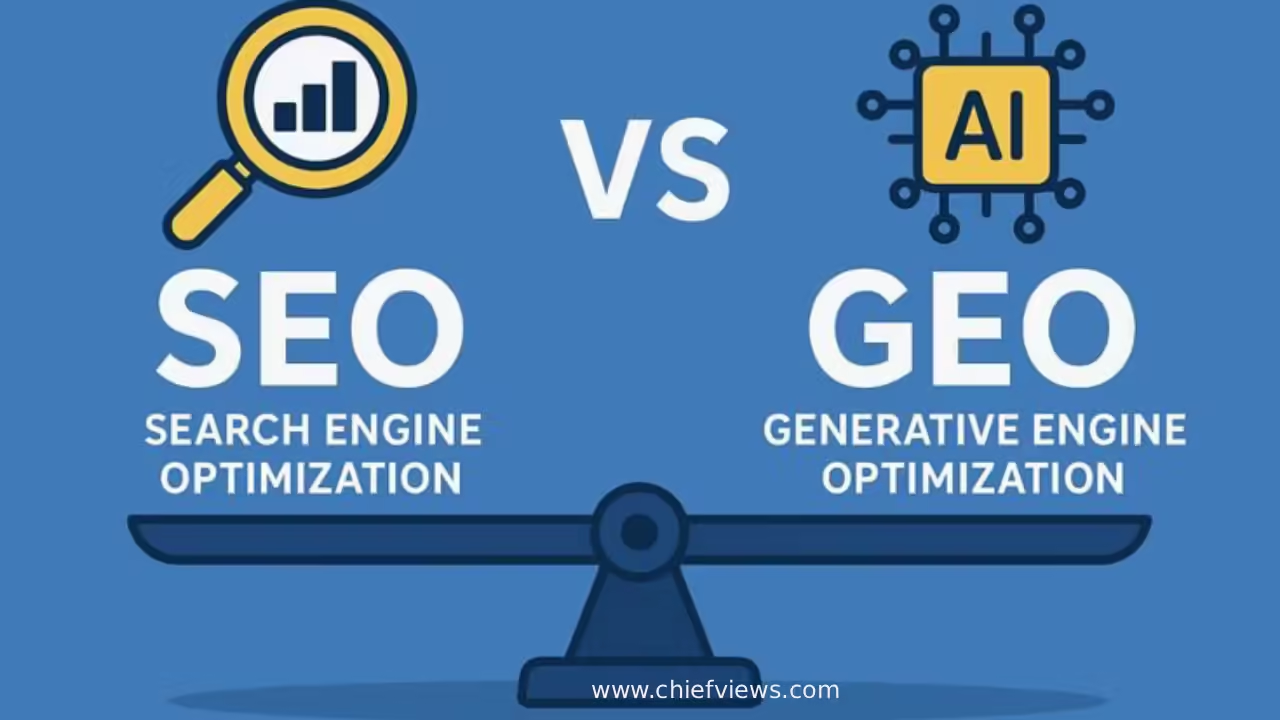
Generative engine optimization vs traditional SEO comes down to one hard truth: ranking on page one no longer guarantees you show up when buyers actually make decisions. Traditional SEO still gets your pages found. Generative engine optimization (GEO) decides whether large language models quote, recommend, or ignore you inside the answer itself.
Here’s the practical difference in plain terms:
- Traditional SEO optimizes for rankings, clicks, and traffic through keywords, links, and technical signals.
- GEO optimizes for citation and recommendation inside AI answers from ChatGPT, Perplexity, Gemini, and Google AI Overviews.
- The two work together, but the metrics, content structure, and success signals have shifted.
- Brands that only chase rankings are increasingly invisible at the moment of consideration.
- CMOs who treat both as connected systems pull ahead faster than those treating GEO as an add-on.
The rest of this piece breaks down the real operational gaps and shows where to put your effort.
The Core Shift in How Discovery Works
For two decades the game was straightforward. Rank higher, earn the click, convert the visitor. That model still exists, but AI answers now sit in front of many high-intent queries. Users get a synthesized response and often never leave the interface. Zero-click behavior has accelerated, and the pages that feed those answers are selected by different criteria than classic ranking algorithms.
Traditional SEO still matters for crawlability, indexation, and relevance signals. Google itself has stated that its generative features remain rooted in core search systems. Yet the extraction layer is different. Models pull discrete, attributable fragments—clear definitions, dated statistics, named expert quotes—and reassemble them. A well-ranked page written in flowing narrative style can lose to a lower-ranked page that delivers clean, liftable claims.
In my experience the teams that adapt fastest stop treating SEO and GEO as competing priorities. They treat traditional SEO as the foundation and GEO as the layer that converts visibility into actual recommendation.

Side-by-Side Comparison
| Dimension | Traditional SEO | Generative Engine Optimization (GEO) |
|---|---|---|
| Primary Goal | Rank and drive clicks | Be named and cited inside the AI answer |
| Content Priority | Keyword coverage, comprehensive length | Answer-first passages, extractable units, evidence |
| Trust Signals | Backlinks, domain authority | Named sources, third-party mentions, entity consistency |
| Structure Preference | Headings, internal links, readable flow | Short declarative blocks that stand alone |
| Measurement | Rankings, organic traffic, conversions | Citation rate, brand mention rate, share of model |
| Freshness Cadence | Quarterly or semi-annual refreshes | More frequent updates on high-value answer pages |
| Success Signal | Position and sessions | Appearing as a recommended or cited source |
Generative engine optimization vs traditional SEO The table shows the practical trade-offs. You still need the technical and relevance foundations of traditional SEO. You simply cannot stop once the page ranks.
Where Traditional SEO Still Wins
Technical health remains non-negotiable. Pages that cannot be crawled or rendered cleanly never reach the models. Structured data, clean HTML, fast loading, and proper indexation continue to matter. Strong organic rankings also correlate with longer-lasting citations in Google’s own AI features. Ranking anywhere for a target question still improves the odds of being pulled into AI Overviews and AI Mode.
Backlinks retain value as authority signals, though their influence is diluted when models cross-check multiple sources. Keyword research remains useful for mapping the questions people actually ask. The difference is that those keywords now feed a prompt portfolio rather than a pure ranking target list.

Where GEO Demands Different Habits
Generative engine optimization vs traditional SEO Answer-first writing becomes mandatory. Open important sections with the direct response in 40–70 words, then expand. Models prefer passages they can lift without heavy rewriting.
Evidence density rises in priority. Specific statistics with clear attribution, named expert or customer quotes, and primary-source citations consistently outperform vague claims. The original Princeton GEO research quantified this: expert quotations, statistics addition, and citing sources delivered the strongest visibility lifts.
Entity consistency moves from nice-to-have to required. Conflicting descriptions of your brand across owned sites, profiles, and third-party pages create doubt for models that map relationships. Clean Organization schema, consistent NAP data, and aligned knowledge signals reduce that friction.
Third-party validation carries heavier weight. Mentions on Reddit, review platforms, analyst reports, and high-authority publications frequently appear in citations. Owned content alone is rarely enough.
Measurement changes. Traffic and average position remain useful, but they no longer tell the full story. Fixed prompt sets tracked monthly across engines reveal whether you are actually present in the answers that matter.
Building a Connected Approach
Generative engine optimization vs traditional SEO A practical sequence works better than trying to overhaul everything at once.
Start with an audit of 20–30 high-intent buyer questions. Run them through the major AI interfaces and record whether you appear, how you are described, and which competitors are named. This baseline immediately surfaces the gap between ranking performance and AI visibility.
Next, protect the technical foundation. Confirm AI crawlers are allowed, pages render cleanly, and indexation is healthy. Traditional SEO hygiene still prevents the most basic failures.
Then rewrite the highest-value pages with extractability in mind. Lead with the answer. Insert dated, sourced facts. Add one clean expert or customer quote. Strip filler language that models cannot easily use.
Layer in entity cleanup and selective third-party outreach. Align brand descriptions everywhere they appear. Target the non-owned domains that already surface in your category answers.
Generative engine optimization vs traditional SEO Finally, install a simple monthly scorecard. Re-run the same prompt set. Track citation presence and sentiment. Adjust based on what the data shows rather than assumptions.
This sequence connects traditional SEO strengths with GEO requirements without forcing teams to abandon proven practices. For a full executive-level framework on how marketing leaders should organize this work, see the detailed CMO strategy for AI visibility and generative engine optimization.
Common Mistakes Teams Make
Generative engine optimization vs traditional SEO Treating GEO as a pure content rewrite exercise while ignoring crawl access and entity signals. Models cannot cite what they cannot reliably retrieve or trust.
Chasing every possible prompt instead of prioritizing questions closest to revenue. Informational volume looks impressive on reports but rarely moves pipeline the way comparison and solution queries do.
Measuring only AI referral traffic. Attribution remains incomplete. Citation rate and brand mention frequency give a clearer picture of presence.
Assuming traditional rankings will automatically translate into AI citations. They help, but they do not guarantee extraction or recommendation.
Refreshing content on the old quarterly calendar. High-value answer pages benefit from tighter update cycles that keep numbers and claims current.
Key Takeaways
- Generative engine optimization vs traditional SEO is not an either-or choice. Traditional SEO builds the foundation; GEO determines whether you appear inside the answers.
- Answer-first structure, specific evidence, and entity consistency are the highest-leverage content changes.
- Measurement must expand beyond rankings and traffic to include citation rate across fixed buyer prompts.
- Third-party mentions on trusted platforms still outweigh pure on-site optimization for many queries.
- Start with a prompt audit and five high-value page rewrites rather than a full site overhaul.
- Keep technical SEO healthy—crawlability and indexation remain prerequisites.
- Treat the work as connected systems under CMO ownership rather than a siloed SEO experiment.
Generative engine optimization vs traditional SEO The brands that treat AI answers as a distribution channel rather than a threat are already compounding an advantage. Rankings still matter. Being the source the model chooses to quote matters more when the decision happens inside the answer. Map your highest-intent questions this week, compare ranking performance against actual AI presence, and close the largest gaps first. That single diagnostic turns the comparison into a working plan.
FAQs
Is generative engine optimization replacing traditional SEO?
No. Traditional SEO remains essential for crawlability, relevance, and ranking signals. GEO builds on those foundations to improve the odds of being extracted and cited inside AI answers.
Which should CMOs prioritize first—rankings or AI citations?
Protect the technical and relevance foundations first, then shift effort toward extractable content and third-party signals on the questions closest to revenue. Both matter; sequence determines speed of results.
How long does it take to see results from GEO efforts?
Entity cleanup and answer-first rewrites on priority pages often produce measurable citation changes within 60–90 days. Broader authority work and consistent measurement compound over longer periods.

