




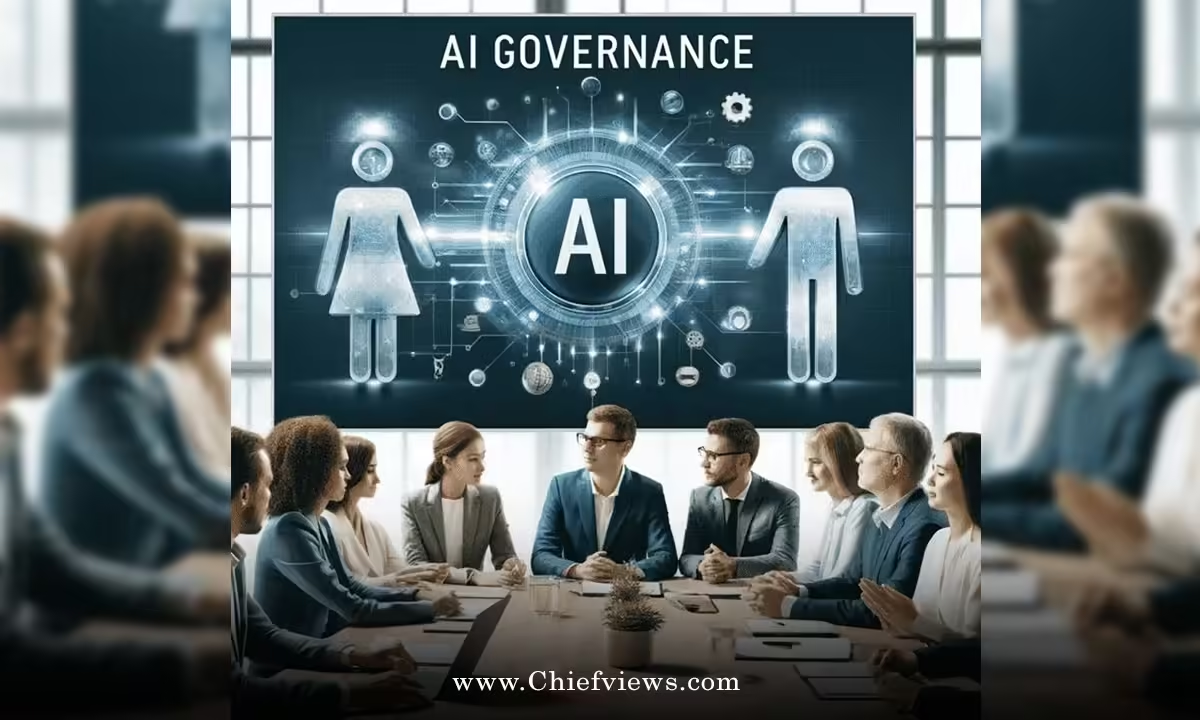
AI governance and compliance frameworks for enterprise IT are no longer a nice-to-have—they’re the backbone of deploying AI responsibly in your business. Imagine you’re piloting a massive ship through foggy waters; without clear rules and navigation tools, you’re risking collisions with icebergs like data breaches, biased algorithms, or hefty regulatory fines. As enterprises race to integrate AI into everything from customer service chatbots to predictive analytics, getting these frameworks right isn’t just about ticking boxes—it’s about unlocking AI’s full potential while sleeping soundly at night. In this deep dive, we’ll unpack what AI governance and compliance frameworks for enterprise IT really mean, why they matter, and how you can build one that scales with your operations.
Why AI Governance and Compliance Frameworks for Enterprise IT Are Non-Negotiable
Let’s face it: AI is transforming enterprise IT faster than a caffeinated coder on deadline. But with great power comes great responsibility. You’ve got generative models churning out reports, machine learning optimizing supply chains, and neural networks spotting fraud in real-time. Without solid AI governance and compliance frameworks for enterprise IT, you’re basically handing your company a loaded gun.
The Rising Stakes in Enterprise AI Adoption
Think about the numbers. By 2026, over 80% of enterprises will deploy AI in at least one function, according to industry forecasts. Yet, scandals like biased hiring algorithms or hallucinating chatbots have made headlines, eroding trust. AI governance and compliance frameworks for enterprise IT step in here, ensuring your tech doesn’t just work—it works ethically and legally.
Rhetorically speaking, what happens when your AI misfires? Fines from GDPR can hit 4% of global revenue, and the EU’s AI Act classifies high-risk systems with strict oversight. In the US, NIST’s AI Risk Management Framework is becoming the de facto standard. These aren’t abstract threats; they’re boardroom nightmares waiting to happen if you skip proper frameworks.
Balancing Innovation with Risk in Enterprise IT
Here’s an analogy: AI in enterprise IT is like fire in a kitchen—cook up amazing meals, but let it rage unchecked, and your house burns down. AI governance and compliance frameworks for enterprise IT provide the fire alarms, extinguishers, and chef’s handbook. They help you innovate boldly while mitigating risks like data privacy leaks or algorithmic discrimination.
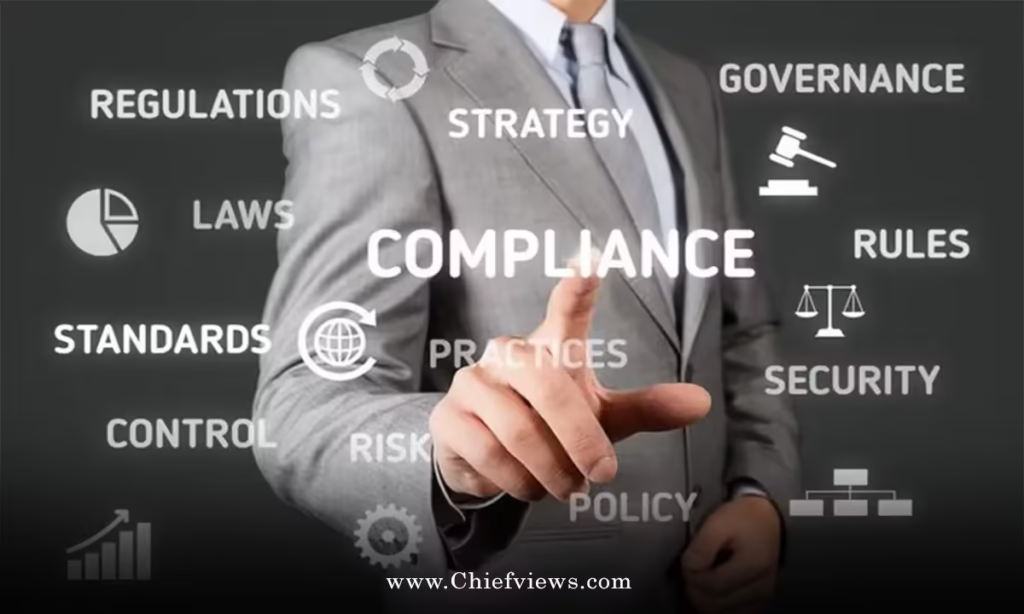
Core Components of AI Governance and Compliance Frameworks for Enterprise IT
Diving deeper, let’s break down what makes AI governance and compliance frameworks for enterprise IT tick. It’s not one-size-fits-all; it’s a customizable toolkit tailored to your IT ecosystem.


Establishing Clear Policies and Standards
Start with policies—the North Star of any framework. Define what AI can and can’t do in your enterprise IT setup. For instance, mandate human oversight for high-stakes decisions, like loan approvals. Use active voice: You set rules on data sourcing, model training, and deployment.
Sub-policies cover ethics: Ban biased training data and require fairness audits. Compliance ties into regs like CCPA or HIPAA. Make it conversational—imagine telling your team, “Hey, before we launch that AI tool, does it play nice with our privacy laws?”
Risk Assessment and Management Strategies
No framework survives without risk assessment. Categorize AI use cases: low-risk (recommendation engines) vs. high-risk (autonomous vehicles in logistics). Tools like NIST’s playbook help score risks on impact and likelihood.
In practice, conduct regular audits. Metaphor time: It’s like a car inspection before a cross-country drive. AI governance and compliance frameworks for enterprise IT demand ongoing monitoring—deploy anomaly detection to flag drifting models.
Tools and Technologies for Risk Mitigation
Leverage platforms like IBM Watson OpenScale or Google Cloud’s AI Platform for built-in governance. These automate compliance checks, ensuring your enterprise IT stays audit-ready.
Roles, Responsibilities, and Accountability
Who’s in charge? Assign a Chief AI Officer or governance board. Use RACI matrices: Responsible for devs, Accountable for execs. This clarity prevents “not my job” finger-pointing when issues arise.
Implementing AI Governance and Compliance Frameworks for Enterprise IT: A Step-by-Step Guide
Ready to roll up your sleeves? Implementing AI governance and compliance frameworks for enterprise IT doesn’t have to be a Herculean task. Here’s your roadmap, broken into actionable steps.
Step 1: Assess Your Current AI Landscape
Map every AI tool in your enterprise IT stack. Inventory models, data flows, and integrations. Ask: Where’s the AI? What’s it touching? Tools like Collibra or Alation shine here for data catalogs.
Step 2: Design Your Framework Blueprint
Craft a blueprint inspired by global standards. Blend ISO 42001 for AI management systems with your industry’s nuances—finance might prioritize SEC rules, healthcare HIPAA.
Customizing for Enterprise Scale
For big orgs, federate governance: Central policies with divisional tweaks. Ensure scalability—cloud-native frameworks handle hybrid IT environments seamlessly.
Step 3: Integrate Governance into DevOps Pipelines
Embed checks in CI/CD. Use MLOps platforms like Kubeflow to automate testing for bias and compliance. Picture this: Code pushes trigger governance gates, halting non-compliant deploys.
Step 4: Train Your Teams and Foster a Culture
Training isn’t a checkbox—it’s a mindset shift. Run workshops: “How does this AI decision impact users?” Gamify it with simulations. AI governance and compliance frameworks for enterprise IT thrive on buy-in.
Step 5: Monitor, Audit, and Iterate
Set up dashboards for real-time metrics: model performance, compliance scores. Annual third-party audits build trust. Iterate based on lessons—post-mortems turn failures into fortresses.
Navigating Regulations in AI Governance and Compliance Frameworks for Enterprise IT
Regulations are evolving faster than AI itself. How do you stay ahead?
Global Regulatory Landscape
EU AI Act tiers systems by risk—your enterprise IT AI might fall under “high-risk,” demanding transparency. In the US, Biden’s AI Executive Order pushes voluntary frameworks, but states like California mandate disclosures.
Link to authority: Dive into the NIST AI Risk Management Framework for US-centric guidance.
Industry-Specific Compliance
Finance? Basel III weaves AI into risk models. Healthcare? FDA’s AI/ML software as medical device rules apply. Tailor your AI governance and compliance frameworks for enterprise IT to these niches.
Challenges and Solutions in Building AI Governance and Compliance Frameworks for Enterprise IT
Every framework hits bumps. Let’s troubleshoot.
Common Pitfalls and How to Dodge Them
Pitfall one: Overly rigid rules stifling innovation. Solution: Agile governance—pilot sandboxes for experimentation.
Pitfall two: Siloed teams. Break barriers with cross-functional AI councils.
Overcoming Resource Constraints
Start small: Bootstrap with open-source like OpenAI’s moderation API. Scale as ROI proves out—governance cuts breach costs by 30%, per studies.
Analogy: It’s like gym training; consistency beats intensity. Link up with experts via Gartner’s AI Governance Insights.
The Future of AI Governance and Compliance Frameworks for Enterprise IT
Peering ahead, quantum-safe encryption and explainable AI (XAI) will dominate. Expect decentralized governance via blockchain for audit trails. Enterprises adopting now lead the pack.
What if your competitors lag? You’ll outpace them ethically and efficiently. Proactive AI governance and compliance frameworks for enterprise IT position you as the trusted innovator.
Link for forward-thinking: Explore World Economic Forum’s AI Governance Alliance.
Conclusion
Wrapping it up, AI governance and compliance frameworks for enterprise IT are your secret sauce for safe, scalable AI adoption. We’ve covered why they’re essential, core components, implementation steps, regulations, challenges, and future trends. Don’t wait for a crisis—build yours today. You’ll protect your business, build stakeholder trust, and unleash AI’s true power. Ready to govern like a pro?
Frequently Asked Questions (FAQs)
What are the key benefits of implementing AI governance and compliance frameworks for enterprise IT?
They minimize risks like fines and biases, ensure regulatory adherence, and boost AI reliability, letting your enterprise IT innovate confidently.
How do I start building AI governance and compliance frameworks for enterprise IT in my organization?
Begin with an AI inventory, draft policies aligned to NIST or ISO, and integrate into DevOps—scale from there with team training.
Which regulations impact AI governance and compliance frameworks for enterprise IT most?
EU AI Act, GDPR, NIST frameworks, and industry-specific rules like HIPAA shape them, demanding risk-based approaches.
Can small enterprises afford AI governance and compliance frameworks for enterprise IT?
Absolutely—use open-source tools and phased rollouts to keep costs low while reaping high ROI in risk reduction.
How often should I audit AI governance and compliance frameworks for enterprise IT?
Quarterly for high-risk systems, annually for others, with continuous monitoring to catch drifts early.