




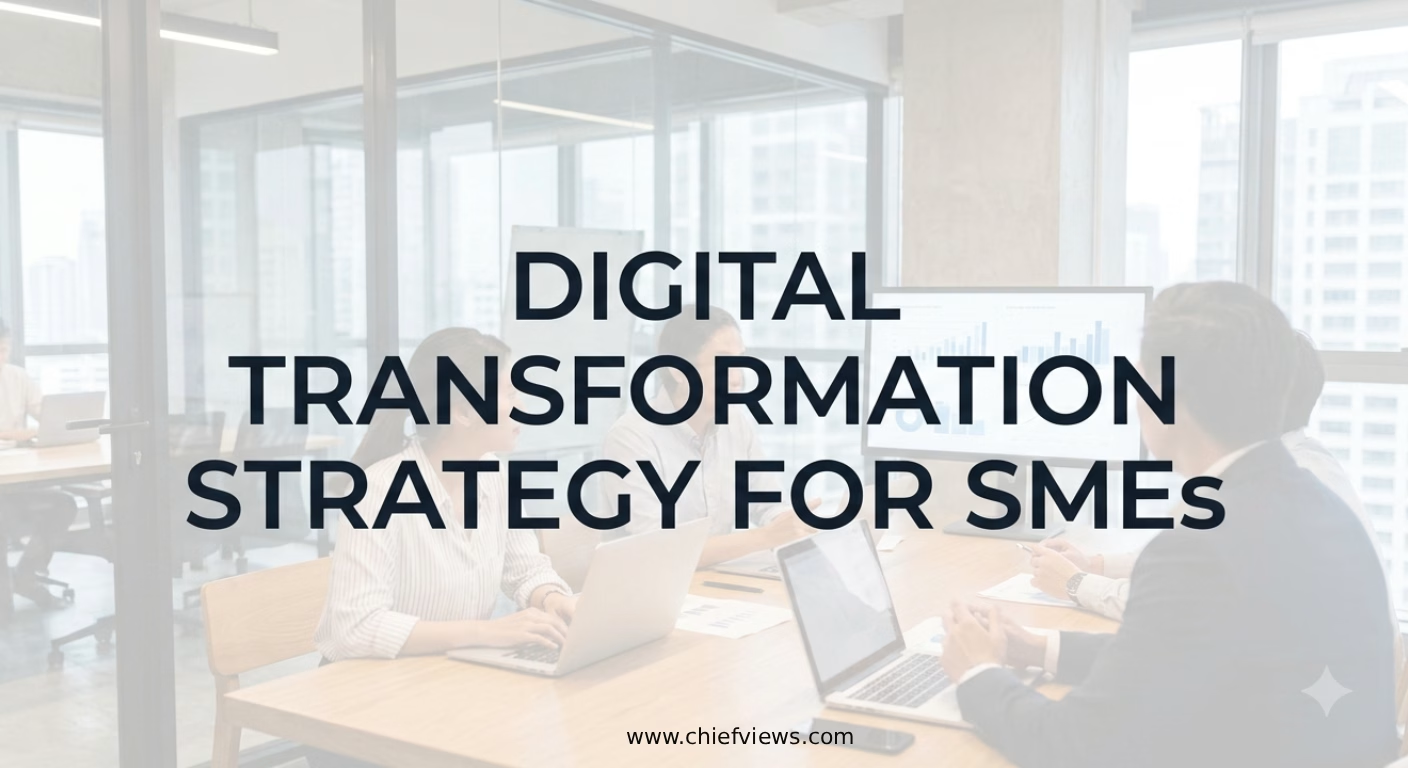
Digital transformation strategy for SMEs is not about buying every new tool on the market. It is about using the right technology to save time, improve service, and help your business grow without creating chaos.
If you run an SME, you already know the pressure: tighter budgets, lean teams, and customers who expect fast, smooth service. The good news is that digital transformation does not have to be complicated. In this article, we’re going to be taking a look at digital transformation strategy for SMEs, and how you can build a smarter business step by step. If you would like to find out more, feel free to read on.
Pic – CC0 License
What a digital transformation strategy for SMEs really means
A digital transformation strategy for SMEs is a clear plan for how your business will use digital tools to work better. That could mean moving from paper to cloud software, automating repeat tasks, improving customer communication, or using data to make better decisions.
The key word is strategy. Without one, businesses often end up with disconnected tools, confused teams, and little return on investment. A good strategy keeps every tech choice tied to a business result.
For SMEs, the best starting point is usually not “What is the newest technology?” but “What problem are we trying to solve?” That question keeps your spending focused and your team aligned.


Start with business pain points
The strongest digital transformation strategy for SMEs starts with a simple review of what is slowing your business down. Look at the places where time, money, or customer trust is being lost.
Common pain points include:
- Manual invoicing or admin work
- Slow customer response times
- Poor visibility over stock, sales, or cash flow
- Too much reliance on spreadsheets
- Repetitive tasks that take skilled staff away from higher-value work
Once you know the pain points, you can match them to the right tools. For example, a cloud-based CRM may help your sales team, while accounting software may save hours in finance. According to the OECD, SMEs benefit most when digital support is tied to clear business needs, not generic tech adoption.[2]
Build the strategy in phases
One of the biggest mistakes SMEs make is trying to change everything at once. A better digital transformation strategy for SMEs is phased and realistic.
A simple sequence looks like this:
- Assess your current setup
Review your systems, processes, and team skills so you know where you stand. - Set clear goals
Define what success looks like, such as faster billing, lower admin costs, or better customer retention. - Choose a few high-impact tools
Start small with software that solves one problem well, rather than launching a huge overhaul. - Train your people
Even the best tool fails if your team does not know how to use it well. - Measure and improve
Track results, learn from what works, and adjust as you go.
This phased approach is strongly supported in SME guidance from sources such as the World Economic Forum and industry field guides, which stress incremental adoption and measurable outcomes.[6][4]
Focus on cloud, automation, and data
For most SMEs, the most practical digital wins come from three areas: cloud tools, automation, and better use of data.
Cloud software gives you flexibility and reduces the need for heavy upfront infrastructure. Automation saves time on routine work like reminders, approvals, and invoice processing. Better data helps you spot trends, track performance, and make decisions faster.
If you want your digital transformation strategy for SMEs to work, these three pieces should sit at the core of the plan. They are not flashy, but they create real day-to-day value.
Do not ignore cybersecurity and governance
As your business becomes more digital, your risk also increases. That is why cybersecurity should be part of the strategy from day one, not added later as an afterthought.
At a minimum, SMEs should think about:
- Strong passwords and multi-factor authentication
- Backups for important data
- Staff training on phishing and scams
- Access controls so people only see what they need
- Basic policies for using AI and other digital tools safely
This is also where AI readiness for CIOs becomes relevant. If your business is starting to use AI tools, your technology leader needs to make sure the data, systems, and controls are ready before scaling up. That connection between digital strategy and AI readiness is becoming harder to ignore, especially for growing businesses.[6][11]
Get your team involved early
Digital transformation is not only a technology project. It is a people project.
If your staff feel that new tools are being forced on them, adoption will be slow and frustrating. If they are involved early, they are more likely to support the change and spot useful improvements.
A simple way to do this is to ask managers and team members where they lose time each week, what they would automate, and what tools would actually help them work better. This creates buy-in and often reveals practical ideas that leadership would otherwise miss.

Use partners wisely
Many SMEs do not have the luxury of a large in-house tech team. That is why the right partners matter.
A good consultant, vendor, or IT partner should help you with implementation, training, and support, not just sell software. They should also explain things in plain language and tie every recommendation to a business outcome.
If you are considering more advanced tools later, especially AI-based systems, make sure your leadership team understands the basics first. A strong digital foundation makes the move toward AI much safer and much more effective.
How to measure success
If you cannot measure it, you cannot manage it. That applies to digital transformation too.
Useful metrics include:
- Time saved per task or process
- Faster response times for customers
- Lower error rates
- Higher sales conversion rates
- Reduced operating costs
- Better staff productivity
Pick a few numbers that matter most to your business and review them regularly. That way, your digital transformation strategy for SMEs stays practical instead of becoming a vague tech project.
Where to go next
We hope that you have found this article enlightening in some way and that digital transformation strategy for SMEs now feels more achievable. The smartest approach is to start with one business problem, choose one or two tools that solve it, and build from there.
If you keep your plan simple, involve your team, and measure progress carefully, you will create a business that is faster, more flexible, and better prepared for what comes next. And if your next step involves AI, your foundation will already be in much better shape for AI readiness for CIOs.