









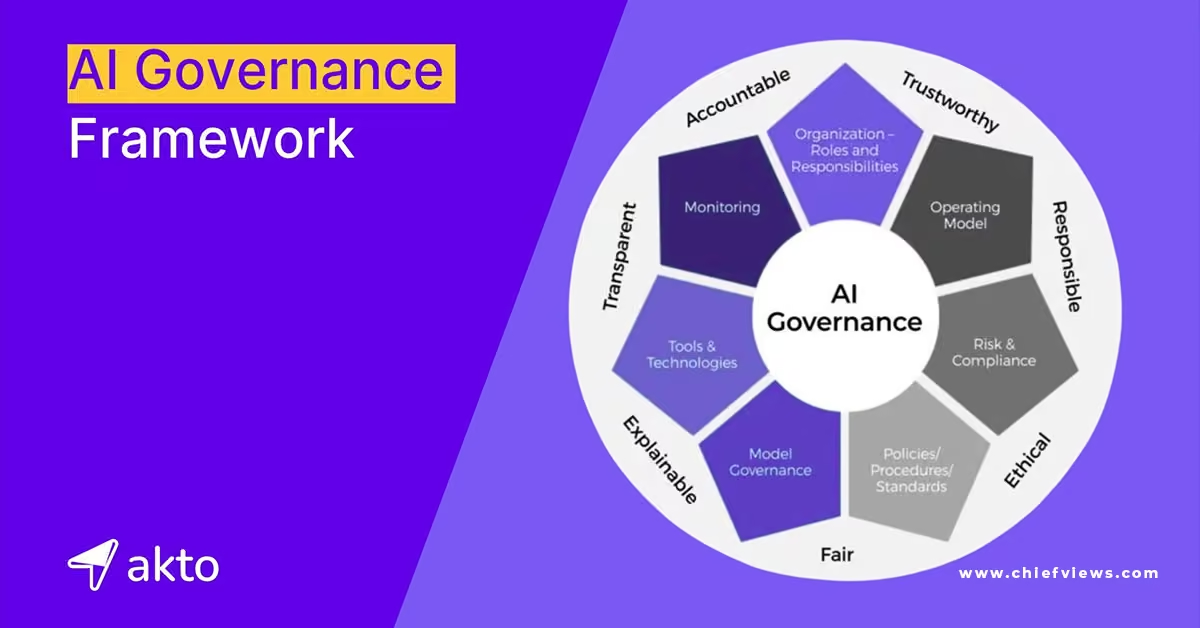
An AI governance framework for finance teams isn’t red tape. It’s the thing standing between a confident AI rollout and a compliance nightmare that lands on the CFO’s desk at 11pm.
Here’s the uncomfortable part. Finance teams are adopting AI faster than most functions in the enterprise — Deloitte’s Q2 2026 CFO Signals Survey found 93% of large organizations now use AI across key finance operations. But speed without guardrails is exactly how good pilots turn into bad headlines.
Quick Answer: What You Need to Know
- An AI governance framework for finance teams defines who approves AI use cases, how models are audited, and what happens when something goes wrong.
- 46% of CFOs name cost uncertainty or lack of transparency as their biggest internal AI concern, according to Deloitte’s Q2 2026 survey.
- NIST’s AI Risk Management Framework offers a free, voluntary structure finance teams can adapt without building governance from scratch.
- Good governance doesn’t slow innovation — it’s what gets AI past legal and audit review faster.
- This ties directly into the broader CFO guide to delivering enterprise cost savings with AI, where governance is the difference between savings that stick and pilots that quietly die.
Let’s break down how to actually build one.
Why Finance Teams Can’t Skip AI Governance in 2026
Finance data is sensitive by nature. Payment records, vendor contracts, payroll, forecasts tied to material events — none of it tolerates a “move fast and fix it later” approach.
Regulators know this too. The SEC and financial auditors increasingly expect documented controls around automated decision-making, not just around the decisions themselves. If your AI flags an anomaly in a transaction and nobody can explain why, that’s not innovation. That’s an audit finding waiting to happen.


In my experience, the teams that skip governance early almost always build it later anyway — just under worse conditions, usually after an incident forces the issue.
Core Components of an AI Governance Framework for Finance Teams
A working framework doesn’t need to be complicated. It needs to be clear, documented, and actually followed. NIST’s AI Risk Management Framework breaks this into four functions that finance teams can adapt directly: govern, map, measure, and manage risk.
Translated into plain finance-team language, here’s what that looks like in practice.
| Governance Component | What It Covers | Who Typically Owns It | Why It Matters for Cost Savings |
|---|---|---|---|
| Use-Case Approval | Which AI applications get greenlit before deployment | Finance leadership + IT risk | Prevents wasted spend on redundant or low-value tools |
| Data Access Controls | Who/what can access sensitive financial data for training or inference | CISO + Finance data owners | Avoids breach costs and regulatory fines |
| Model Audit Trail | Documentation of model decisions, especially for material transactions | Internal audit | Reduces audit prep time and dispute resolution costs |
| Human-in-the-Loop Checkpoints | Mandatory human review for high-stakes or high-value decisions | Finance operations managers | Catches errors before they become costly write-offs |
| Vendor Risk Review | Evaluation of third-party AI tools before procurement | Procurement + Legal | Prevents shadow-AI sprawl that quietly drains budget |
Notice the last column. Every governance component ties back to cost control, not just compliance theater. That’s the connection most teams miss.
Step-by-Step: Building an AI Governance Framework for Finance Teams
If you’re starting from zero, don’t try to govern everything at once. Build it the way you’d build any internal control — incrementally, with ownership attached to each piece.
- Inventory every AI tool currently touching finance data. You’d be surprised how much shadow AI is already running through expense tools, chat assistants, and spreadsheet plugins.
- Assign a governance owner — not a committee. Committees stall decisions. One accountable leader moves faster and owns outcomes.
- Classify use cases by risk level. A chatbot drafting internal memos is low-risk. A model approving vendor payments is high-risk. Treat them differently.
- Document approval criteria before the next tool purchase. Retrofitting governance onto existing tools is painful; build the gate before new ones arrive.
- Set audit-trail requirements for anything touching material financial decisions. If your auditors can’t trace a decision, regulators won’t accept “the AI did it” as an explanation.
- Train frontline finance staff on escalation paths. They need to know when to flag an odd AI output, not just trust it blindly.
- Review and update quarterly. AI tools change fast. A governance framework frozen in 2025 won’t cover what’s deployed by mid-2026.
This sequence matters more than any specific software you buy. Governance is a discipline, not a product.
Common Mistakes & How to Fix Them
Mistake 1: Building governance after deployment, not before. Fix: Require governance sign-off as a procurement gate, not an afterthought.
Mistake 2: Treating governance as purely a legal/compliance function. Fix: Give finance operational ownership — legal advises, finance decides and enforces.
Mistake 3: No clear risk tiering. Fix: Not every AI tool deserves the same scrutiny. Tier by financial materiality and data sensitivity.
Mistake 4: Ignoring vendor-side AI risk. Fix: Extend governance reviews to third-party tools your vendors use internally, not just your own stack.
Mistake 5: Governance documentation that nobody reads. Fix: Keep policies short, specific, and tied to real examples finance staff will actually encounter.
Governance and Cost Savings Are the Same Conversation
Here’s the thing people miss: governance isn’t the opposite of savings. It’s the mechanism that protects them.
Think of it like brakes on that race car again — the framework doesn’t slow the finance function down, it’s what lets you drive faster without flying off the track at the first sharp turn. Every CFO guide to delivering enterprise cost savings with AI eventually runs into this same truth: savings without governance are temporary, and governance without savings focus is just bureaucracy.
Key Takeaways
- An AI governance framework for finance teams defines approval, access, audit, and escalation processes — not just “AI rules.”
- 93% of large enterprises now use AI across finance operations, making governance urgent, not optional.
- 46% of CFOs cite cost uncertainty and lack of transparency as their top internal AI concern — governance directly addresses this.
- NIST’s AI Risk Management Framework offers a free, adaptable structure for building your own policy.
- Risk-tier your AI use cases; not every tool needs the same level of scrutiny.
- Shadow AI tools already in use across expense and reporting software often slip past governance entirely — audit first.
- Governance and cost savings aren’t competing priorities. Strong governance protects savings from evaporating into compliance failures.
- Review your framework quarterly. AI tooling moves faster than most annual policy cycles.
Bottom line: an AI governance framework for finance teams isn’t a bureaucratic checkbox — it’s the control layer that makes every other part of your AI cost-savings strategy defensible. Build it before your next tool purchase, not after an incident forces your hand. If you haven’t mapped out the cost-savings side yet, start with the full CFO guide to delivering enterprise cost savings with AI and work governance in from day one.
FAQs
Does an AI governance framework for finance teams slow down AI adoption?
Not when built correctly. It actually speeds approval cycles by giving legal, audit, and procurement a clear, pre-agreed structure to evaluate new tools against.
Who should own the AI governance framework for finance teams — IT or finance?
Finance should hold operational ownership since the business risk sits with finance outcomes, while IT and legal play supporting advisory roles on technical and regulatory specifics.
How often should a finance team update its AI governance policies?
Quarterly reviews are realistic given how fast AI tools and vendor offerings change — an annual review cycle is usually too slow to catch new shadow-AI risks.
