









CFO guide to delivering enterprise cost savings with AI starts with one blunt truth: most finance chiefs aren’t short on AI hype. They’re short on a repeatable way to turn it into real dollars on the P&L. Budgets are tight. Boards want proof, not pilots. And the pressure to show measurable ROI within a fiscal year has never been higher.
Here’s the thing — this isn’t a tech problem anymore. It’s a governance and prioritization problem.
Quick Answer: What This Guide Covers
- AI cost savings in finance come from automating transactional work (AP/AR, reconciliations, reporting) and sharpening forecasting accuracy.
- Gartner reports 59% of finance functions used AI in 2025, up sharply from 37% in 2023.
- Deloitte’s Q2 2026 CFO Signals Survey found 93% of CFOs at large organizations now use AI across key operations.
- Success depends less on the tool and more on data readiness, governance, and change management.
- Expect savings in cycle time, error reduction, and headcount redeployment — not just raw labor cuts.
Let’s dig into how you actually get there.
Why This CFO Guide to Delivering Enterprise Cost Savings With AI Matters Right Now
AI adoption in finance isn’t creeping anymore — it’s sprinting. McKinsey’s survey of 102 CFOs found 44% already use generative AI for finance tasks, and that number keeps climbing.
But adoption without a cost-savings framework is just expensive experimentation. I’ve watched finance teams buy three different AI tools in a single year, each solving a narrow problem, with zero integration plan. The result? Shadow IT, duplicated spend, and a CFO explaining to the board why “AI transformation” shows up as a cost center instead of savings.


The kicker is this: the companies winning right now aren’t the ones with the flashiest AI stack. They’re the ones who treated AI adoption like any other capital allocation decision — rigorous, measured, and tied to specific KPIs.
Where Enterprise Cost Savings Actually Show Up
Not every AI use case saves money the same way. Some cut cycle time. Others cut error rates. A few actually let you redeploy headcount into higher-value work instead of firing people — which, in my experience, is the version that survives budget scrutiny best.
Here’s a breakdown of where the real savings tend to land.
| Finance Function | Typical AI Use Case | Primary Savings Driver | Realistic Timeline to ROI |
|---|---|---|---|
| Accounts Payable/Receivable | Invoice matching, anomaly detection | Reduced manual processing hours, fewer duplicate payments | 3–6 months |
| FP&A / Forecasting | Predictive demand & revenue models | Fewer forecast misses, reduced over/under-staffing | 6–12 months |
| Financial Close | Automated reconciliation & variance flagging | Faster close cycle, reduced audit prep hours | 3–9 months |
| Procurement | Spend analytics & vendor risk scoring | Better contract terms, leakage detection | 6–12 months |
| Internal Audit/Compliance | Continuous transaction monitoring | Reduced fraud exposure, fewer manual audit hours | 9–18 months |
Notice something? None of these are “replace the team with a chatbot.” They’re targeted efficiency plays. That’s the realistic version of enterprise cost savings — not science fiction.

The CFO Guide to Delivering Enterprise Cost Savings With AI: Step-by-Step Action Plan
If you’re a beginner here, don’t start with the tool. Start with the problem. What I’d do if I were walking into this fresh:
- Audit your highest-friction manual processes first. Pull cycle-time and error-rate data from AP, close, and FP&A before touching any vendor demo.
- Pick one high-volume, low-complexity use case for your pilot. Invoice processing or expense categorization are classic starting points — contained risk, measurable output.
- Set a hard baseline metric before deployment. Hours spent, error rate, or days-to-close. No baseline means no proof of savings later.
- Run a 90-day pilot with a named owner. Not “the finance team” — one person accountable for tracking outcomes weekly.
- Validate data quality before scaling. Garbage in, garbage out isn’t a cliché here — it’s the single biggest reason AI pilots stall.
- Build a governance layer before expansion. Who approves new use cases? Who audits model outputs? Decide this now, not after an incident.
- Scale horizontally, not vertically. Once AP automation works, apply the same playbook to AR or procurement rather than piling complexity onto one team.
- Report savings in dollars, not “efficiency gains.” Boards fund numbers. “We saved 40 hours a week” needs to become “$X in redeployed labor cost.”
This sequence matters more than the specific vendor you choose. Tools change constantly. Discipline doesn’t.
Common Mistakes & How to Fix Them
Even sharp finance teams trip over the same handful of mistakes. I’ve seen each of these play out more than once.
Mistake 1: Treating AI as an IT project instead of a finance transformation. Fix: Put a finance leader — not just IT — in the driver’s seat for use-case selection and ROI tracking.
Mistake 2: Skipping the data cleanup phase. Fix: Budget time and headcount for data standardization before deployment. It’s unglamorous, but it’s where most projects actually die.
Mistake 3: Measuring adoption instead of outcomes. Fix: Track dollars saved or hours redeployed, not “number of users logged in.”
Mistake 4: Ignoring change management. Fix: Get frontline finance staff involved early. Resistance kills more AI rollouts than bad technology ever does.
Mistake 5: No governance until something breaks. Fix: Build audit trails and approval workflows during the pilot, not after a compliance headache forces your hand.
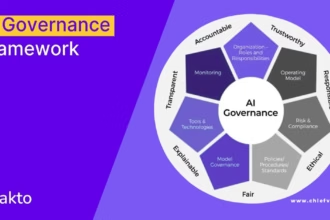
A CFO Guide to Delivering Enterprise Cost Savings With AI: Governance Framework Basics
Governance sounds boring until the first AI-driven error hits a regulatory filing. Then it’s the only thing anyone wants to talk about.
At minimum, build three guardrails: a model-review process, a human-in-the-loop checkpoint for material decisions, and a documented audit trail for every automated transaction. Deloitte’s research into AI cost governance found this exact gap — many CFOs admit their organizations lack formal cost-governance structures for AI spend, even as adoption accelerates.
Think of governance like brakes on a race car. Nobody buys a faster engine to go slower — but without brakes, you’re not winning the race, you’re just crashing earlier.
Measuring ROI: What Good Looks Like
Beginners often ask: how fast should I expect payback? Realistically, transactional automation (AP, expense processing) often shows measurable savings within one to two quarters. Forecasting and strategic use cases take longer — six to twelve months isn’t unusual before the numbers are clean enough to present confidently.
Is that slower than the vendor pitch promised? Almost always. Is it still worth doing? Also almost always — if you picked the right use case to begin with.
Key Takeaways
- A CFO guide to delivering enterprise cost savings with AI should start with process audits, not tool selection.
- Adoption is already mainstream: Gartner found 59% of finance functions used AI in 2025, up from 37% in 2023.
- Deloitte’s Q2 2026 data shows 93% of large-company CFOs now use AI across key operations — adoption is no longer the differentiator, execution is.
- The clearest early wins sit in AP/AR automation, reconciliation, and anomaly detection.
- Governance and data quality determine whether savings materialize or evaporate into failed pilots.
- Measure dollars and hours redeployed — not login counts or “engagement.”
- Scale proven use cases horizontally across similar functions rather than stacking complexity in one team.
- Change management isn’t optional. Teams that skip it see adoption stall regardless of tool quality.
Bottom line: delivering real enterprise cost savings with AI isn’t about chasing the newest model release. It’s about disciplined prioritization, clean data, and governance that catches problems before the board does. Start small, measure relentlessly, and scale what actually works. If you’re building your 2026 roadmap right now, your next move is simple — pick one high-volume manual process, set a baseline this quarter, and run a contained 90-day pilot before committing to anything bigger.
FAQs
Does a CFO guide to delivering enterprise cost savings with AI require a big tech budget to start?
No. The most effective pilots often target a single manual process like invoice matching, which needs modest investment compared to enterprise-wide platform rollouts.
How long before AI-driven cost savings show up on the income statement?
Transactional automation like AP processing can show measurable savings within one to two quarters, while forecasting and strategic use cases typically take six to twelve months to validate.
What’s the biggest risk CFOs overlook when pursuing AI cost savings?
Weak data governance. Without clean, standardized data and clear audit trails, AI outputs become unreliable fast, and savings claims won’t survive scrutiny from the board or auditors.
