




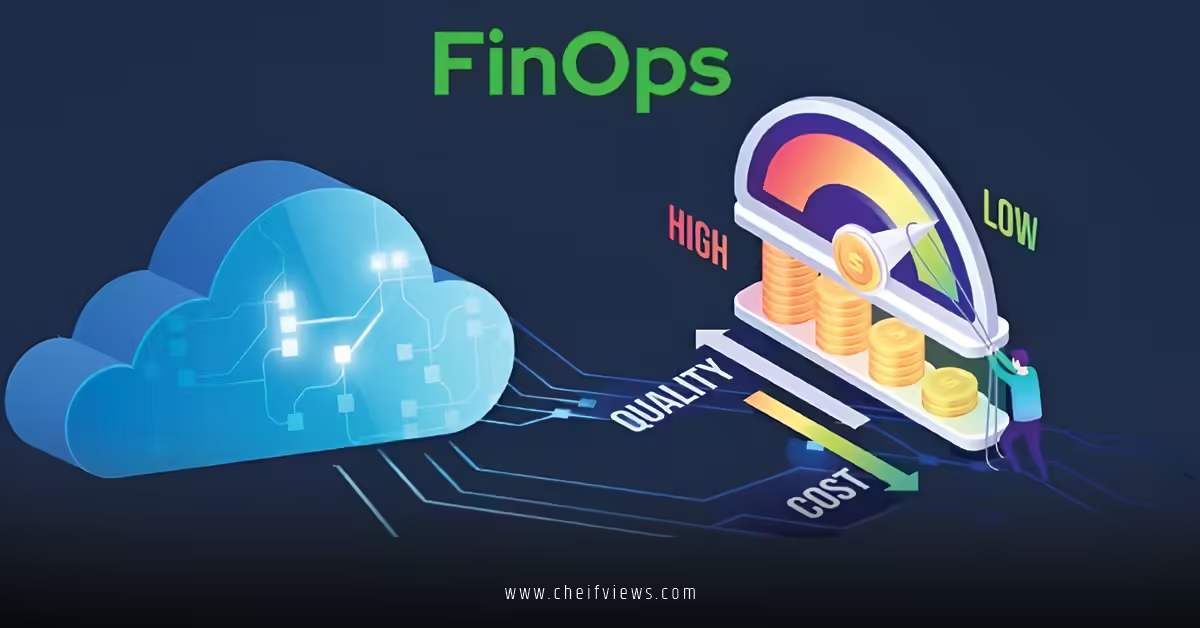
Cloud FinOps Best Practices 2026 separate organizations that treat cloud like a strategic asset from those drowning in surprise bills. With AI workloads exploding and multi-cloud setups the norm, FinOps has evolved from nice-to-have to non-negotiable.
It’s the operating model that brings finance, engineering, and business teams together to maximize value while keeping costs under control.
- Real-time visibility wins: Granular tagging and dashboards replace monthly reports.
- AI-driven optimization: Automation handles rightsizing and anomaly detection at scale.
- Unit economics focus: Every dollar ties to business outcomes, not just raw spend.
- Expanded scope: SaaS, licensing, private cloud, and data centers now fall under FinOps.
- Executive ownership: 78% of practices report into CTO/CIO orgs.
Cloud FinOps Best Practices 2026 deliver 20-40% savings when executed well. Here’s how seasoned teams make it stick.
Why Cloud FinOps Matters More Than Ever in 2026
Cloud waste hovers around 29% despite maturing practices. AI experiments turned production workloads drive unpredictable spend. Regulations around sustainability reporting add pressure.
The kicker? Teams with strong FinOps see faster innovation because they stop wasting cycles on inefficient resources.
In my experience, organizations that treat FinOps as a culture shift outperform those chasing one-off cleanups by a mile. What usually happens otherwise? Costs creep back up within quarters.

Core Cloud FinOps Best Practices 2026
Build Cross-Functional Teams
Central FinOps team plus product owners who feel the cost impact. Collaboration beats silos.
Achieve Granular Visibility
Enforce tagging from day one. Use tools for real-time allocation across clouds and teams. Showback or chargeback models drive accountability.
Implement Continuous Optimization
Rightsize instances automatically. Leverage spot instances for tolerant workloads. Schedule non-prod environments to shut down.
Adopt Unit Economics
Move beyond total spend to cost-per-feature or cost-per-user metrics. This aligns tech decisions with revenue.
Leverage Automation and AI
AI agents predict and act on anomalies. Policy-as-code prevents waste. Commitment management (RIs, Savings Plans) gets smarter.
Focus on Business Value
Tie every optimization to outcomes. Avoid blind cost-cutting that hurts performance or velocity.
Expand Beyond Public Cloud
Apply principles to SaaS, on-prem, and AI infrastructure.
Comparison Table: Traditional Cloud Management vs. 2026 FinOps
| Aspect | Traditional Approach | Cloud FinOps Best Practices 2026 | Typical Results |
|---|---|---|---|
| Visibility | Monthly reports | Real-time, tagged, multi-cloud dashboards | 2-3x faster issue detection |
| Optimization Cadence | Quarterly reviews | Continuous + automated | 25-40% lower waste |
| Team Structure | Finance owns costs | Cross-functional ownership | Higher engineering engagement |
| Decision Framework | Cost minimization | Unit economics & business value | Better ROI on cloud investments |
| AI/Workload Handling | Manual tracking | AI-powered forecasting and governance | Handles unpredictable spend |
| Scope | Public cloud only | Cloud + SaaS + licensing + data centers | Comprehensive control |
Step-by-Step Action Plan for Beginners
- Assess Current State (2-4 weeks): Map all cloud spend. Identify biggest waste areas and tagging gaps.
- Assemble the Team: Pull in finance, engineering leads, and a FinOps champion. Get executive buy-in early.
- Establish Visibility: Implement robust tagging policy and centralized dashboards. Start with high-impact accounts.
- Set Policies and Automation: Define rules for rightsizing, scheduling, and commitments. Roll out initial automations.
- Introduce Showback/Chargeback: Make teams see their costs. Tie to budgets or OKRs.
- Monitor, Iterate, Expand: Run regular business reviews. Measure unit economics. Extend to AI workloads and SaaS.
What I’d do if kicking this off for a mid-sized company? Prioritize visibility and quick wins on idle resources first. That builds momentum and credibility fast.
Common Mistakes & How to Fix Them
Mistake 1: Treating FinOps as a tool project. Fix: Build culture and processes first. Tools support people, not the other way around.
Mistake 2: Focusing only on cost cuts. Fix: Always measure impact on velocity and reliability. Use unit economics as your North Star.
Mistake 3: Poor tagging hygiene. Fix: Automate enforcement and make it part of CI/CD pipelines.
Mistake 4: Ignoring emerging areas like AI. Fix: Build governance for GPU spend and inference costs early.
Mistake 5: Siloed execution. Fix: Connect deeply with CIO strategies for cloud migration and cost optimization for holistic results that align migration waves with ongoing FinOps maturity.
Cloud FinOps Best Practices 2026 in Practice
Leaders turn to the FinOps Foundation for evolving standards. For practical implementation stories, check resources from nOps. Broader CIO perspectives come via industry reports on State of FinOps 2026.
Key Takeaways
- Cloud FinOps Best Practices 2026 emphasize real-time visibility, automation, and cross-team ownership.
- Unit economics beat raw cost metrics for sustainable decisions.
- AI changes everything—govern it aggressively from the start.
- Continuous optimization trumps periodic cleanups.
- Tagging and policy-as-code prevent waste at scale.
- Executive alignment multiplies impact.
- Expand scope beyond core cloud to capture full value.
- Culture eats tools for breakfast—invest in people and processes.
Cloud FinOps Best Practices 2026 turn cloud spend from a black hole into a predictable, value-driving investment. Nail the fundamentals and your organization moves faster with clearer financial confidence.
Ready to level up? Start with a spend audit this week and map your biggest opportunities against the practices above. Strong FinOps separates survivors from leaders in the AI era.
FAQs
What are the top Cloud FinOps Best Practices 2026 organizations should adopt first?
Prioritize real-time visibility with tagging, cross-functional teams, and automated rightsizing. These deliver quick wins and build momentum.
How does FinOps connect to broader CIO strategies for cloud migration and cost optimization?
FinOps ensures migrations deliver sustained value instead of just shifting costs. It embeds optimization into the migration process and ongoing operations.
Can smaller teams implement Cloud FinOps Best Practices 2026 effectively?
Yes. Start lean with native cloud tools and one strong champion. Focus on high-impact automations and scale practices as you grow.