





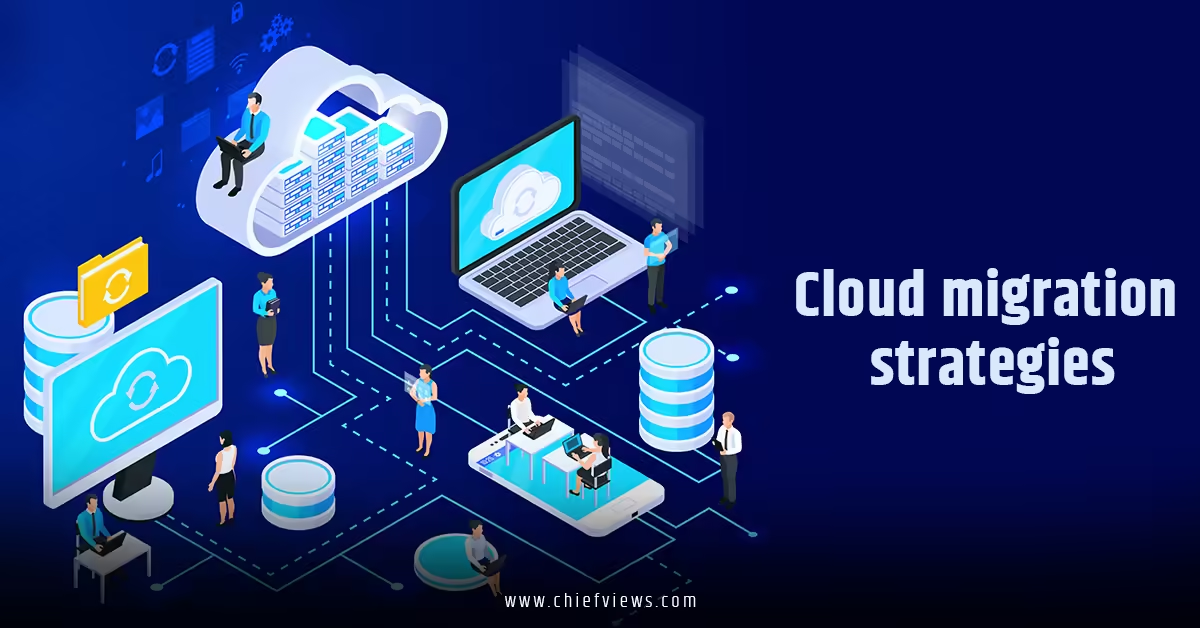
Cloud migration strategies for hybrid workforces have become essential in today’s dynamic business landscape. With teams split between home offices, coffee shops, and corporate headquarters, companies can’t afford rigid, location-bound IT setups anymore. Imagine your workforce as a flock of birds—some soaring high in the clouds, others perched safely on familiar branches. Cloud migration strategies for hybrid workforces help unify that flock, giving everyone seamless access to tools, data, and collaboration without missing a beat.
In this comprehensive guide, we’ll dive deep into cloud migration strategies for hybrid workforces, exploring why they’re crucial, the best approaches, potential pitfalls, and practical steps to make the transition smooth. Whether you’re a small business owner just dipping your toes or an IT leader steering a large enterprise, you’ll find actionable insights here.
Why Cloud Migration Strategies for Hybrid Workforces Matter Now More Than Ever
Hybrid work isn’t a temporary trend—it’s the new normal. Employees expect to log in from anywhere, switch devices effortlessly, and stay productive whether they’re in pajamas or a suit. Traditional on-premises servers just can’t keep up with that flexibility. They tie data to physical locations, create latency issues for remote users, and make collaboration clunky.
Cloud migration strategies for hybrid workforces address these pain points head-on. By moving workloads to the cloud (or a hybrid mix), businesses gain scalability that grows with demand—think bursting resources during peak project seasons without buying extra hardware. Security gets a boost too, with built-in features like encryption and multi-factor authentication that are often better than legacy systems.
But it’s not just about tech perks. From a people perspective, these strategies empower your team. No more VPN headaches that slow down video calls or file access. Instead, real-time editing in shared docs, instant file sharing, and reliable connectivity keep morale high and burnout low. Studies show that flexible setups lead to happier, more engaged employees—who wouldn’t want that?



Understanding the Core Cloud Migration Strategies for Hybrid Workforces
When planning cloud migration strategies for hybrid workforces, you have several proven paths. The famous “7 Rs” framework (popularized by AWS and adopted widely) gives you clear options. Let’s break them down with a focus on hybrid scenarios.
Rehosting (Lift and Shift): The Quickest Way to Get Started
Rehosting means picking up your applications as-is and dropping them into the cloud. It’s like moving your furniture to a new house without rearranging the rooms first. This strategy shines for hybrid workforces because it’s fast—minimal changes mean less downtime, so remote teams stay connected.
Many organizations start here with email and productivity suites (hello, Microsoft 365 or Google Workspace). You keep sensitive data on-premises while shifting collaboration tools to the cloud. The result? Remote workers get lightning-fast access without overhauling everything overnight.
But beware: rehosting doesn’t optimize costs or performance fully. It’s a great first step in cloud migration strategies for hybrid workforces, but plan to evolve later.
Replatforming: A Smarter Lift with Tweaks
Replatforming takes rehosting up a notch. You make minor adjustments—like swapping databases or using managed services—to leverage cloud advantages without rewriting code. Think of it as upgrading your old car engine while keeping the body the same.
For hybrid teams, this means better scalability for apps that see variable usage. A sales team logging in from different time zones won’t crash the system during end-of-quarter rushes. It’s a balanced choice in cloud migration strategies for hybrid workforces when you want quick wins with some efficiency gains.
Refactoring (Re-architecting): The Full Modernization Play
Refactoring involves rebuilding applications to be cloud-native. It’s the most transformative but also the most resource-intensive—like redesigning your house from the foundation up.
Why bother? Cloud-native apps auto-scale, recover faster from failures, and integrate seamlessly with AI tools. In a hybrid workforce, this means ultra-reliable performance for remote devs, designers, or analysts who rely on heavy software. Tools like containers (Kubernetes) make deployments consistent across locations.
Many experts recommend starting small—refactor one critical app first to test the waters.
Other Rs: Repurchase, Retire, Retain, and Relocate
- Repurchase: Swap old software for SaaS versions (e.g., move from on-prem CRM to Salesforce). Perfect for hybrid teams needing mobile-friendly tools.
- Retire: Ditch unused apps to declutter.
- Retain: Keep mission-critical or regulated workloads on-premises.
- Relocate: Move to another hypervisor or platform with minimal changes.
A hybrid mix often wins: retain compliance-heavy stuff on-prem, migrate collaboration to the cloud.
Key Steps in Implementing Cloud Migration Strategies for Hybrid Workforces
Ready to roll up your sleeves? Here’s a practical roadmap.
Step 1: Assess Your Current Setup Thoroughly
Start with discovery. Map every app, dependency, and data flow. Ask: Which tools do remote workers use most? Where are bottlenecks? Tools like cloud assessment services from AWS, Azure, or Google help here.
Prioritize based on business impact—low-risk apps first to build momentum.
Step 2: Define Your Hybrid Goals and Choose a Model
Decide on public, private, or hybrid/multi-cloud. For hybrid workforces, hybrid cloud often rules: on-prem for sensitive data, public cloud for flexibility.
Set clear objectives—reduce costs by 30%, improve remote access speed, enhance security.
Step 3: Build a Phased Migration Plan
Go incremental. Phase 1: Migrate productivity tools. Phase 2: Core business apps. Phase 3: Legacy systems.
Test everything in a pilot—simulate remote access from various locations.
Step 4: Prioritize Security and Compliance
Hybrid workforces mean data everywhere. Use zero-trust models, encryption, and identity management. Regular audits keep you compliant (GDPR, HIPAA, etc.).
Step 5: Train Your Team and Foster Adoption
Don’t forget the humans! Offer training on new tools. Communicate benefits—faster workflows, better work-life balance.
Step 6: Monitor, Optimize, and Iterate
Post-migration, track usage, costs, and performance. Tools like cloud monitoring dashboards help spot savings (right-size instances, auto-scaling).

Common Challenges in Cloud Migration Strategies for Hybrid Workforces (And How to Beat Them)
No journey is bump-free. Here are hurdles and fixes.
Security and Data Privacy Concerns
Remote access increases risks. Solution: Implement strong access controls, regular patching, and employee education.
Cost Overruns and Budget Surprises
Cloud bills can spiral. Mitigate with cost management tools and governance policies.
Integration Headaches Between On-Prem and Cloud
Legacy systems resist. Use APIs and middleware for smooth data flow.
Skills Gaps in Your Team
Cloud expertise is rare. Partner with experts or invest in upskilling.
Downtime and User Disruption
Plan cutovers during low-activity periods and have rollback plans.
Real-World Benefits of Mastering Cloud Migration Strategies for Hybrid Workforces
Companies that nail this see game-changing results: 20-50% cost savings over time, faster innovation, and happier teams. Remote workers collaborate as if in the same room. Scalability handles growth without panic-buying servers.
Plus, you’re future-proofed for AI integrations, edge computing, and whatever comes next.
Conclusion: Take the Leap with Confidence
Cloud migration strategies for hybrid workforces aren’t optional—they’re how modern businesses thrive. By assessing thoughtfully, choosing the right approach (like starting with rehosting and evolving to refactoring), addressing challenges head-on, and keeping people at the center, you create an IT foundation that’s flexible, secure, and empowering.
Don’t wait for the perfect moment. Start small, learn as you go, and watch your hybrid team soar. Your workforce—and your bottom line—will thank you.
FAQs About Cloud Migration Strategies for Hybrid Workforces
What are the main cloud migration strategies for hybrid workforces?
The primary ones include rehosting (lift and shift), replatforming, refactoring, repurchase, retire, retain, and relocate. Hybrid workforces often benefit from a mix, starting with quick wins like moving collaboration tools to the cloud while keeping critical data on-premises.
How do cloud migration strategies for hybrid workforces improve remote productivity?
They eliminate location dependencies, provide anytime-anywhere access, reduce latency, and enable real-time collaboration. Tools like cloud-based Office suites ensure seamless file sharing and video calls from any device.
What challenges come with cloud migration strategies for hybrid workforces?
Common issues include security risks, cost management, integration complexities, skills gaps, and potential downtime. Overcoming them requires strong planning, zero-trust security, monitoring tools, and phased rollouts.
Is hybrid cloud the best model for cloud migration strategies for hybrid workforces?
Yes, for most organizations. It balances on-premises control (for compliance) with public cloud scalability (for flexibility), making it ideal for distributed teams.
How long does implementing cloud migration strategies for hybrid workforces typically take?
It varies—simple migrations take months, complex ones years. Phased approaches (starting with non-critical apps) minimize disruption and allow 6-18 months for significant progress.