




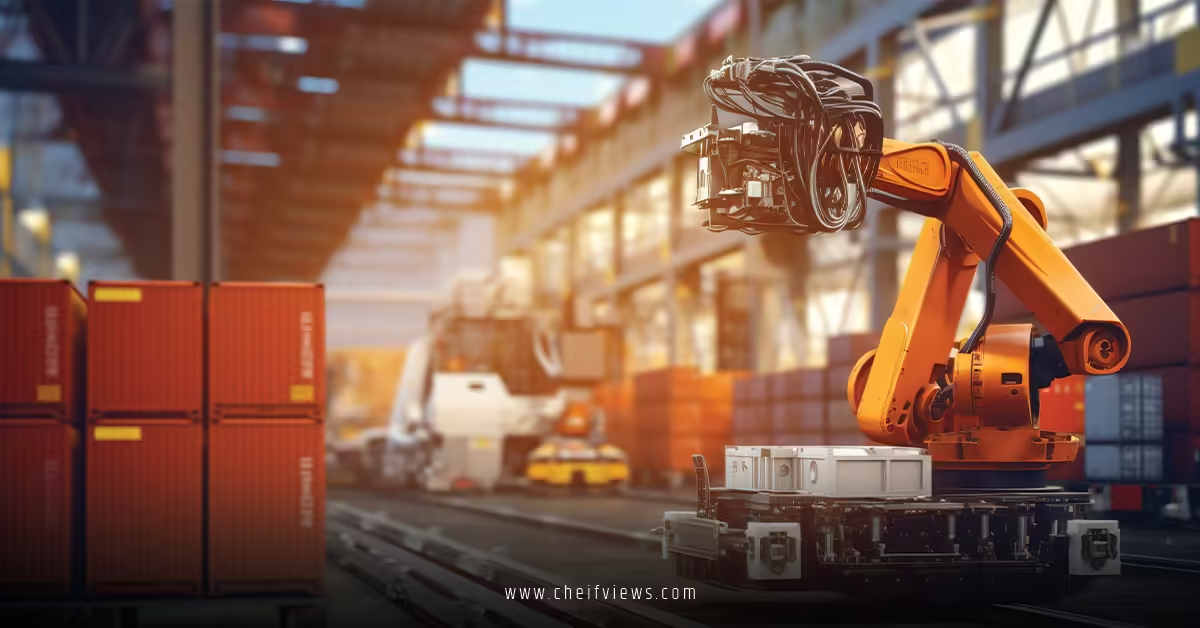
COO role 2026 AI-powered operations and supply chain resilience demands a fundamental shift. No longer just the executor keeping the lights on, today’s COO architects intelligent systems that predict disruptions, adapt in real time, and turn volatility into advantage.
- Leads AI integration across operations for predictive decision-making and automation.
- Builds resilient supply chains using real-time visibility and scenario modeling.
- Balances efficiency with agility while managing human-AI collaboration.
- Drives measurable ROI through data-driven optimization and risk reduction.
- Positions operations as a strategic growth engine, not a cost center.
This evolution matters because supply chain shocks hit harder and faster in 2026. Geopolitical tensions, tariffs, and climate events make old playbooks obsolete. COOs who master AI turn resilience into a competitive moat.
Why the COO Role Matters More Than Ever in 2026
The ground shifted. COOs now sit at the intersection of strategy and execution like never before. They translate boardroom ambitions into operational reality while navigating AI disruption and persistent uncertainty.
Here’s the thing: traditional operations focused on stability. Today’s version thrives on adaptability. AI tools deliver real-time insights that let leaders move from reactive firefighting to proactive orchestration.
What usually happens is companies pilot AI in silos—demand forecasting here, inventory there—and wonder why results disappoint. Successful COOs connect the dots across the entire value chain. They treat data as infrastructure and AI as the operating system.
The kicker? Those who get it right don’t just cut costs. They unlock speed, innovation, and customer trust that competitors can’t match.


Core Responsibilities in AI-Powered Operations
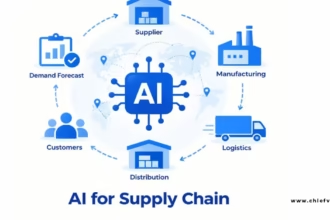
Modern COOs wear multiple hats. They redesign processes for human-AI teamwork. They champion data quality because garbage data poisons even the smartest models. They orchestrate talent, ensuring teams evolve alongside technology.
Key shifts include:
- Moving from manual oversight to exception-based management powered by predictive analytics.
- Embedding AI into core workflows like sourcing, production, and logistics.
- Building governance frameworks that ensure ethical, secure AI deployment.
In my experience, the best operators start small but think ecosystem-wide. They pick high-impact areas—predictive maintenance or dynamic routing—then scale what works.
How AI Transforms Supply Chain Resilience
Supply chains in 2026 face constant turbulence. AI changes the game by providing visibility beyond Tier 1 suppliers and enabling rapid scenario planning.
Digital twins simulate disruptions before they happen. Agentic AI handles routine decisions autonomously. Machine learning spots patterns humans miss in vast datasets.
The result? Faster recovery times and lower risk exposure. Companies using AI report better forecast accuracy, reduced inventory bloat, and stronger supplier relationships.
One fresh analogy: Think of traditional supply chains as rigid highways prone to single-point failures. AI-powered ones resemble a living neural network—constantly rerouting, learning, and strengthening connections under stress.
Rhetorical question: When the next shock hits, do you want your operations guessing or knowing?
Comparison: Traditional vs. AI-Powered COO Operations
| Aspect | Traditional COO Approach | AI-Powered 2026 Approach | Expected Impact |
|---|---|---|---|
| Decision Making | Weekly reviews, historical data | Real-time insights, predictive modeling | 20-35% faster responses |
| Risk Management | Reactive buffers, limited visibility | Proactive simulations, multi-tier monitoring | Reduced disruption costs |
| Inventory Optimization | Rule-based, periodic adjustments | Dynamic AI forecasting and auto-replenishment | 15-30% lower holding costs |
| Workforce Allocation | Fixed roles, manual scheduling | Human-AI collaboration, skill-based assignment | Higher productivity, lower burnout |
| Supplier Management | Contract-focused, annual reviews | AI-driven performance scoring, dynamic sourcing | Stronger resilience, better terms |
Data informed by industry patterns from sources like McKinsey and PwC reports on operational improvements.
Step-by-Step Action Plan for Beginners and Intermediate Leaders
Getting started doesn’t require a massive overhaul. Follow this practical roadmap:
- Assess Your Current State — Map data flows, identify silos, and audit AI readiness. What’s your data quality score?
- Build a Strong Foundation — Clean and integrate data sources. Partner with IT for a unified platform. No solid data, no reliable AI.
- Pilot High-Impact Use Cases — Start with demand forecasting or predictive maintenance. Measure everything: cost, speed, accuracy.
- Scale with Governance — Establish AI ethics guidelines, security protocols, and cross-functional oversight.
- Develop Talent — Train teams on AI tools. Create hybrid roles that blend domain expertise with tech fluency.
- Monitor and Iterate — Set clear KPIs. Review quarterly. Adjust based on real results, not hype.
What I’d do if stepping into a new role: Spend the first 30 days listening—talk to operators on the floor, suppliers, and customers. Then prioritize quick wins that build momentum and credibility.
For deeper strategy on digital transformation, explore resources from PwC’s COO insights.
Common Mistakes & How to Fix Them
Many COOs trip over the same hurdles.
Mistake 1: Chasing shiny AI tools without business alignment. Fix: Tie every initiative to a specific KPI or pain point.
Mistake 2: Underestimating change management. People resist what they don’t understand. Fix: Communicate benefits clearly and involve teams early.
Mistake 3: Ignoring data quality. AI amplifies bad data. Fix: Invest upfront in cleansing and governance.
Mistake 4: Going too broad too fast. Fix: Focus on one or two value streams first. Prove ROI before expanding.
Mistake 5: Treating AI as a tech project. Fix: Own it as a business transformation with clear operational ownership.
Advanced Strategies for Supply Chain Resilience in 2026
Mature operations go further. They build multi-shored networks balanced by AI optimization. They use resilience heatmaps to visualize risks. They create connected intelligence linking supply chain data with finance, ESG, and sales.
Explore KPMG supply chain trends for more on scaling AI beyond pilots.
Another rhetorical question: Are your operations merely surviving volatility—or weaponizing it?
Key Takeaways
- COO role 2026 AI-powered operations and supply chain resilience centers on predictive, adaptive leadership.
- AI delivers tangible gains in efficiency, visibility, and speed when properly integrated.
- Data quality and governance form the non-negotiable foundation.
- Start with targeted pilots, then scale systematically with strong change management.
- Resilience requires both technology and human elements working in harmony.
- Measure relentlessly—focus on business outcomes, not just tech adoption.
- The role offers huge opportunity for those who act decisively now.
- Operations becomes a true strategic differentiator in uncertain times.
COO role 2026 AI-powered operations and supply chain resilience isn’t about keeping pace. It’s about setting it. Leaders who embrace this shift position their organizations to thrive no matter what comes next.
Start by auditing one key process this week. Identify where AI could deliver the biggest immediate lift. Momentum builds from there.
FAQs
How is the COO role 2026 AI-powered operations and supply chain resilience different from previous years?
It shifts from operational execution to strategic orchestration of intelligent systems. COOs now lead AI adoption, build predictive capabilities, and treat resilience as a core design principle rather than an afterthought.
What skills should aspiring COOs develop for AI-powered supply chains?
Focus on data literacy, AI fundamentals, cross-functional leadership, and scenario planning. Technical knowledge matters, but the ability to translate insights into business action separates high performers.
Can small and mid-sized companies implement COO role 2026 AI-powered operations and supply chain resilience effectively?
Yes. Cloud-based tools lower the barrier. Start modular—target specific pain points like forecasting or visibility. Many platforms offer scalable solutions that grow with the business.