




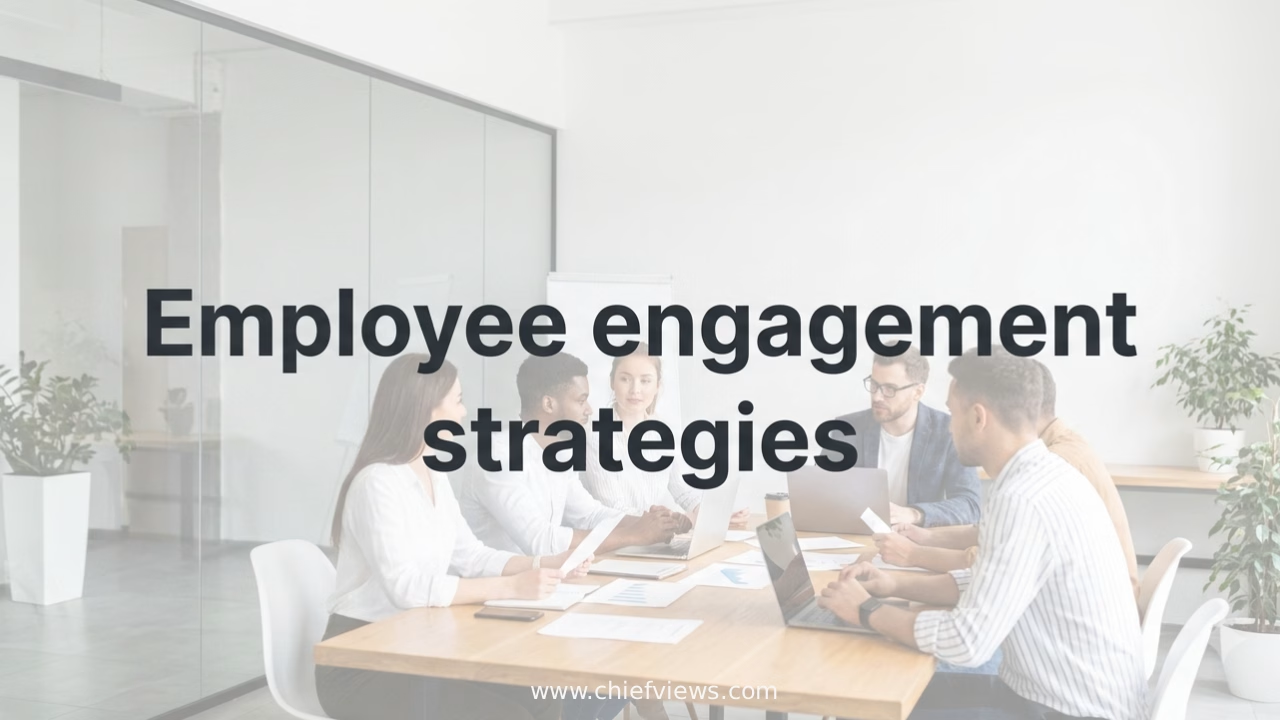
Employee engagement strategies can make the difference between a team that just “shows up” and a team that genuinely cares about the work, the customers and the future of your business. When engagement is low, you see it quickly: higher turnover, more mistakes, slow response times and a lot of quiet frustration. When engagement is high, people bring energy, ideas and ownership — and that usually shows up in your revenue and customer reviews too.[4]
In this article, we’re going to be taking a look at employee engagement strategies, and how you can link them to a stronger People strategy & culture transformation so your people actually want to stay and grow with you. If you would like to find out more, feel free to read on.
Pic – CC0 License
What employee engagement really means
We’re not talking about free snacks and a ping-pong table. Employee engagement is about how connected, motivated and committed your people feel to their work, their team and your business goals.[5]
Engaged employees:
- Know what success looks like in their role
- Feel like their work has real purpose and impact[4]
- Trust their manager and feel supported
- Believe their ideas and concerns are heard[8]
When we design engagement strategies, we’re simply putting repeatable habits and systems in place to support those things. That’s why employee engagement links directly to People strategy & culture transformation — it’s the practical “how” behind the culture you say you want.


Start with listening: surveys and real conversations
If we don’t know how people are feeling, we’re just guessing. The smartest engagement strategies start with listening. Many high-performing organisations use regular pulse surveys to understand what’s working and what isn’t.[11]
You can keep this simple:
- Run a short, anonymous survey a few times a year
- Ask about clarity, support, workload, recognition and wellbeing
- Share a quick summary of what you heard
- Choose 1–2 focus areas to act on each time
Research-backed guides on engagement show that listening to employee feedback and then acting on it is one of the strongest drivers of engagement.[8] When people see that their input leads to change, trust grows — and engagement follows.
Pair surveys with direct conversations. Encourage managers to ask, “What’s helping you do your best work right now?” and “What’s getting in the way?” during regular check-ins.[4] These questions keep engagement on the agenda, not just performance.
Connect work to purpose and goals
People want to know that their work matters. One of the key drivers of engagement is a clear sense of purpose and alignment with the organisation’s goals.[4]
You can improve this by:
- Sharing the bigger picture regularly — where the business is heading and why
- Showing how each role contributes to key outcomes (revenue, customer satisfaction, quality)
- Celebrating wins by linking them back to specific contributions from teams and individuals
Studies on engagement highlight that when employees see the connection between their tasks and the broader strategy, they feel more invested and stay engaged for longer.[10] This is also where People strategy & culture transformation comes in: your culture should constantly reinforce that everyone’s work has meaning, not just leadership roles.
Recognition that actually lands
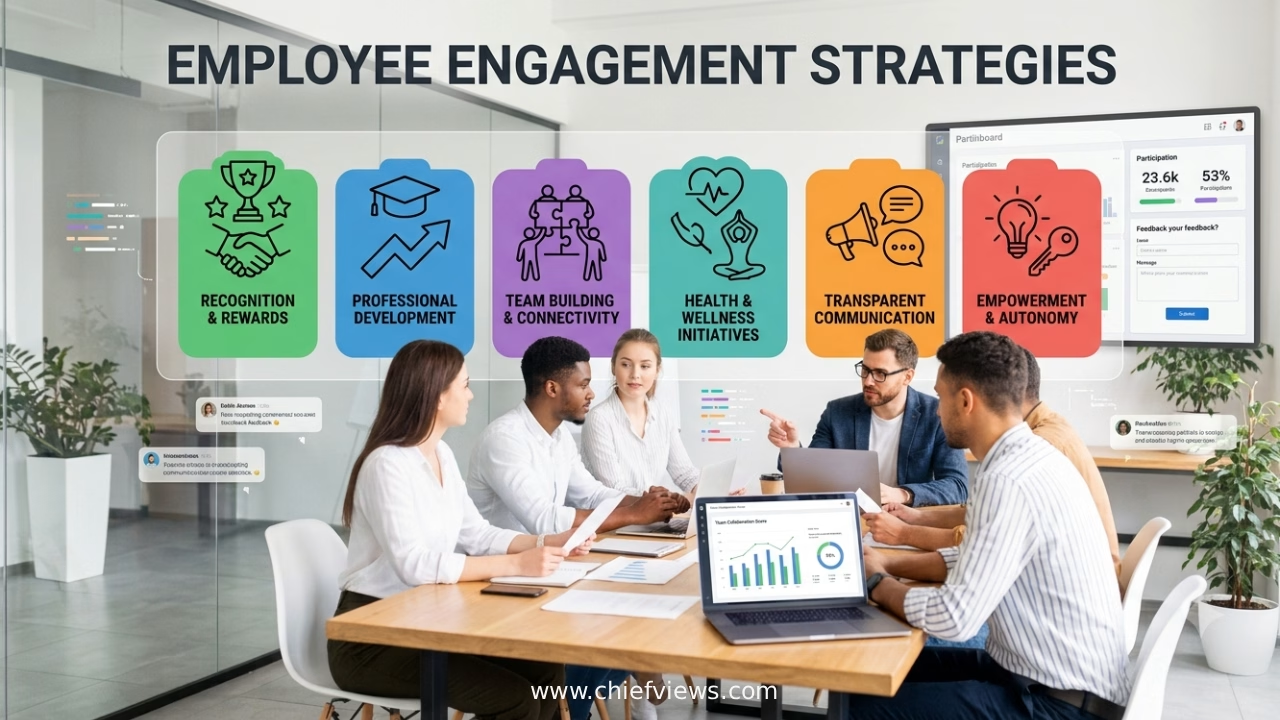
Recognition is one of the fastest, lowest-cost ways to lift engagement — when it’s done well. Many effective employee engagement strategies put recognition front and centre.[3][10]
Good recognition is:
- Specific: “Your detailed handover helped us keep the client happy” beats “Good job”
- Timely: close to the behaviour you’re praising
- Visible: so others see what “good” looks like
- Fair: spread across teams, not just the loudest people
You can set up simple systems like:
- A weekly “shout-out” segment in team meetings
- Peer-nominated recognition awards
- Small, meaningful rewards tied to values-driven behaviours
Employee engagement strategies Research-backed advice suggests that consistent, meaningful recognition improves motivation, retention and overall engagement levels.[5] When we link recognition to the behaviours we want in our culture, we’re directly supporting our People strategy & culture transformation at the same time.
Growth, development and career pathing
If people feel stuck, they disengage. Engagement goes up when employees can see a path to learn, grow and take on more responsibility.[6]
You don’t need complex programs to start:
- Ask each team member about their next 12–18 month goals
- Offer stretch projects, job shadowing or mentoring[6]
- Make learning part of regular one-on-one conversations
- Share internal opportunities and encourage internal moves where possible
Guides on employee engagement strategies stress the importance of growth, career development and clear paths as core drivers of commitment.[6][11] Even small businesses can offer development — it might be exposure to new areas, external courses or more responsibility over time.
When your People strategy includes simple, realistic growth options for different roles, you’re less likely to lose good people simply because they feel they’ve hit a ceiling.
Build managers who coach, not just manage
Employee engagement strategies Managers are often the “make or break” factor in engagement. Research shows that caring, supportive managers who hold ongoing coaching conversations are central to keeping people engaged.[4][11]
Strong engagement-focused managers:
- Hold regular, short check-ins instead of annual “big” reviews[10]
- Give clear, honest feedback and listen without getting defensive[7]
- Support wellbeing and flexible work where possible
- Help people use their strengths every day[4]
You can support this by giving managers basic training in coaching skills, feedback, and how to run simple engagement conversations. Even using structured questions from reputable HR toolkits can make these chats more effective.[16]
This is a direct lever for People strategy & culture transformation: when managers consistently show respect, curiosity and support, the culture slowly shifts to match.
Wellbeing, flexibility and work-life balance
Burned-out people can’t engage, no matter how many strategies we put in place. Modern engagement research highlights wellbeing, flexibility and psychological safety as key drivers.[6][8]
Practical steps include:
- Setting realistic workloads and protecting focus time
- Offering some flexibility in hours or location where roles allow
- Promoting mental health resources and normalising their use
- Encouraging breaks, leave and genuine time off
A healthy workplace where people feel safe, cared for and able to balance work with life is far more likely to sustain high engagement over time.[8] These wellbeing choices are a big part of your overall People strategy & culture transformation — they show what you really value.
Measure, adjust, repeat
Employee engagement strategies are not “set and forget”. The most effective organisations keep measuring and refining their approach over time.[9][11]
You can build a simple rhythm:
- Run regular surveys and track key scores
- Review feedback from one-on-ones and team conversations
- Choose a small number of experiments (e.g., more frequent recognition, clearer goals, new wellbeing initiatives)
- Review what changed after 3–6 months and keep what works
When we treat engagement like any other strategic priority — with data, experiments and iteration — we make real progress. And because engagement touches everything from performance to retention, it’s a powerful pillar of your wider People strategy & culture transformation.
Bringing employee engagement and culture together
We hope that you have found this article enlightening in some way, and that it has shown how employee engagement strategies aren’t just HR “nice-to-haves” — they’re practical tools for building the culture and performance your business needs. By listening well, connecting work to purpose, recognising real contributions, supporting growth, building coaching-style managers and protecting wellbeing, you create a workplace where people want to give their best.
When those strategies are tied back to your broader People strategy & culture transformation, you get more than quick morale boosts; you get a consistent way of working that attracts good people, keeps them longer and helps your business grow with far less friction. Start small, stay consistent, and treat engagement as an ongoing conversation with your team — not a one-off project.