







Ideal customer profile development starts with your best closed-won accounts, not a whiteboard wish list. Get this right and every campaign, every sequence, and every sales conversation aims at companies that actually buy, expand, and stick. Get it wrong and you burn pipeline, inflate CAC, and wonder why win rates stay flat.
Here’s the short version of what strong ideal customer profile development delivers:
- A data-backed filter built from retention and expansion, not acquisition volume
- Clear firmographic, technographic, and behavioral criteria sales and marketing both trust
- Explicit disqualifiers that stop wasted effort on bad-fit accounts
- A living document that feeds scoring, targeting, and messaging
- The foundation for tighter Revenue impact marketing and GTM alignment across the revenue team
That last point matters. Without a shared ICP, marketing and sales still operate on different definitions of “good,” and the whole GTM motion leaks.
Why Ideal Customer Profile Development Beats Guesswork
Most teams draft an ICP once, file it in a shared drive, and never open it again. The document usually describes the logos leadership wants, not the ones that actually deliver high lifetime value.
In my experience the teams that treat ideal customer profile development as an ongoing operating process see three immediate shifts. Lead acceptance rates climb. Sales cycles shorten on matched accounts. Marketing spend concentrates on segments that convert and retain.
The difference is simple. Aspiration produces volume. Evidence produces revenue.


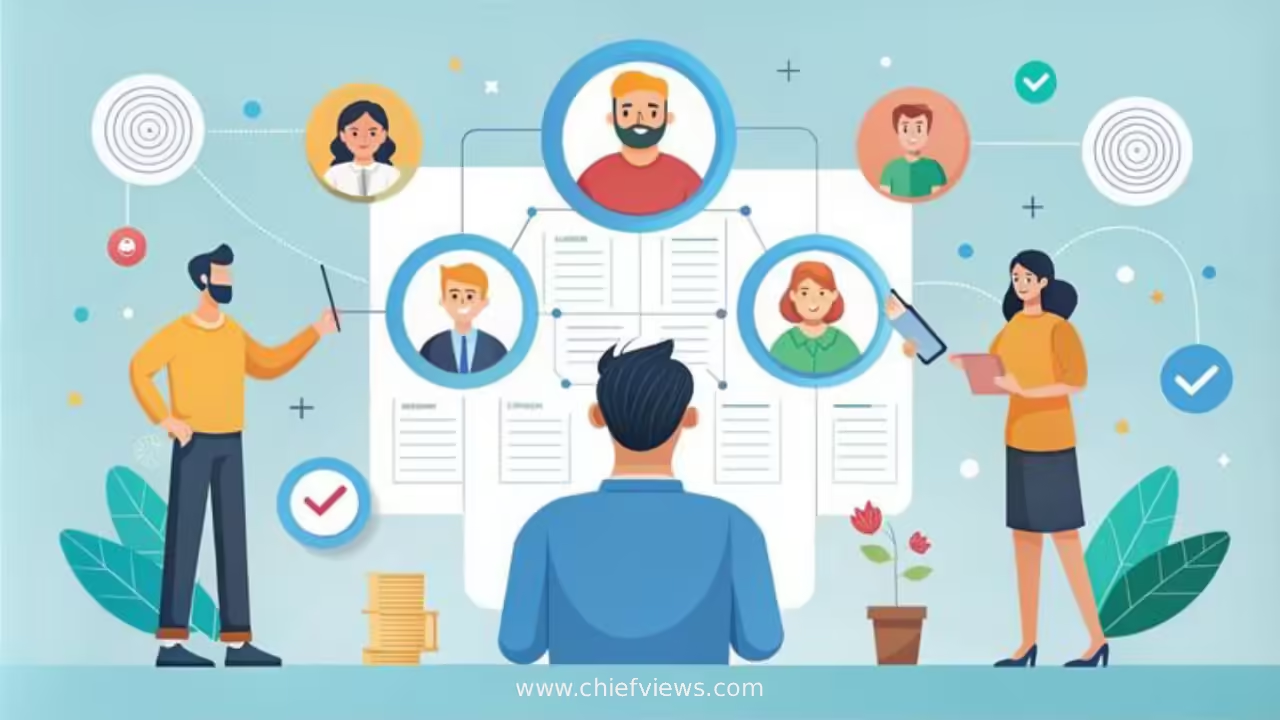
The Core Layers of a Useful ICP
Ideal customer profile development A workable ideal customer profile sits at the account level. Personas describe the people inside those accounts. Confuse the two and messaging drifts.
Build across these layers:
- Firmographics: size, industry, revenue band, geography, growth stage
- Technographics: tools already in the stack that signal problem awareness or integration readiness
- Behavioral and trigger signals: recent funding, hiring patterns, org changes, or public pain indicators
- Economic and success signals: typical ACV fit, time-to-value, expansion potential, support load
Keep the finished profile tight. Three to five hard filters and two or three soft signals is enough. More than that and you have described your current six customers instead of a market.
Step-by-Step Ideal Customer Profile Development Process
Ideal customer profile development Here’s the exact sequence I walk clients through. It works for early-stage and mid-market teams alike.
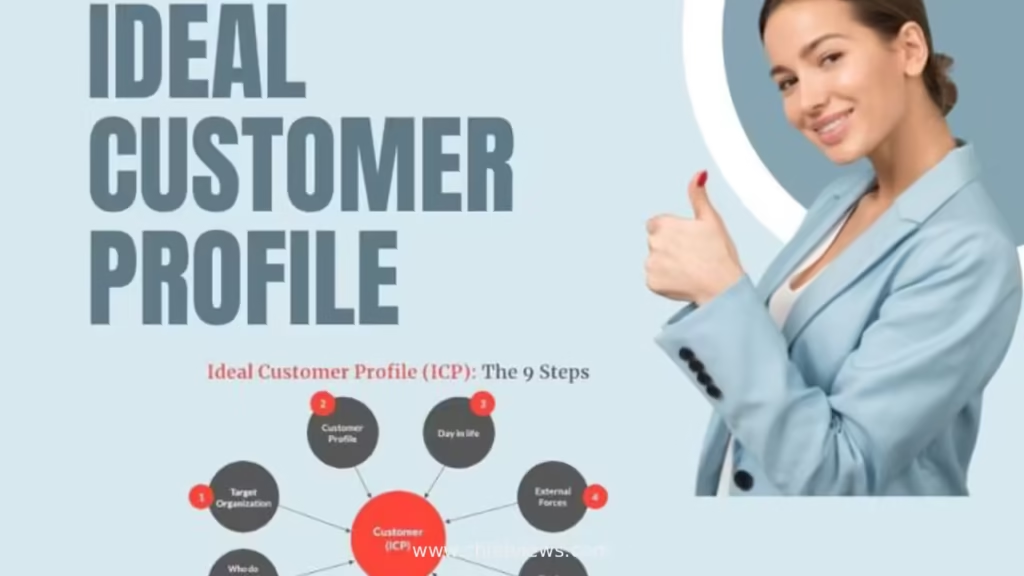
- Export your closed-won accounts from the last 12–18 months. Rank them by a blend of retention length, net revenue retention or expansion, gross margin, and how clean the sales cycle felt. Pull the top 20–40. These are your ground truth, not the biggest logos.
- Record the shared attributes. Firmographics first, then tech stack, buying committee structure, and the trigger that brought them in. Look for the non-obvious patterns. Your best accounts often cluster in ways leadership never expected.
- Study the anti-patterns. Pull the accounts that churned fast, never adopted, or drained support. What traits appear again and again? Those become explicit disqualifiers.
- Interview 8–12 of the strongest customers. Ask what was broken before they bought, what they tried first, and what success looks like now. Data shows the “what.” Conversations reveal the “why.”
- Write the profile with uncomfortable specificity. “Mid-market SaaS” fails. “Series B–D B2B SaaS, 150–600 employees, $10M–$50M ARR, running Salesforce or HubSpot, where a RevOps or Sales Ops leader owns the problem and the company hired in that function in the last six months” works.
- Score it in the CRM. Assign weighted points to each criterion. Below a threshold the account goes to nurture or product-led only. Above it, sales gets priority.
- Review quarterly. Markets move. New cohorts appear. Update the profile with fresh closed-won and churn data so it stays predictive.
Ideal customer profile development Do this once thoroughly and you have a filter the entire revenue team can use. That shared filter is one of the fastest ways to strengthen Revenue impact marketing and GTM alignment.
Common Mistakes in Ideal Customer Profile Development and How to Fix Them
Mistake one: Building from the logos you wish you had. Fix: Rank by actual outcomes—retention, expansion, margin—not prestige.
Mistake two: Making the profile too broad because narrowing feels risky. A real ICP shrinks the target list. If yours produces tens of thousands of accounts, it is a market segment, not an ICP.
Mistake three: Stopping at firmographics. Size and industry alone leave too much noise. Add technographics and triggers.
Mistake four: Treating the document as static. Fix: Put a recurring review on the calendar and force both sales and marketing to bring fresh data.
Mistake five: Creating different versions for different teams. One source of truth or the alignment breaks. Marketing scores one way, sales another, and the lists diverge within weeks.
Mistake six: Confusing fit with readiness. An account can match the ICP perfectly and still not be in market. Separate the two signals.
Turning the ICP into Daily Action
Ideal customer profile development Once the profile exists, operationalize it. Marketing uses it to build target account lists and score inbound. Sales uses it to prioritize outbound and qualify opportunities. Customer success uses it to flag expansion risk early.
The same ICP feeds content themes, ad targeting, and even product prioritization. When every function starts from the same definition of “ideal,” the handoffs get cleaner and the metrics start talking to each other.
Ideal customer profile development For deeper context on how a sharp ICP powers the broader motion, the principles of Revenue impact marketing and GTM alignment show exactly why this foundation matters. Teams that skip it keep generating activity that never compounds into predictable revenue.
| Layer | Weak Version | Strong Version |
|---|---|---|
| Firmographics | Mid-market companies | 150–600 employees, $10M–$50M ARR, B2B SaaS |
| Technographics | Uses CRM | Runs Salesforce or HubSpot + specific adjacent tools |
| Triggers | Growing | Hired RevOps/Sales Ops role in last 90 days |
| Disqualifiers | None listed | Agencies, <50 employees, no formal CRM |
| Success Signals | Closed the deal | Expanded within 12 months, low support tickets |
Key Takeaways
- Ideal customer profile development begins with your highest-retention, highest-expansion accounts, not aspirational logos.
- Rank accounts by outcomes that matter: retention, expansion, margin, and sales effort.
- Include explicit disqualifiers so teams know what to ignore.
- Keep the profile specific enough to act on and short enough to remember.
- Score it inside the CRM so it drives daily prioritization.
- Review it on a fixed cadence with both sales and marketing present.
- A shared ICP is one of the highest-leverage moves for Revenue impact marketing and GTM alignment.
- The goal is not a prettier document. The goal is fewer wasted conversations and higher conversion on the accounts that matter.
Ideal customer profile development Open your CRM this week. Pull the top closed-won accounts by the metrics that actually drive lifetime value. That single export is the start of an ICP the whole team will use instead of ignore.
FAQs
How often should we update our ideal customer profile development process?
Review the data every quarter and do a full rebuild at least once a year or after any major shift in product, pricing, or market conditions. Static profiles decay fast.
What is the difference between an ICP and a buyer persona?
The ICP defines the company most likely to buy, succeed, and expand. Personas describe the specific roles and motivations of the people inside those companies. You need both, but the account-level profile comes first.
Can early-stage companies with few customers still do effective ideal customer profile development?
Yes. Use every closed-won account you have, supplement with strong lost-deal analysis, and lean harder on customer interviews. The profile will be narrower and will evolve quickly as more data arrives.

