






startup CTO vs enterprise CTO challenges hit harder than most founders and tech leaders expect. One day you’re shipping features with a skeleton crew and duct-taped infrastructure. The next, you’re buried in compliance audits, legacy systems, and stakeholder alignment meetings that stretch for weeks.
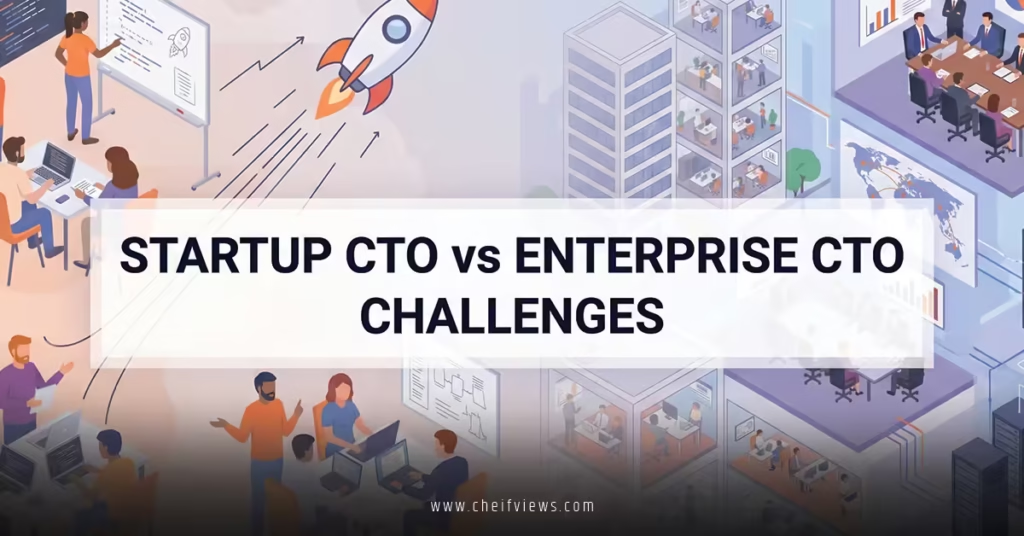
The gap isn’t just about company size. It’s about speed versus stability, hands-on building versus strategic governance, and surviving chaos versus managing complexity.
Here’s what matters right now:
- Startup CTOs juggle code, hiring, and product bets with almost no safety net.
- Enterprise CTOs steer massive tech organizations through regulatory minefields and multi-year roadmaps.
- Both roles demand leadership, but the daily fires look completely different.
- Understanding these differences helps you choose the right path—or transition without crashing.
This matters because poor tech leadership sinks companies fast. Tech startups already face brutal odds, with around 63% failing within five years.
Why the startup CTO vs enterprise CTO challenges differ so sharply
In a startup, the CTO often acts as chief builder, coder, and firefighter. You make quick calls on architecture, stack choices, and team hires while burning through runway. Resources stay thin. Every decision carries immediate survival risk.
Enterprise CTOs operate in a slower, heavier environment. They focus on long-term strategy, vendor ecosystems, compliance, and scaling systems that already serve millions. Politics, legacy debt, and cross-department alignment dominate their days.
The time horizon tells the real story. Startup CTOs optimize for the next release. Enterprise CTOs plan for the next five to ten years.



Key pressure points in 2026 remain consistent across both worlds but hit differently:
- Talent shortages hit everyone, yet startups compete on vision and equity while enterprises lean on brand and stability.
- AI integration pressures both, but startups use it for differentiation while enterprises wrestle with governance and ethics.
- Security and compliance never sleep—startups risk everything on one breach, enterprises drown in audits.
Direct comparison: Startup CTO vs Enterprise CTO challenges
| Aspect | Startup CTO Challenges | Enterprise CTO Challenges | Winner for Speed |
|---|---|---|---|
| Team Size & Hiring | Building from scratch with limited budget; wearing multiple hats | Managing 100+ engineers, layers of management, retention in bureaucracy | Startup |
| Decision Making | Fast, experimental, high failure tolerance | Deliberate, risk-averse, heavy stakeholder buy-in | Startup |
| Architecture | Rapid prototyping, technical debt acceptable | Scalability, legacy integration, governance | Enterprise |
| Focus Horizon | Next sprint or funding round | 5-10 year roadmap, compliance | Depends |
| Resource Constraints | Extreme—runway pressure everywhere | Budget battles but more stability | Enterprise |
| Innovation Style | Disruptive bets, move fast | Measured transformation, ROI proof | Startup |
| Compliance Load | Light at first, ramps up fast | Heavy from day one (SOC2, GDPR, etc.) | Startup |
This table cuts through the noise. Notice how startup life rewards velocity while enterprise rewards resilience.
Core challenges unique to startup CTOs
Startup CTOs live in permanent beta mode. You build the plane while flying it.
Talent wars feel existential. In 2026, finding and keeping skilled engineers stays brutal. You can’t match Big Tech salaries, so you sell mission, equity, and impact. What usually happens is you hire generalists early, then scramble when specialization becomes necessary.
Cash runway dictates everything. One wrong tech bet and you’re done. Founders push for features yesterday. You balance that against building something that won’t collapse under early traction.
Product-market fit pressure. Your tech choices must deliver fast value. No room for gold-plated solutions. Many startups die because they over-engineer before validating demand.
The kicker? You often code alongside your team. Hands dirty, context everywhere.
What enterprise CTOs battle daily
Enterprise CTOs inherit complexity. Legacy systems, siloed departments, and risk-averse cultures slow everything down.
Integration nightmares dominate. Merging new tech with decades-old infrastructure eats budgets and timelines. One faulty API can ripple across millions of users.
Compliance and security overhead. Audits, governance frameworks, and board reporting consume massive time. A single breach makes headlines and costs careers.
Stakeholder alignment. You spend more time in meetings than reviewing code. Convincing finance, legal, and operations teams takes patience most startup CTOs never develop.
Politics matter more here. Great ideas die in committee without strong navigation skills.
Transitioning between worlds: What actually works
Many leaders move from startup to enterprise or vice versa. The shift trips people up.
If you’re a startup CTO eyeing bigger roles, start practicing delegation now. Enterprise life punishes hero coders. Build your ability to influence without authority.
Going the other way? Enterprise CTOs often struggle with speed. They over-plan. In startups, you must kill features fast and pivot without remorse.
What I’d do if switching tomorrow:
- Audit my decision speed and cut meeting time by 40%.
- Shadow a peer in the target environment for two weeks.
- Focus on storytelling—both roles need it, but the audience changes.
Step-by-step action plan for new or aspiring CTOs
- Assess your current environment. List your top five daily activities. Do they match startup velocity or enterprise stability?
- Build a personal tech radar. Track emerging tools (AI agents, edge computing, etc.) relevant to your context. Dedicate two hours weekly.
- Hire for gaps, not resumes. In startups, prioritize learning agility. In enterprises, prioritize systems thinkers.
- Create lightweight processes early. Even startups need basic roadmaps and retrospectives. Don’t wait for chaos.
- Network across both worlds. Join communities like CTO Craft or relevant Slack groups. Insights flow from peers facing similar fires.
- Measure what matters. Startups: velocity and user feedback. Enterprises: uptime, cost efficiency, compliance scores.
Follow this and you’ll avoid rookie traps.
Common mistakes & how to fix them
Mistake 1: Staying too hands-on too long.
Founders love the coding CTO. But growth demands leadership. Fix: Transition to tech leads within 12-18 months. Mentor aggressively.
Mistake 2: Ignoring soft skills.
Technical brilliance alone fails. Fix: Practice executive communication. Record yourself presenting roadmaps.
Mistake 3: Underestimating culture.
Tech stacks come and go. Bad culture kills momentum. Fix: Define engineering principles early and live them.
Mistake 4: Poor vendor and partner management.
Startups pick shiny tools that lock them in. Enterprises drown in contracts. Fix: Always negotiate exit clauses and data portability.
One fresh analogy: Think of the startup CTO as a bush pilot flying through storms with minimal instruments. The enterprise CTO captains an ocean liner—massive, powerful, but slow to turn. Both reach destinations. Different skills, different risks.
Key takeaways
- Startup CTO vs enterprise CTO challenges center on speed, resources, and risk tolerance.
- Hands-on execution defines early-stage success while strategic governance rules large organizations.
- Talent acquisition remains the universal headache in 2026.
- Technical debt accumulates faster in startups but costs more to fix in enterprises.
- Strong communication separates good CTOs from great ones across both environments.
- Transitions require deliberate unlearning of old habits.
- Context always beats generic advice—know your company’s stage deeply.
- Continuous learning on AI, security, and team scaling pays the biggest dividends.
The main benefit? Mastering these differences lets you lead effectively no matter the arena. You stop fighting the environment and start shaping it.
Next step: Grab your notebook. Map your current challenges against the table above. Identify one shift you can make this week. Small moves compound fast in tech leadership.
FAQs
How do startup CTO vs enterprise CTO challenges around talent differ in practice?
Startup CTOs sell upside and autonomy to attract risk-takers. Enterprise CTOs leverage brand stability and resources but fight bureaucracy to retain top performers. Both face shortages, yet the pitch completely changes.
Can one person successfully handle startup CTO vs enterprise CTO challenges in their career?
Yes, many do. The key lies in recognizing when your operating style needs to evolve. Hands-on builders thrive early. Strategic operators excel later. Intentional growth bridges the gap.
What technical skills matter most when comparing startup CTO vs enterprise CTO challenges today?
Both need cloud architecture and security knowledge. Startups prioritize rapid prototyping and AI experimentation. Enterprises emphasize integration patterns, governance tools, and compliance platforms. Adapt to your context.