







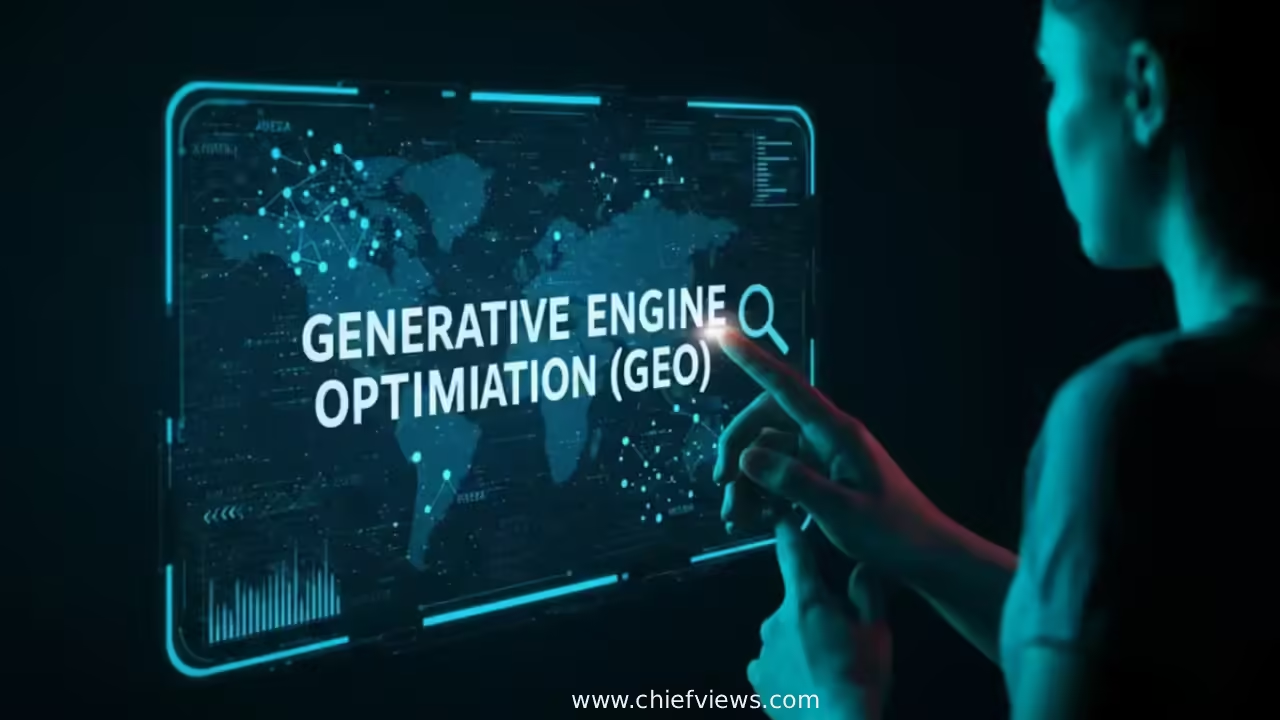
Generative engine optimization strategies determine whether AI systems like ChatGPT, Perplexity, Google AI Overviews, and Gemini pull your content into answers—or ignore it entirely. Traditional SEO gets pages ranked. GEO gets passages cited, brands mentioned, and recommendations shaped before a user ever clicks through.
Here’s the practical overview:
- GEO focuses on making content easy for generative engines to retrieve, extract, trust, and cite.
- Strongest levers include answer-first structure, verifiable statistics and sources, entity clarity, and third-party corroboration.
- Research (including the original Princeton GEO study) shows tactics like adding statistics, quotations, and citations can lift visibility by up to 40% in tested settings.
- Most AI brand mentions still come from non-owned sources, so owned content alone is rarely enough.
- Measurement shifts from rankings and traffic to citation rate, mention share, and prompt coverage.
These generative engine optimization strategies sit alongside—and often feed into—broader work like Brand stewardship in AI-agent discovery era. When agents move beyond answers into research, shortlisting, and action, the same signals that earn citations become the foundation for recommendation.
Why Generative Engine Optimization Strategies Matter Now
Generative Engine Optimization Strategies AI Overviews and answer engines continue expanding. Zero-click behavior is common, and citation overlap with classic Google top-10 results remains limited. Engines retrieve passages, weigh evidence, and synthesize. They favor content that is crawlable, extractable, current, and backed by independent signals.
The brands winning citations treat GEO as an extension of solid SEO rather than a replacement. Crawlability and relevance remain table stakes. The extra work sits in how you structure, evidence, and corroborate.


Core Generative Engine Optimization Strategies That Move the Needle
1. Lock down access and technical foundations first
Nothing downstream works if the right bots cannot reach the page. Review robots.txt for AI search crawlers (OAI-SearchBot for ChatGPT retrieval, PerplexityBot, and standard Googlebot for AI Overviews). Ensure important pages render cleanly without heavy client-side barriers. Strong traditional indexing still feeds most generative systems.
2. Structure every key page for extraction
Lead with the direct answer. Place a concise, self-contained response in the first sentence or two under each major heading. Break content into clear, topical sections of roughly 200–300 words. Use question-style headings that mirror real buyer prompts. Tables, numbered steps, and definition blocks survive synthesis better than long narrative.
Front-loading pays off. Multiple analyses show a large share of citations come from the early portion of a page.
3. Load pages with extractable evidence
The original GEO research and follow-on testing consistently rank three content tactics highest:
- Add specific, sourced statistics.
- Include short, attributed quotations from named experts.
- Cite primary authoritative sources inline.
Vague claims get filtered. Concrete, attributable numbers and quotes get lifted. Prefer primary sources over secondary summaries. Original data (even small internal surveys or aggregated support-ticket patterns) gives engines something unique.
4. Build and protect entity clarity
Engines need to know exactly who you are, what category you occupy, and how you relate to other entities. Keep brand name, descriptions, product attributes, and author credentials consistent across your site, schema, knowledge panels, review platforms, and third-party profiles. Inconsistent naming creates ambiguity that lowers selection odds.
5. Earn third-party corroboration
A large majority of brand mentions in AI answers originate outside owned domains—review sites, comparison articles, industry publications, forums, and reference pages. Owned content establishes the facts. Independent coverage validates them. Treat PR, expert contributions, customer reviews, and category coverage as core GEO work, not optional brand-building.
6. Maintain freshness and refresh cadence
Engines show a measurable preference for recent material. Outdated statistics, old pricing, or stale process descriptions get deprioritized. Schedule regular reviews of high-value pages and update dates, data points, and examples.
7. Measure with repeated prompt testing
Rankings alone no longer tell the story. Maintain a fixed set of category, comparison, and “best for X” prompts. Run them across major engines monthly or quarterly. Track presence, accuracy of portrayal, competing brands, and cited sources. Tools for AI visibility measurement continue to mature; use them alongside manual checks.
Comparison of Key GEO Tactics
| Tactic | Primary Benefit | Evidence Strength | Implementation Effort |
|---|---|---|---|
| Answer-first structure | Higher extraction and citation rate | Strong practitioner + positional data | Low–Medium |
| Statistics + sourced claims | Increased visibility (up to ~40% in tests) | Peer-reviewed GEO study | Medium |
| Third-party mentions | Brand inclusion and recommendation | Multiple 2025–2026 citation analyses | Higher |
| Entity consistency + schema | Reduced ambiguity | Practitioner consensus | Medium |
| Crawler access + technical SEO | Eligibility for retrieval | Platform documentation | Low–Medium |
| Content freshness | Preference in recency-biased systems | Citation age studies | Ongoing |

Practical Action Plan for Generative Engine Optimization Strategies
Start with a 30-day foundation:
- Audit AI crawler access and fix blockers on priority pages.
- Select 5–10 high-intent buyer prompts and establish a baseline citation score across engines.
- Rewrite the top 5–10 pages with answer-first openings, clear headings, and at least one specific statistic or sourced claim each.
- Map entity consistency gaps (name, description, category) and close the biggest ones.
- Identify the third-party sources already cited in your category and begin targeted coverage or profile strengthening.
In the following 60 days, expand original data points, systematize refresh cycles, and formalize monthly prompt testing. Teams that sequence access → structure → evidence → corroboration usually see movement faster than those that scatter tactics.
These same foundations strengthen Brand stewardship in AI-agent discovery era. When agents research and shortlist on a user’s behalf, the content that is already clear, evidenced, and independently corroborated is far more likely to survive evaluation and appear in recommendations.
Common Mistakes That Undermine GEO Work
- Treating GEO as pure content rewriting while ignoring crawler access.
- Stuffing keywords or forcing unnatural “AI-friendly” language (the original research showed keyword stuffing underperformed).
- Relying solely on owned content when engines heavily weight third-party signals.
- Measuring only after traffic changes instead of tracking citation and mention share proactively.
- Publishing once and never refreshing high-value pages.
Generative Engine Optimization Strategies Fix the access and structure issues first. Evidence and third-party work compound on top of a clean foundation.
Key Takeaways
- Generative engine optimization strategies prioritize extractable, evidenced passages over traditional ranking signals alone.
- Answer-first structure, statistics, citations, and quotations deliver the most consistent measured lifts.
- Third-party corroboration remains essential because most brand mentions originate outside owned sites.
- Technical access and entity clarity are non-negotiable prerequisites.
- Freshness and systematic prompt measurement turn one-off wins into durable visibility.
- GEO and traditional SEO reinforce each other; strong foundations support both.
- The same signals that earn citations feed higher-stakes agentic recommendation environments.
- Begin with a focused audit of access, baseline prompts, and the highest-value pages rather than attempting a full-site overhaul.
Generative Engine Optimization Strategies Mastering generative engine optimization strategies is no longer optional for brands that want to remain visible as discovery shifts. Start with the pages and prompts that matter most to your buyers, make the answers clear and defensible, and keep measuring. The engines are already reading. Make sure what they find is worth citing.
FAQs
How quickly can generative engine optimization strategies show results?
Many teams see improved citation presence within 30–60 days after fixing crawler access, rewriting key pages with clear answers and evidence, and strengthening entity consistency. Full impact depends on content quality, third-party signals, and consistent measurement.
How quickly can generative engine optimization strategies show results?
Many teams see improved citation presence within 30–60 days after fixing crawler access, rewriting key pages with clear answers and evidence, and strengthening entity consistency. Full impact depends on content quality, third-party signals, and consistent measurement.
How quickly can generative engine optimization strategies show results?
Many teams see improved citation presence within 30–60 days after fixing crawler access, rewriting key pages with clear answers and evidence, and strengthening entity consistency. Full impact depends on content quality, third-party signals, and consistent measurement.

