









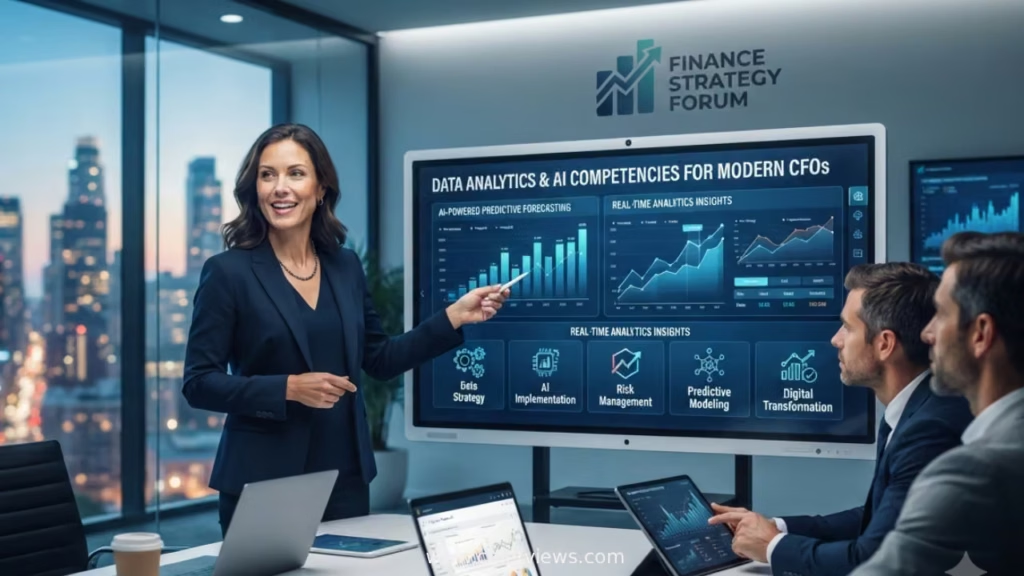
Data analytics and AI competencies for modern CFOs separate the finance leaders who shape strategy from those stuck reporting the past. In 2026, boards and CEOs expect the CFO to turn messy data into clear decisions, govern AI risks, and free the team from transactional grind so it can focus on value creation. The shift is already visible in job postings, board agendas, and the daily reality of finance teams that still lack formal training.
- Modern CFOs need practical fluency in data interpretation, AI tool evaluation, and risk-aware deployment—not coding skills.
- The biggest constraint is human capability: most finance teams report limited formal training in analytics or AI.
- Success requires pairing technical literacy with judgment, storytelling, and workflow redesign.
- CFOs who treat AI as another capital allocation decision, with clear ROI targets and controls, pull ahead.
- Beginners can close the gap with a structured 90-day action plan focused on high-impact use cases.
The old model—close the books, produce the pack, answer questions—no longer cuts it. Data volume exploded. Generative and agentic AI tools now sit inside forecasting, anomaly detection, cash management, and scenario planning. The CFO who cannot evaluate an AI output, spot data quality problems, or redesign a process around the technology becomes a bottleneck.
Why Data Analytics and AI Competencies for Modern CFOs Matter Right Now
Data analytics and AI competencies for modern CFOs Finance leaders now co-own or lead enterprise AI and technology capital allocation in a majority of large organizations. Deloitte’s recent research shows CFOs frequently oversee AI trust, spending controls, and cross-enterprise technology decisions. At the same time, many finance teams still operate with limited formal preparation. Research from CrossCountry Consulting and the Financial Education and Research Foundation found that 87% of finance teams report 25% or fewer members have formal training in data analytics or AI, and roughly half have none.
The gap creates real risk. AI can accelerate forecasting and surface patterns humans miss. It can also generate confident-sounding nonsense, amplify biased data, or create control failures. The CFO who lacks data analytics and AI competencies cannot ask the right questions of the model or the vendor. That is the new baseline skill set.
Think of it like learning to read a balance sheet in the 1980s. You did not need to write the accounting software. You needed to understand what the numbers meant, what assumptions sat underneath them, and when something looked off. The same logic applies today. The tools changed. The need for judgment did not.

Core Data Analytics and AI Competencies for Modern CFOs
Data analytics and AI competencies for modern CFOs Four interlocking capabilities define the modern skill stack.
Data literacy and critical evaluation. You must understand how source data shapes AI output. That means knowing data lineage, quality issues, and the difference between correlation and causation. When an AI tool flags an anomaly or produces a forecast, the competent CFO can interrogate the inputs and the logic before the number reaches the board pack.
AI fluency without becoming a technologist. Know what generative and agentic tools can and cannot do. Understand prompt quality, hallucination risk, and the difference between a pilot and a production process. McKinsey’s work on AI in finance stresses that value comes from setting measurable targets and redesigning processes, not from tool accumulation.
Analytical storytelling and decision support. Numbers alone rarely move a CEO or board. The ability to turn insight into a clear recommendation—framed in business language, with options and trade-offs—is now a core finance skill. Gartner has repeatedly flagged “analytical storytelling” as a priority alongside digital skills.
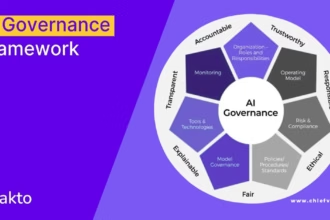
Governance, risk, and ethical oversight. AI introduces new risk surfaces: data privacy, model bias, explainability for auditors, and over-reliance by teams. CFOs increasingly own or share responsibility for AI trust and controls. Treating AI investment like any other capital decision—with stage gates, ROI tracking, and kill criteria—keeps the function honest.
These competencies sit on top of traditional financial expertise. They do not replace it.
Comparison of Traditional vs. Modern CFO Skill Emphasis
| Skill Area | Traditional Emphasis | 2026 Emphasis | Practical Implication for CFOs |
|---|---|---|---|
| Data Handling | Reporting accuracy & compliance | Real-time interpretation + quality assessment | Challenge AI outputs before they influence decisions |
| Technology | ERP system knowledge | AI fluency + workflow redesign | Fund and govern, not just approve tools |
| Insight Delivery | Historical variance analysis | Scenario thinking + clear recommendations | Move from “what happened” to “what we should do” |
| Risk & Controls | Financial controls & SOX | AI risk, data lineage, model governance | Expand control frameworks to cover AI agents |
| Team Development | Accounting depth | Data/AI literacy + human judgment skills | Upskill existing talent before hiring specialists |
Step-by-Step Action Plan for Building Data Analytics and AI Competencies
If you are starting from a relatively traditional base, avoid boiling the ocean. Focus on high-leverage moves that build capability and credibility at the same time.
- Audit your current state in 30 days. Map the top 5–7 finance processes that consume the most time or produce the highest decision impact (forecasting, close, cash forecasting, variance analysis, board reporting). Note where data quality breaks down and where teams already experiment with AI tools. Document formal training levels across the team.
- Pick two use cases with clear ROI. Choose one process where automation can free capacity (accounts payable anomaly detection or basic reconciliation) and one where better insight creates strategic value (rolling forecast scenarios or cash flow prediction). Define success metrics before any tool selection: time saved, forecast accuracy improvement, or decision cycle reduction.
- Build personal fluency first. Spend focused time using the tools yourself. Run the same questions through different models. Compare outputs against known results. Learn to write better prompts and to demand source citations or confidence indicators. Your visible use signals to the team that this is not optional.
- Establish lightweight governance. Create simple rules for data that can enter AI tools, required human review of material outputs, and documentation standards. Partner with IT, legal, and risk early. Treat this as an extension of existing financial controls rather than a separate bureaucracy.
- Upskill the team in waves. Start with applied AI fluency for everyone who touches data. Move selected people into solution design and workflow redesign. Use cross-functional projects so finance professionals work alongside data and technology colleagues. Measure progress with practical demonstrations, not certificates.
- Track value and kill underperformers. Review every AI initiative quarterly against the original metrics. Sunset tools or processes that fail to deliver. Reallocate the freed capacity to higher-value work. This discipline prevents the common trap of accumulating pilots that never scale.
Data analytics and AI competencies for modern CFOs In my experience, the CFOs who make the fastest progress treat the first 90 days as a learning lab rather than a transformation announcement. They get their hands dirty, show visible results on a couple of processes, and only then expand the mandate.
Common Mistakes & How to Fix Them
Mistake 1: Buying tools before fixing data. Many teams deploy sophisticated AI on messy, siloed, poorly governed data and then wonder why the outputs are unreliable.
Fix: Prioritize data quality, ownership, and lineage as the foundation. Clean data multiplies the value of every tool that sits on top of it.
Mistake 2: Treating AI as an IT project. When finance hands the problem to technology and waits for a solution, adoption stalls and the resulting tools often miss the real decision needs.
Fix: Keep finance in the driver’s seat on use-case selection, success metrics, and process redesign. Technology partners on architecture and integration.
Mistake 3: Focusing only on efficiency. Cost takeout is real, but the bigger prize is better and faster decisions. Teams that stop at automation miss the strategic upside.
Fix: Pair every efficiency use case with at least one insight or scenario-planning use case. Measure decision quality and speed, not just hours saved.
Mistake 4: Ignoring the human judgment layer. Over-reliance on AI outputs without critical review creates new risks and erodes trust when errors surface.
Fix: Explicitly design human review points for material decisions. Train people to challenge the model the same way they challenge a junior analyst’s work.
Mistake 5: Under-investing in storytelling. Brilliant analysis that no one understands or acts on delivers zero value.
Fix: Make clear recommendation writing and visual communication a required skill. Review board and leadership materials for decision clarity, not just accuracy.
Key Takeaways
- Data analytics and AI competencies for modern CFOs center on evaluation, judgment, and process redesign rather than coding or pure technical expertise.
- The largest current constraint is formal training: most finance teams still lack structured preparation for AI and advanced analytics.
- CFOs increasingly share ownership of enterprise AI capital allocation, trust, and controls—making personal fluency non-negotiable.
- Start with a short diagnostic, two high-ROI use cases, personal tool use, and lightweight governance before scaling.
- Pair efficiency gains with insight and decision-speed gains to capture the full value.
- Treat AI investments with the same rigor as any other capital decision: clear targets, stage gates, and willingness to kill underperformers.
- Human judgment remains the scarce resource. Technology amplifies it or amplifies its absence.
- Continuous upskilling and cross-functional collaboration turn capability into sustained competitive advantage.
Data analytics and AI competencies for modern CFOs The finance leaders who thrive in this environment treat data and AI as core operating disciplines, not side projects. They build teams that can interrogate models, redesign work, and translate insight into action. That combination of technical fluency and business judgment is what boards now expect and what the market rewards.
Start with the 30-day audit of your highest-impact processes and your team’s current skill levels. The gap becomes visible quickly. Closing it is a leadership choice, not a technology purchase.
FAQs
What specific data analytics and AI competencies for modern CFOs matter most in 2026?
The highest-leverage ones are the ability to evaluate AI outputs critically, understand how data quality shapes those outputs, redesign workflows around the technology, and govern the associated risks. Traditional financial expertise remains the foundation; these competencies sit on top of it.
Do modern CFOs need to learn to code to develop data analytics and AI competencies?
No. The requirement is fluency—knowing what the tools can do, asking the right questions, spotting flawed outputs, and ensuring measurable business value—not writing production code. Partnering with data and technology specialists is the practical model.
How can a CFO with limited technical background start building data analytics and AI competencies?
Begin by using the tools yourself on real finance problems, run a short diagnostic of current processes and team skills, pick two use cases with clear success metrics, and establish simple review standards. Visible personal use and early wins create momentum faster than formal training programs alone.
