





CFO Guide to Blockchain for Supply Chain Finance starts with a simple truth: in today’s fast-paced business world, where supply chains stretch across continents and cash flows can make or break a company, you need tools that cut through the chaos. As a CFO, you’ve probably juggled endless spreadsheets, chased down delayed payments, and worried about fraud lurking in the shadows of complex supplier networks. But what if I told you blockchain could flip the script? This technology isn’t just buzz—it’s a game-changer for streamlining finances in your supply chain. Let’s dive in and explore how this CFO guide to blockchain for supply chain finance can empower you to make smarter, faster decisions.
Why Every CFO Needs to Grasp Blockchain Basics
Picture blockchain as a digital ledger that’s shared among everyone in a party, but no one can sneak in and alter the entries without everyone noticing. It’s like a group chat where every message is timestamped, encrypted, and impossible to delete or fake. At its core, blockchain is a decentralized database that records transactions in blocks, chained together with cryptography. No single entity controls it, which means goodbye to middlemen and hello to trust built right into the system.
As a CFO, why should you care about this in the context of supply chain finance? Well, traditional supply chains are riddled with inefficiencies—think manual invoicing, disputed deliveries, and capital tied up in transit. Blockchain steps in to automate and verify these processes, making your financial oversight more precise. In this CFO guide to blockchain for supply chain finance, we’ll break down how it works without drowning you in tech jargon. For instance, smart contracts—self-executing code on the blockchain—can automatically release payments when goods arrive, verified by IoT sensors. It’s like having a tireless assistant who never makes mistakes.
But let’s keep it real: blockchain isn’t magic. It shines in scenarios with multiple parties, like suppliers, manufacturers, and financiers, all needing a single source of truth. If you’re dealing with cross-border trades, where currency conversions and regulations add layers of complexity, this tech can slash costs by up to 30%, according to industry insights. Curious yet? Stick with me as we unpack the benefits tailored for your role.
The Transformative Power of Blockchain in Supply Chain Finance
Imagine your supply chain as a busy highway jammed with trucks—delays, accidents, and toll booths everywhere. Blockchain acts like a smart traffic system, clearing paths and ensuring smooth flow. In supply chain finance, it integrates financial transactions with physical movements, creating a seamless ecosystem. This CFO guide to blockchain for supply chain finance highlights how it enables real-time visibility into inventory, invoices, and payments, reducing the infamous “bullwhip effect” where small fluctuations amplify into major disruptions.
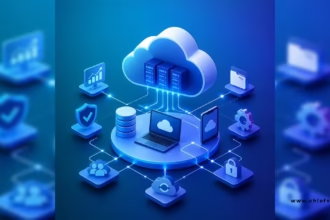

One key way blockchain revolutionizes this is through tokenization. Assets like invoices or inventory can be turned into digital tokens, making them easier to trade or finance. For a CFO, this means unlocking liquidity faster—say, selling an invoice to a financier in minutes instead of weeks. It’s akin to turning a clunky old safe into a sleek ATM. Plus, with immutable records, audits become a breeze; no more digging through piles of paper to reconcile accounts.
Key Benefits of Blockchain for Supply Chain Finance from a CFO’s Lens
Let’s get specific. What does this mean for your bottom line? First off, enhanced transparency. Every transaction is logged permanently, so you can trace a product’s journey from farm to shelf, spotting fraud or inefficiencies instantly. In this CFO guide to blockchain for supply chain finance, consider how this reduces disputes—suppliers can’t claim non-delivery when the blockchain says otherwise. Studies show this can cut dispute resolution time by 50%.
Cost savings are another big win. By eliminating intermediaries like banks for letters of credit, blockchain trims fees and accelerates settlements. Think cross-border payments: traditional methods take days and cost a fortune in forex; blockchain does it in seconds for pennies. For CFOs managing global operations, this frees up working capital, potentially boosting ROI by improving cash flow cycles.
Then there’s risk mitigation. Supply chains are vulnerable to everything from counterfeit goods to geopolitical tensions. Blockchain’s cryptography ensures data integrity, making it harder for bad actors to tamper. As a CFO, you’ll appreciate the compliance perks—automatic smart contracts enforce regulations, reducing legal headaches. And don’t forget scalability: as your business grows, blockchain handles increased volume without proportional cost hikes.
Efficiency in reporting is a hidden gem too. Real-time data means your financial forecasts are spot-on, not based on outdated info. In volatile markets, this edge can be the difference between profit and loss. Overall, this CFO guide to blockchain for supply chain finance positions it as a strategic tool, not just tech hype.
Overcoming Challenges: What CFOs Should Watch Out For
No rose without thorns, right? Adopting blockchain isn’t a walk in the park. Scalability issues plague some networks—public blockchains like Ethereum can get congested, slowing transactions. For supply chain finance, where speed is key, opting for private or consortium blockchains might be wiser, as they offer faster processing with controlled access.
Regulatory hurdles loom large. Laws around digital assets vary by country, and as a CFO, you must navigate this minefield to avoid fines. This CFO guide to blockchain for supply chain finance advises consulting legal experts early. Integration with legacy systems is another pain point; your ERP software might not play nice with blockchain, requiring custom development.
There’s also the human factor—resistance from teams used to old ways. Training costs add up, and initial investments can strain budgets. Security risks, like smart contract bugs, could expose vulnerabilities. But here’s the silver lining: starting small with pilots minimizes these risks. Weigh the pros against cons, and you’ll see the long-term gains outweigh the upfront challenges.

Step-by-Step Implementation: A Practical CFO Guide to Blockchain for Supply Chain Finance
Ready to roll up your sleeves? Implementing blockchain doesn’t require a PhD in coding. Start with assessment: Audit your supply chain finance processes. Where are the bottlenecks? Invoicing delays? Payment reconciliations? Identify areas ripe for blockchain, like supplier financing or inventory tracking.
Next, build your strategy. Set clear goals—say, reduce payment cycles by 40%. In this CFO guide to blockchain for supply chain finance, I recommend choosing the right type: Public for maximum transparency, private for speed. Partner with tech providers; platforms like IBM Blockchain or Hyperledger make it accessible.
Pilot testing is crucial. Launch a small-scale project, perhaps digitizing invoices for one supplier. Monitor metrics like cost savings and error rates. Scale up based on results, integrating with existing tools via APIs. Don’t forget change management—train your finance team on the new system, emphasizing benefits like less manual work.
Budget wisely: Initial setup might cost $100K-$500K, but ROI comes quick through efficiencies. Track progress with KPIs, adjusting as needed. This hands-on approach ensures blockchain aligns with your financial objectives, turning theory into tangible value.
Real-World Case Studies: Blockchain in Action for Supply Chain Finance
Let’s ground this in reality. Take Walmart’s partnership with IBM on Food Trust—a blockchain platform tracking produce from farm to store. For CFOs, this means faster recalls (from days to seconds), reducing losses from spoilage or scandals. In finance terms, it streamlines supplier payments, ensuring only verified deliveries get funded.
Another gem: Maersk and IBM’s TradeLens for shipping. This platform digitizes bills of lading, cutting paperwork by 80%. As a CFO, imagine the cash flow boost from quicker customs clearances and fewer disputes. Costs dropped significantly, with real-time visibility aiding better forecasting.
In finance-specific cases, like Ant Financial’s blockchain for SME lending in supply chains, it assesses credit via transaction history, enabling faster loans. These examples in our CFO guide to blockchain for supply chain finance show proven ROI—companies report 20-30% efficiency gains. What could it do for your operations?
Future Trends: Where Blockchain Meets Supply Chain Finance Next
Peering into the crystal ball, integration with AI and IoT will supercharge blockchain. Imagine AI predicting disruptions while blockchain verifies data in real-time. For CFOs, this means predictive finance—anticipating cash needs before they arise.
DeFi (Decentralized Finance) is rising, offering peer-to-peer lending without banks. In supply chains, this could mean instant financing for suppliers via tokenized assets. Regulatory clarity is coming too, with governments like the EU pushing blockchain-friendly policies.
Sustainability tracking is hot—blockchain proves ethical sourcing, appealing to eco-conscious investors. As this CFO guide to blockchain for supply chain finance evolves, expect quantum-resistant security to counter future threats. Stay ahead, and you’ll position your company as a leader.
Conclusion: Embrace the Blockchain Revolution in Supply Chain Finance
Wrapping up this CFO guide to blockchain for supply chain finance, we’ve covered the basics, benefits like transparency and cost cuts, challenges to navigate, implementation steps, real cases, and future trends. It’s clear: blockchain isn’t a fad; it’s a strategic imperative for optimizing finances in complex supply chains. As a CFO, adopting it can enhance efficiency, reduce risks, and unlock new opportunities. Don’t wait for competitors to lap you—start exploring today. Your balance sheet will thank you.
FAQs
1. What makes this CFO guide to blockchain for supply chain finance essential for beginners?
This CFO guide to blockchain for supply chain finance breaks down complex concepts into digestible bits, helping newbies understand benefits like faster payments without overwhelming tech details.
2. How does blockchain reduce costs in supply chain finance, according to this CFO guide?
In this CFO guide to blockchain for supply chain finance, we explain how eliminating intermediaries and automating processes via smart contracts can slash fees by up to 30%, freeing up capital.
3. What are the main risks highlighted in the CFO guide to blockchain for supply chain finance?
The CFO guide to blockchain for supply chain finance warns about scalability issues, regulatory uncertainties, and integration challenges, advising pilot tests to mitigate them.
4. Can small businesses benefit from the strategies in this CFO guide to blockchain for supply chain finance?
Absolutely— this CFO guide to blockchain for supply chain finance shows how even SMEs can use affordable platforms for better transparency and quicker financing.
5. Where can I learn more beyond this CFO guide to blockchain for supply chain finance?
Expand your knowledge with resources like Deloitte’s insights on cryptocurrency, which tie into supply chain efficiencies.
Click Here:ChiefViews