









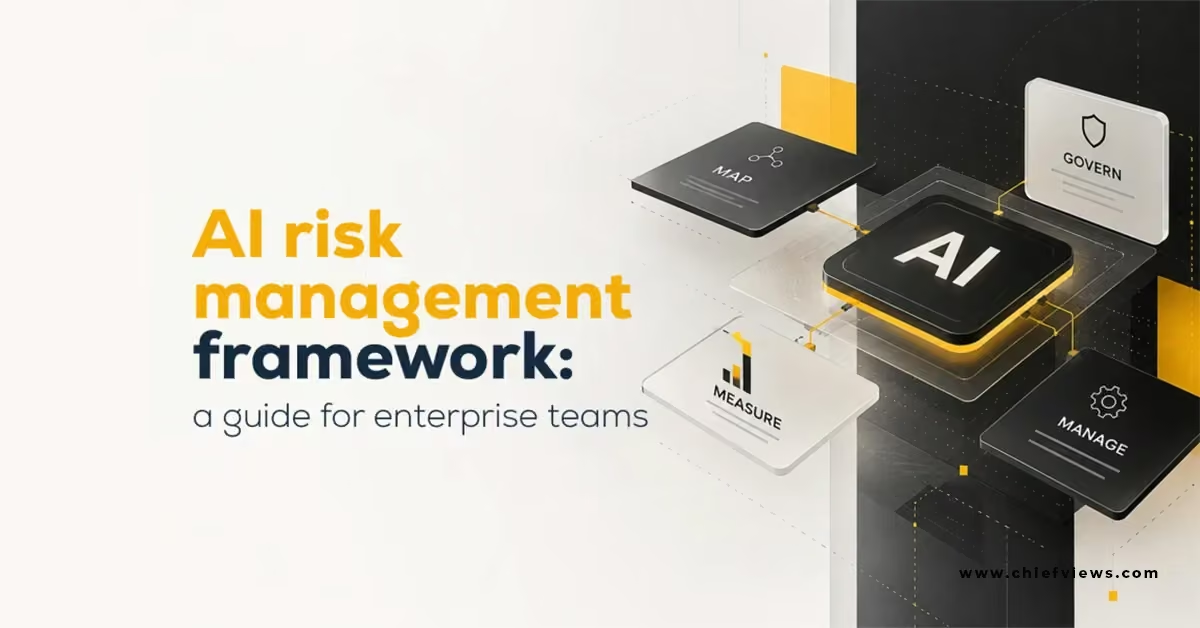
AI risk management framework for finance teams is a structured way to identify, measure, and control the risks that come with using AI on financial data, forecasts, and reporting, before those risks show up in your numbers.
The quick version:
- What it is: A repeatable process for mapping AI risks, setting controls, and monitoring results across finance workflows.
- Why it matters: AI errors can flow straight into forecasts, close processes, and disclosures.
- Who needs it: Any finance team using chatbots, copilots, or vendor-embedded AI, not just the ones building models.
- Where to start: Inventory your tools, tier them by risk, and assign owners.
This guide is the hands-on companion to our CFO-level piece on how CFO can scale governed AI to drive growth 2026. That one covers strategy. This one covers the machinery.
Why Finance Teams Need Their Own AI Risk Framework
Finance isn’t marketing. A bad AI-written tagline is embarrassing. A bad AI-assisted accrual is a restatement risk.
That gap is why a generic corporate AI policy usually falls short. It tends to cover acceptable use and data privacy, then stop. Finance needs more: control ownership, evidence trails, and clear rules on where human judgment is non-negotiable.
Here’s the thing. Most finance teams already have the muscle for this. You run reconciliations, approval matrices, and segregation of duties every day. An AI risk management framework for finance teams simply extends that muscle to a new kind of “preparer” that never sleeps and occasionally makes things up.



The risks that actually show up
In my experience, the same handful of issues come up again and again:
- Wrong answers delivered with confidence. Generative tools can produce fluent, plausible, incorrect output.
- Data leakage. Analysts paste sensitive figures into public tools.
- Model drift. A forecasting model that worked last year slowly stops reflecting reality.
- Bias and unfair outcomes. Credit, pricing, or collections models can skew in ways nobody intended.
- Weak audit trails. Nobody can reconstruct how a number was produced.
- Third-party risk. Vendors switch on AI features inside your ERP without much fanfare.
The Core Building Blocks of an AI Risk Management Framework for Finance Teams
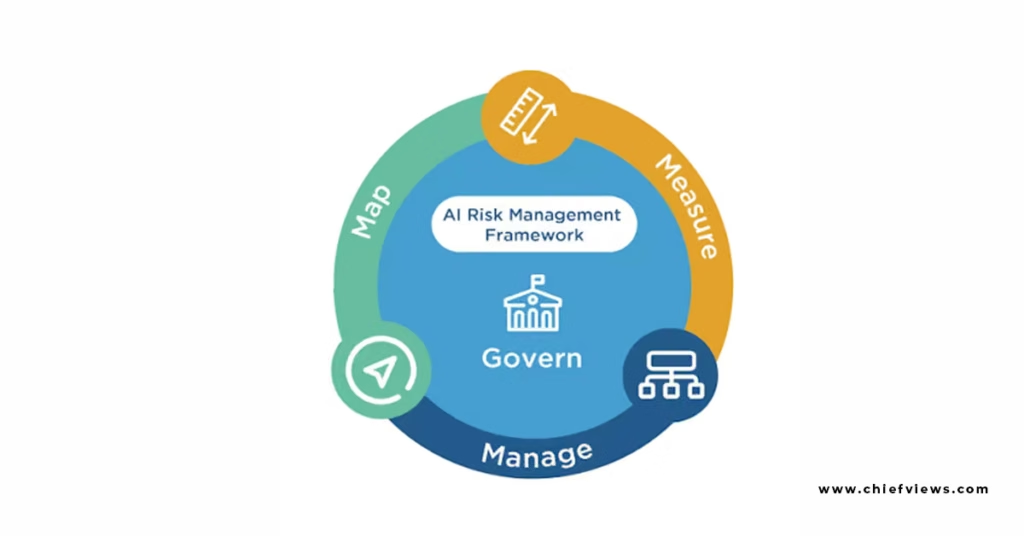
Don’t invent this from a blank page. The NIST AI Risk Management Framework is the most widely referenced U.S. starting point. It’s voluntary, and it organizes AI risk work into four functions: Govern, Map, Measure, and Manage. NIST also released a Generative AI Profile in 2024 that extends the framework to the particular risks of generative tools.
Think of the framework as a building’s fire-safety system. You don’t install it because you expect a fire every week. You install it so a small spark never becomes a headline.
Here’s how the four functions translate into finance language.
| NIST Function | What It Means in Finance Terms | Example Action |
|---|---|---|
| Govern | Policies, roles, and accountability | Name an AI owner for each use case; set an approval path |
| Map | Understand context, data, and impact | Inventory tools; document what data each one touches |
| Measure | Test and track performance and risk | Compare outputs to baselines; track error and exception rates |
| Manage | Prioritize and respond to risks | Add controls, retrain or retire models, escalate incidents |
Connecting AI controls to what you already test
Your auditors already know the COSO internal control model. The COSO internal control guidance gives you a familiar vocabulary: control environment, risk assessment, control activities, information, and monitoring.
The practical move is to fold AI controls into your existing control matrix. A separate AI binder gets ignored. A line item inside the controls you already test gets maintained.
Step-by-Step: Building Your AI Risk Management Framework for Finance Teams
If you’re a beginner, follow this order. Skipping ahead is how programs stall.
Step 1: Build an AI inventory
List every AI tool, formal or informal. Include chatbots analysts use on their own, AI features inside planning software, and any model built in-house. Record the owner, purpose, data touched, and vendor.
You can’t govern what you can’t see.
Step 2: Classify use cases by risk tier
Sort each use case by how much damage a wrong output could cause. A simple three-tier model works well.
| Tier | Example Use Cases | Review Level |
|---|---|---|
| Low | Drafting meeting summaries, formatting reports | Light checklist, spot checks |
| Medium | Forecast support, collections prioritization, variance commentary | Named owner, documented testing, periodic review |
| High | Journal entry generation, disclosures, credit decisions, customer-facing outputs | Legal, compliance, and internal audit review; ongoing monitoring |
Step 3: Assign three owners per use case
Every use case needs a business owner, a technical owner, and a risk reviewer. If a team can’t name all three, the use case waits.
Step 4: Define controls for each tier
Match controls to risk, not to enthusiasm. Typical controls include:
- Approved data sources and a ban on pasting restricted data into public tools
- Human review before any output reaches the ledger or the board
- Segregation of duties between the person who prompts and the person who approves
- Retention of prompts, outputs, and overrides for audit
- Change management when a model or vendor feature is updated
Step 5: Test before you trust
Run the tool against known answers. Compare AI-assisted results to your manual process for a full cycle. Document what passed, what failed, and what you changed.
Step 6: Monitor and report
Set a cadence. Track error rates, exceptions, override frequency, and forecast variance. Report a short scorecard to the audit committee, using the same metrics every quarter.
Step 7: Review and update
Models drift. Vendors change features. Regulations move. Schedule a formal review at least annually, and sooner after any significant incident or vendor update.
Borrowing From Banking: Model Risk Management
Banks have managed model risk for years. The Federal Reserve’s SR 11-7 supervisory guidance on model risk management emphasizes sound development, independent validation, and strong governance of models.
It’s written for banking organizations, and it isn’t a legal requirement for most other companies. That’s my opinion talking, but I’d borrow its core habits anyway: document your assumptions, validate independently, and challenge model output before relying on it.
What usually happens is that teams skip the “independent challenge” piece because it feels slow. It’s also the piece that catches the expensive mistakes.
An AI Risk Management Framework for Finance Teams in Action: Three Quick Scenarios
Abstract frameworks only help if you can picture them working. Try these.
Scenario 1: AI-assisted forecasting. A planning tool suggests a revised revenue forecast. Under your framework, the FP&A lead reviews the drivers, compares the output to the prior model, and logs approval before the number goes upstairs.
Scenario 2: Accounts receivable prioritization. A model ranks overdue invoices. The risk reviewer checks that it isn’t systematically skewing against certain customer segments, and the collections manager can override rankings with a documented reason.
Scenario 3: Variance commentary drafting. A generative tool writes first-draft commentary. The analyst verifies every figure against the source, because fluent prose can hide a wrong number.
Same framework. Different tiers. Different levels of scrutiny.
Common Mistakes & How to Fix Them
| Mistake | What It Looks Like | The Fix |
|---|---|---|
| Writing a policy and stopping there | A PDF nobody reads | Tie controls to your existing control matrix and test them |
| Ignoring “shadow AI” | Analysts using personal accounts | Run an inventory and offer approved alternatives |
| One-size-fits-all review | Every tool gets the same heavy process | Use risk tiers so low-risk tools move fast |
| No baseline | Nobody can prove the AI helped or hurt | Capture “before” metrics at kickoff |
| Overlooking vendor AI | New features appear after a software update | Add AI review to procurement and renewals |
| Treating humans as a rubber stamp | Reviewers approve without checking | Require evidence of review and sample-test approvals |
The kicker: most of these failures are about discipline, not technology.
How to Measure Whether Your Framework Is Working
Does your framework reduce risk, or just generate paperwork? Metrics settle that question.
Track a short list: number of AI use cases inventoried versus approved, count of control exceptions, override rates, forecast variance before and after adoption, and time to close. Keep facts and judgments separate. A measured result is a fact. A belief about future impact is a projection, so label it that way.
If you want the growth side of this story, including how governance supports revenue, pricing, and working capital gains, see our guide on how CFO can scale governed AI to drive growth 2026.
Key Takeaways
- An AI risk management framework for finance teams extends your existing controls to cover AI tools and models.
- Start with NIST’s four functions (Govern, Map, Measure, Manage) and avoid building a framework from scratch.
- Fold AI controls into your COSO-aligned control matrix so they actually get tested.
- Inventory every tool first, including shadow AI and vendor-embedded features.
- Tier use cases by risk so low-risk work moves quickly and high-risk work gets real scrutiny.
- Every use case needs a business owner, a technical owner, and a risk reviewer.
- Test against baselines, monitor on a schedule, and review the framework at least annually.
- Report a small set of consistent metrics to leadership and the audit committee.
Final Thoughts
A good AI risk management framework for finance teams doesn’t slow you down. It gives you a reason to trust the numbers when the pressure is on.
You don’t need a six-month program to begin. Block two hours this week, list every AI tool your team touches, and sort each one into low, medium, or high risk. That single page is your framework’s first draft.
FAQs
What is an AI risk management framework for finance teams?
It’s a documented set of roles, risk tiers, controls, and monitoring routines that governs how finance uses AI. It helps ensure outputs touching forecasts, close processes, and reporting are accurate, explainable, and reviewed by a human.
Do U.S. finance teams have to follow the NIST AI RMF?
No. The NIST framework is voluntary. Many organizations adopt it because it’s widely recognized and gives auditors, legal teams, and vendors a shared language. Your industry or state may impose separate requirements, so check with legal counsel.
How does an AI risk framework connect to CFO growth goals?
Controls make it safe to scale. When leaders trust the process, they can expand AI into forecasting, pricing, and working capital with confidence. That’s the core idea behind how CFO can scale governed AI to drive growth 2026.

