








CHRO guide to making HR AI infrastructure invisible 2026 starts with a simple reality check: the best AI in HR is the kind no one notices. Employees open their existing tools, get answers, finish tasks, and move on. Managers get clean recommendations without hunting through dashboards. The tech runs in the background like electricity in the walls—you flip the switch and the lights come on. You never see the wiring.
Here’s the quick overview of what this approach delivers and why it matters right now:
- Seamless embedding of AI agents, data pipelines, and workflow triggers into the tools people already use so HR interactions feel native instead of bolted-on.
- Stronger CHRO-CIO partnerships that treat infrastructure as a shared operating layer rather than a separate tech project.
- Lower friction and higher adoption because employees never have to learn a new interface or jump systems.
- Better governance and audit trails that stay invisible to end users but fully visible to compliance and leadership.
- Real capacity gains redirected into higher-value work instead of more admin screens.
Most organizations still treat AI as a visible add-on. New portals. Separate chatbots. Training sessions on “how to use the AI tool.” That approach creates resistance and shadow work. The 2026 version flips it: make the infrastructure disappear so the outcomes stand out.
Why Invisible Infrastructure Wins in 2026
CEOs now expect enterprise CHROs who can partner with technology leaders on workforce redesign. Reports from firms like Heidrick & Struggles show only about one in four HR leaders currently operate at that level. The gap often sits in the plumbing—fragmented data, brittle integrations, and AI features that force people out of their daily flow.
Invisible infrastructure solves that. Data pipelines stay quiet. Agents trigger inside the collaboration tools already open on the desktop. Scheduling, policy answers, onboarding status, and skills matching happen without extra logins. KPMG’s work on “Invisible HR” describes exactly this zero-interface experience embedded in email, chat, and workflow tools people already live in.
The payoff shows up in adoption numbers and in the quality of work redesign. When the system feels natural, managers actually use the recommendations. When it feels like extra work, they bypass it.


Step-by-Step Action Plan for CHROs
Start small and prove the model before scaling. Here’s the sequence I use with teams that want results inside two quarters.
- Map the highest-friction employee and manager moments. Look at onboarding status checks, leave requests, policy questions, and shift scheduling. These are the places where people already complain about “having to go somewhere else.”
- Partner with the CIO on a joint infrastructure audit. Focus on three things: API readiness of core systems, data consistency across the employee record, and existing identity/access controls. Treat this as a shared operating model, not an HR request.
- Choose one bounded workflow and redesign it end-to-end with human-AI roles defined up front. Leave administration or recruiting intake works well. Decide which steps stay human judgment, which become agent-handled, and where escalation happens. Test failure modes so the process still works if the AI layer goes quiet.
- Embed the new capability inside existing entry points. No new apps. No extra tabs. Wire the agent into the collaboration platform or the HRIS self-service surface people already open every day.
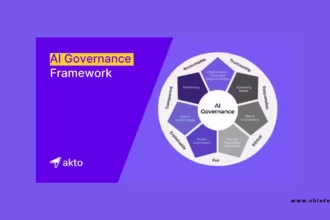
- Build governance that stays invisible to users but fully logged for audit. Decision rights, model versions, data access, and challenge paths all need clear owners. Employees should never see the controls; compliance should always be able to pull the trail.
- Measure capacity freed and where it actually goes. Track time saved, then ask managers what higher-value work absorbed it. Redirect the gains deliberately or they disappear into more meetings.
- Expand only after the first workflow runs cleanly for 60–90 days. Use the same pattern on the next high-friction process. Build a simple internal playbook so other teams can copy the approach without reinventing it.
This sequence keeps the focus on outcomes instead of tool rollout theater.
CHRO guide to making HR AI infrastructure invisible 2026: Core Design Principles
Three principles keep the infrastructure out of sight while keeping value high.
First, entry points stay familiar. Employees should never hear “please log into the new AI portal.” The AI rides inside the tools they already trust.
Second, data collection becomes default and silent. Pull what you can from systems of record, calendars, and access logs. Stop asking people to re-enter information the company already owns.
Third, high-stakes decisions stay transparent by design. Attendance tracking and routine policy answers can stay fully background. Performance signals, promotion recommendations, and talent assessments need clear disclosure of what data fed the model and how a human can override it.
These rules prevent the classic trap of over-automating sensitive moments while under-automating the pure admin drag.
Common Mistakes & How to Fix Them
Mistake one: buying AI features without fixing the underlying data and integration layer. The tool looks impressive in the demo and fails in production. Fix: insist on an API-first audit before any new contract. If the systems cannot talk cleanly, the AI cannot run cleanly.
Mistake two: treating visibility as a feature. Leaders sometimes demand dashboards and chatbots so they can “see the AI working.” Employees experience that demand as extra noise. Fix: measure outcomes and adoption instead of interface usage. If the lights stay on and the work gets done, the wiring did its job.
Mistake three: leaving middle managers out of the redesign. Agents change how work flows. Managers who do not understand the new handoffs create workarounds. Fix: involve a small group of managers in the first workflow redesign and make them co-owners of the success metrics.
Mistake four: ignoring shadow AI. People will use consumer tools when the official path feels slow. Fix: make the governed path faster and more useful than the shadow alternative. Policy alone rarely wins.

Comparison: Visible vs Invisible AI Infrastructure
| Aspect | Visible Approach | Invisible Approach | Typical Outcome Difference |
|---|---|---|---|
| Employee Experience | New portals, extra logins, training | Embedded in existing tools | Higher daily adoption, lower complaints |
| Implementation Speed | Fast demo, slow scale | Longer upfront integration, faster scale | Visible looks quicker; invisible sticks |
| Governance Visibility | User-facing controls and disclaimers | Backend logs and audit trails only | Cleaner compliance, less user friction |
| Manager Workload | Extra dashboards to check | Recommendations appear in normal flow | Time redirected to coaching and decisions |
| Risk of Shadow AI | High if official path feels heavy | Lower when official path is the easiest | Reduced data leakage exposure |
| CHRO Time Allocation | Tool selection and change campaigns | Work redesign and partnership with CIO | More strategic conversations at the top |
The table makes the trade-off plain. Visible systems generate activity. Invisible systems generate capacity.
Building the Partnership That Makes It Stick
The CHRO-CIO relationship sits at the center. High-performing companies treat it as peer-level, not support-level. Joint ownership of the boundary between people and agents becomes non-negotiable. Name an owner for that boundary. Agree on escalation routes before the first agent goes live.
In my experience, the teams that succeed hold a standing monthly review that covers three items only: which workflows moved further into background operation, where capacity actually landed, and any governance exceptions that surfaced. Keep the meeting short and data-driven. Skip the status theater.
Key Takeaways
- Invisible infrastructure means AI runs inside the tools people already use so the experience feels native.
- Start with one high-friction workflow, define human and agent roles clearly, and prove the model before scaling.
- Partner with the CIO on data consistency and API readiness; treat infrastructure as a shared operating layer.
- Keep governance fully logged for audit while keeping it completely out of the employee interface.
- Measure capacity gained and deliberately redirect it; otherwise the savings vanish.
- High-stakes decisions need transparency; routine admin can stay fully background.
- Middle managers make or break adoption—bring them into the redesign early.
- Shadow AI shrinks when the official path is simply faster and cleaner.
The real advantage in 2026 belongs to the organizations that stop showcasing the technology and start delivering quiet competence. Make the infrastructure disappear and the human work gets sharper. Pick one workflow this quarter, map the friction, and rebuild it so the AI never has to introduce itself. That single move compounds faster than another platform purchase.
FAQs
What is the fastest way to start applying the CHRO guide to making HR AI infrastructure invisible 2026?
Pick one high-friction workflow—leave requests or onboarding status checks work well—map the current steps, define clear human and agent roles, then embed the new process inside the tools people already use. Prove it for 60 days before expanding. That single move delivers visible capacity gains without forcing anyone to learn a new system.
How does the CHRO guide to making HR AI infrastructure invisible 2026 handle compliance and audit requirements?
Governance stays fully logged and auditable in the background while remaining completely invisible to employees. Decision rights, model versions, data access, and override paths are documented for legal and compliance teams, but workers never see extra disclaimers or portals. The result is cleaner audits and higher adoption at the same time.
Will making HR AI infrastructure invisible reduce the need for change management?
It reduces the heaviest parts of change management because people do not have to adopt a new interface. Managers still need clear communication on what the agents handle and how to override results, but the daily friction disappears. Most organizations find adoption rises sharply once the technology stops asking for attention.

