







Customer Data Platform (CDP) Implementation Guide :
A Customer Data Platform implementation guide should start with one blunt truth: most CDP rollouts don’t fail because of bad software. They fail because nobody mapped the mess before buying the tool. Garbage in, garbage out — a CDP just makes the garbage move faster across every department.
Quick summary (what you need to know):
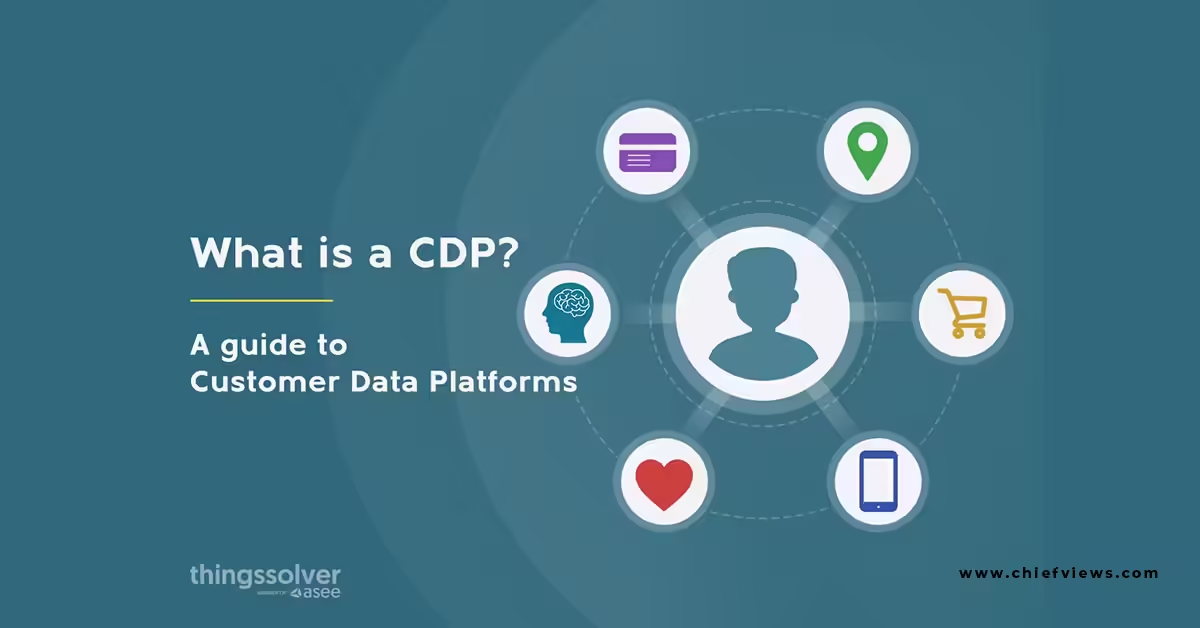
- What it is: A CDP is a system that unifies customer data from every source — web, app, CRM, POS, support tickets — into one persistent, queryable profile per customer.
- Why it matters: The CDP market is projected between $4 billion and $10 billion in 2026, with growth rates ranging from roughly 14% to over 30% depending on the research firm — a sign that unification is no longer optional.
- The core challenge: Most CDP projects stumble on governance and data quality, not technology selection.
- The payoff: Done right, a CDP becomes the backbone that makes CXO strategies for omnichannel experience consistency actually executable — not just a slide in a strategy deck.
What A CDP Actually Does (And What It Doesn’t)
Let’s clear up the confusion first. A CDP isn’t a CRM. It isn’t a data warehouse. It isn’t your marketing automation tool wearing a new badge.
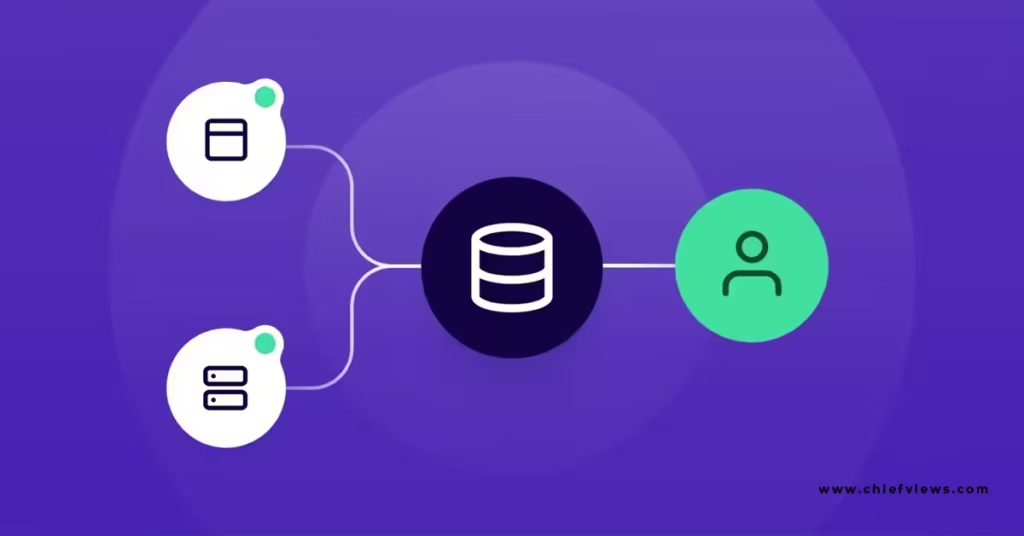
A CDP sits underneath all of those systems and builds one unified profile per customer — stitching together identifiers, behaviors, and transactions that would otherwise live in disconnected silos.
Here’s the kicker: a CDP without clean governance just becomes a faster way to spread bad data everywhere at once. Speed isn’t the goal. Accuracy is.


Why CDP Implementation Is A Leadership Problem, Not Just An IT Ticket
In my experience, the projects that stall are the ones handed entirely to IT with a “build it and they’ll use it” mindset. That rarely works.
A CDP touches marketing, sales, support, and store operations simultaneously. Without a single accountable owner, each department pulls the implementation in a different direction.
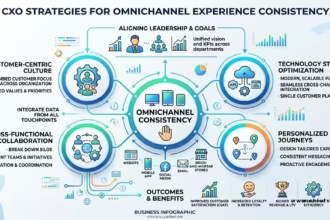
This is exactly the connective tissue behind CXO strategies for omnichannel experience consistency — someone above the departmental line has to own the data model, or the whole thing drifts into another silo with a fancier name.
Step-By-Step CDP Implementation Plan (Beginner-Friendly)
Don’t try to boil the ocean in month one. Sequence matters more than speed here.
- Audit your existing data sources. List every system touching customer data — CRM, e-commerce platform, support software, loyalty program, POS.
- Define your unification goals. Are you solving for personalization, service consistency, or analytics? Pick a primary driver; don’t try to solve everything at once.
- Clean before you connect. Deduplicate records and standardize fields before any data flows into the CDP. Skipping this step is the single most common reason implementations drag on for months.
- Select a CDP architecture that fits your stack. Some are built for marketing-led use cases, others for enterprise-wide data unification — match the tool to the job.
- Build identity resolution rules. Decide how the system matches “John on mobile” with “J. Smith in-store” — this is the technical heart of the whole project.
- Pilot with one use case. Start with something measurable, like cart abandonment emails or a unified support view, before scaling company-wide.
- Integrate with downstream tools. Connect the CDP’s unified profiles to your email platform, ad platforms, and customer service software.
- Set governance rules and access controls. Decide who can edit profiles, who can query data, and how privacy compliance gets enforced.
- Measure, adjust, scale. Review data quality and adoption monthly for the first two quarters — this is where most of the real tuning happens.
CDP Implementation: Cost, Time & Complexity Breakdown
Here’s a realistic view of what different implementation paths actually cost in time and effort — not vendor marketing promises.
| Implementation Type | Typical Timeline | Relative Cost | Best For |
|---|---|---|---|
| Marketing-Focused CDP (point solution) | 4–8 weeks | Lower | Teams needing faster personalization, not full enterprise unification |
| Enterprise CDP (full data unification) | 4–9 months | Higher | Organizations pursuing company-wide omnichannel consistency |
| Hybrid / Composable CDP | 3–6 months | Moderate | Companies with existing data warehouses wanting flexibility |
| Phased Pilot Rollout | 2–3 months per phase | Moderate, spread over time | Beginners wanting proof before full investment |
Common Mistakes & How To Fix Them
Mistake 1: Buying the CDP before mapping the data landscape. Fix: Complete a full data audit first. The tool choice should follow the plan, not precede it.
Mistake 2: No single owner across departments. Fix: Assign one accountable leader — ideally tied to your broader CXO strategies for omnichannel experience consistency — who can make calls across marketing, IT, and ops.
Mistake 3: Skipping identity resolution planning. Fix: Define matching rules explicitly before go-live. Vague matching logic creates duplicate or fractured profiles that undermine the entire project.
Mistake 4: Ignoring privacy and compliance early. Fix: Build consent management and data retention rules into the architecture from day one — not as an afterthought once legal gets involved. The Federal Trade Commission’s guidance on data privacy practices is a useful starting benchmark for U.S. companies structuring these policies.
Mistake 5: Trying to unify everything at once. Fix: Pilot one use case, prove the value, then expand. Big-bang rollouts tend to collapse under their own complexity.
Mistake 6: Treating the CDP as “set it and forget it.” Fix: Data decays. Review matching accuracy and source integrations quarterly, minimum.
How CDP Implementation Connects To Broader Experience Consistency
Here’s a question worth sitting with: what good is a unified customer profile if your teams still give three different answers to the same question across three channels?
A CDP solves the data half of the equation. But data alone doesn’t guarantee consistent experience — that requires leadership discipline layered on top. This is precisely where CDP implementation and CXO strategies for omnichannel experience consistency have to work in tandem; one gives you the single source of truth, the other makes sure every team actually uses it the same way.
Think of a CDP like a shared map handed to every department. If everyone reads the map differently, you still end up with teams walking in different directions — just with better GPS coordinates.
Measuring CDP Implementation Success
Skip the vanity dashboards. Track these instead:
- Profile match rate — the percentage of customer interactions correctly tied to a single unified profile.
- Time-to-activation — how long it takes from data ingestion to usable segments for marketing or service teams.
- Cross-team adoption — are support, marketing, and retail ops actually querying the same unified data, or just marketing?
- Data decay rate — how quickly profile accuracy drops without maintenance, a signal of long-term governance health.
The broader market trend backs the urgency here — CDP adoption is accelerating industry-wide as companies race to fix fragmented customer views, with growth projections reflecting real enterprise demand rather than hype.
Key Takeaways
- A Customer Data Platform implementation works best as a phased rollout — audit, clean, pilot, then scale — not a single big-bang launch.
- Data quality and identity resolution matter more than which vendor logo is on the contract.
- Governance and a single accountable owner determine success far more than the technology stack itself.
- CDP implementation is the technical foundation that makes CXO strategies for omnichannel experience consistency achievable in practice, not just on paper.
- Privacy and compliance planning needs to be built in from day one, not patched in later.
- Track profile match rate and cross-team adoption — not just data volume — to judge real progress.
- Most failed implementations trace back to poor data hygiene before the project even started.
Building a CDP isn’t about chasing the newest platform on the market. It’s about discipline — clean data, one accountable owner, and a phased rollout that proves value before scaling. Start with the audit, pick one pilot use case, and build outward from there.
FAQs
Q: How does a Customer Data Platform implementation differ from a CRM upgrade?
A: A CRM manages sales and relationship records for known contacts, while a CDP implementation unifies behavioral, transactional, and identity data across all systems — including anonymous visitors — into one profile that feeds every connected tool.
Q: Can a small business realistically implement a CDP without a large IT team?
A: Yes — many marketing-focused CDP point solutions are designed for lean teams and can launch in 4–8 weeks, though the broader CXO strategies for omnichannel experience consistency still apply at a smaller scale: someone needs to own the data and the standards, even if that’s a single ops lead.
Q: What’s the first sign that a CDP implementation is going off track?
A: Duplicate or conflicting customer profiles showing up across teams — that’s almost always a symptom of weak identity resolution rules set early in the project, not a tooling problem.

