
AI in HR and workforce planning is no longer a buzzword reserved for Silicon Valley giants — it’s a practical reality that businesses of every size, across every industry, are navigating right now. From automating resume screening to predicting which employees are at risk of leaving, artificial intelligence is quietly reshaping the entire employee lifecycle. The question isn’t whether AI will change how you manage your people — it’s whether you’ll be ahead of that change or scrambling to catch up. And here’s the thing: getting it right starts long before you deploy a single tool. It starts with strategy, structure, and leadership. In this article, we’re going to be taking a look at AI in HR and workforce planning, and how you can use it to build a smarter, more resilient organization without losing the human touch that makes great workplaces work. If you would like to find out more, feel free to read on.
Pic – CC0 License
What AI in HR Actually Looks Like Day to Day
Let’s strip away the hype for a second. When we talk about AI in HR and workforce planning, we’re talking about real tools solving real problems that HR teams deal with every single day.
Think about how long it takes to sift through hundreds of job applications for a single role. AI-powered applicant tracking systems can screen, rank, and shortlist candidates in minutes — not days. Tools like these are already standard in mid-to-large businesses across the US, UK, Australia, Singapore, and Dubai.
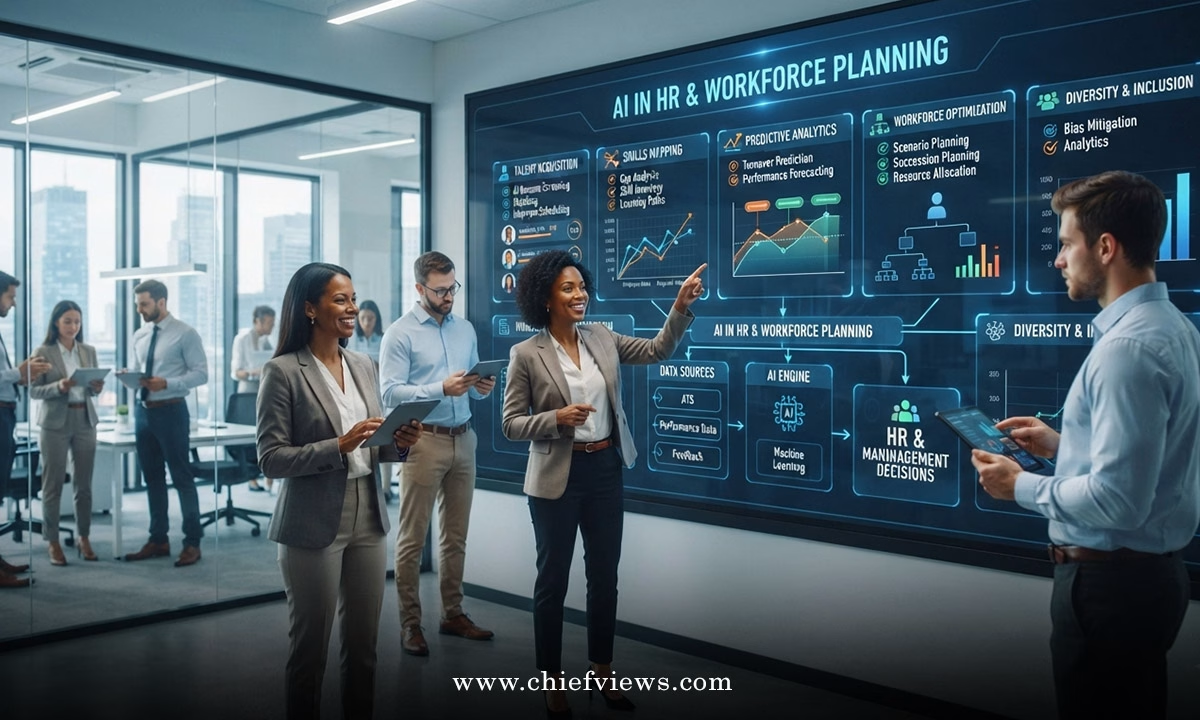
But it goes well beyond hiring. AI is being used to personalize employee learning paths, flag early signs of burnout, forecast headcount needs six to twelve months out, and even suggest internal mobility opportunities before an employee starts thinking about leaving.
The bottom line? AI doesn’t replace your HR team — it gives them time back to focus on the work that actually requires human judgment.
Workforce Planning Gets a Serious Upgrade
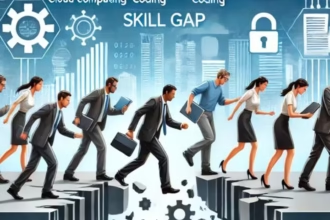
Traditional workforce planning was mostly backward-looking. You’d analyze last year’s turnover data, make some educated guesses, and build a headcount plan that was already outdated by the time it was approved.
AI flips that model on its head. Predictive workforce analytics tools — like those offered by Workday and similar platforms — pull from real-time data across your organization to model future workforce scenarios. Need to know how a new product launch will affect your staffing needs in Q3? There’s a model for that.
For business owners and entrepreneurs scaling quickly, this kind of planning intelligence is a game changer. Instead of reacting to skills gaps after they hurt you, you can spot them months in advance and build a pipeline accordingly.
This is also where AI in HR and workforce planning connects directly to broader business strategy — not just people operations.
The Hiring Process: Faster, Smarter, and Still Human
One of the biggest wins AI delivers in HR is in talent acquisition. Screening, scheduling, initial assessments — these are time-consuming tasks that AI handles efficiently and consistently.
Tools powered by natural language processing can analyze job descriptions to remove biased language before a post even goes live. Video interview platforms use AI to assess communication patterns and help interviewers focus on the most relevant candidate responses. And chatbots now handle the bulk of candidate queries, keeping applicants engaged without burning out your recruiting team.
That said, bias in AI hiring tools is a real and documented risk. If the data you train your model on reflects historical hiring biases, the AI will replicate them — sometimes amplify them. The Equal Employment Opportunity Commission (EEOC) in the US has published specific guidance on AI and employment discrimination that every HR leader should be familiar with.
This is exactly why human oversight isn’t optional — it’s essential.
How AI in HR Connects to Governance — and Why Your CHRO Matters
Here’s where a lot of businesses drop the ball. They invest in AI tools for HR without building any structure around how those tools are monitored, audited, or governed. That’s a serious risk — legally, ethically, and operationally.
Your CHRO isn’t just a people leader. In 2026, they’re your frontline defense against AI-related risk in the workforce. They need to be part of every major AI decision that touches employees — and ideally, they should be leading the charge on cross-functional accountability.
If you haven’t already thought about how your C-suite collaborates on AI decisions, it’s worth understanding how CHRO can lead AI governance coalition with C-suite to make sure the right voices are in the room before problems arise. Getting governance right isn’t just about compliance — it’s about building the kind of organizational trust that makes AI actually work.
Employee Experience: The Underrated AI Opportunity
Most conversations about AI in HR focus on efficiency. Fewer focus on experience — and that’s a missed opportunity.
AI can significantly improve how employees interact with your organization every day. Intelligent HR service desks answer benefits questions instantly, without employees waiting on hold or digging through policy documents. Personalized learning platforms — like those powered by LinkedIn Learning — recommend courses based on an employee’s role, career goals, and skill gaps. Performance management tools can surface real-time feedback patterns, helping managers have better conversations instead of scrambling before annual review season.
When AI improves the day-to-day employee experience, engagement goes up. And engaged employees stay longer, perform better, and cost far less to replace.
What to Watch Out For
AI in HR and workforce planning is powerful, but it’s not plug-and-play. A few honest cautions worth keeping in mind:
- Data quality matters enormously. Bad data in, bad decisions out. Before you automate anything, make sure your people data is clean, consistent, and current.
- Transparency builds trust. Employees want to know when AI is involved in decisions that affect them. Being open about it isn’t just ethical — it protects you legally in many jurisdictions.
- Don’t automate accountability away. AI can support a decision, but a human should always own it. Especially when it comes to hiring, promotions, and terminations.
- Regulatory landscapes are shifting fast. The EU AI Act, UK AI regulation developments, and US state-level AI employment laws are all evolving. Stay close to legal counsel and keep your governance structure current.
Getting Started Without Overwhelming Your Team
You don’t need to overhaul your entire HR function overnight. Start with one high-friction area — maybe it’s resume screening, or scheduling, or onboarding communications — and pilot an AI tool there first.
Measure the impact, gather feedback from your HR team and from employees, and then build from there. Slow and intentional beats fast and chaotic every single time when it comes to AI adoption.
We hope that you have found this article enlightening in some way, and that it’s given you a clearer, more grounded view of what AI in HR and workforce planning can genuinely do for your business. The opportunity is real, the tools are ready, and the businesses that move thoughtfully — not just quickly — are the ones that will come out ahead. Start with strategy, keep people at the center, and don’t skip the governance conversation.