







Strategic workforce planning best practices separate companies that react to talent shortages from those that stay ahead of them. In my experience, the difference shows up in how leaders treat the process. One group runs an annual headcount exercise and hopes for the best. The other treats planning as a living system that continuously matches skills and capacity to business outcomes.
Here’s the quick overview of what works in 2026:
- Start every plan from business strategy, not from last year’s org chart.
- Shift the unit of analysis from jobs to skills and critical work.
- Maintain a total workforce view that includes employees, contractors, and AI capability.
- Run shorter planning cycles with clear ownership and measurable outcomes.
- Treat the plan as a decision framework that feeds Chief Talent Officer strategic workforce orchestration rather than a static document.
The organizations that still treat strategic workforce planning as a once-a-year spreadsheet exercise are already feeling the cost. Capability gaps open faster than traditional planning cycles can close them. Skills demand shifts mid-year. AI changes the shape of work itself. Static plans cannot keep up.
Why Strategic Workforce Planning Best Practices Matter More Than Ever
Most companies still default to operational workforce planning. They forecast openings, open requisitions, and manage fill rates. That approach solves today’s staffing problem. It does almost nothing for the skills the business will need 18 months from now.
Strategic workforce planning best practices change the time horizon and the questions. Instead of “how many people do we need next quarter,” the conversation becomes “what capabilities will deliver our strategy, where do those capabilities currently sit, and how do we close the gap at the right cost and speed?”
KPMG notes that effective strategic workforce planning can generate meaningful labor budget savings through better retention, optimized staffing, and smarter resource allocation. Deloitte’s ongoing work on the future of workforce planning shows that confidence remains low—many CHROs still report limited ability to deliver on strategic goals. The gap between importance and execution is the opportunity.

Core Strategic Workforce Planning Best Practices
These practices show up consistently in organizations that move beyond basic headcount forecasting.
Anchor every cycle in business strategy.
Workforce planning that starts in HR and tries to sell itself upward almost always stays tactical. Sit with the leadership team first. Translate strategy into the critical outcomes and the capabilities required to deliver them. Everything else follows from that alignment.
Focus on skills and work, not just roles.
Job titles change slowly. The underlying tasks and skills required to create value change faster. Break critical work into the skills that matter. Map current inventory against future demand. This single shift unlocks internal mobility, better development decisions, and clearer build-buy-borrow choices.
Build a trusted baseline and keep it current.
Dirty data produces unreliable forecasts. Clean, connected workforce data—skills, performance, mobility history, cost, and external market signals—forms the foundation. Start with the critical 5–10% of roles that drive disproportionate value rather than trying to inventory everything at once.
Plan for multiple futures.
Single-point forecasts fail in volatile environments. Develop base, upside, and downside scenarios. Stress-test the plan against different demand, technology, and labor market conditions. The goal is preparedness, not prediction perfection.
Make the process continuous and cross-functional.
Annual plans go stale. Leading teams run shorter review cycles—quarterly or even monthly for high-impact areas—and involve finance, operations, and technology leaders as co-owners. HR facilitates; the business decides.
Here’s a practical comparison of common approaches:
| Practice Area | Basic Operational Planning | Strategic Workforce Planning Best Practices |
|---|---|---|
| Starting point | Current headcount + growth % | Business strategy and critical outcomes |
| Unit of analysis | Jobs and FTEs | Skills, tasks, and capability coverage |
| Time horizon | 12 months or less | 18–36 months with rolling updates |
| Talent sources | Primarily employees | Total workforce (employees + external + AI) |
| Decision style | Reactive requisitions | Build / buy / borrow / automate choices |
| Ownership | Mostly HR | Shared between HR, business, and finance |
| Success measures | Fill rate, cost per hire | Capability coverage, time to productivity, internal mobility |
The right-hand column is harder. It also produces plans that actually influence strategy instead of lagging behind it.

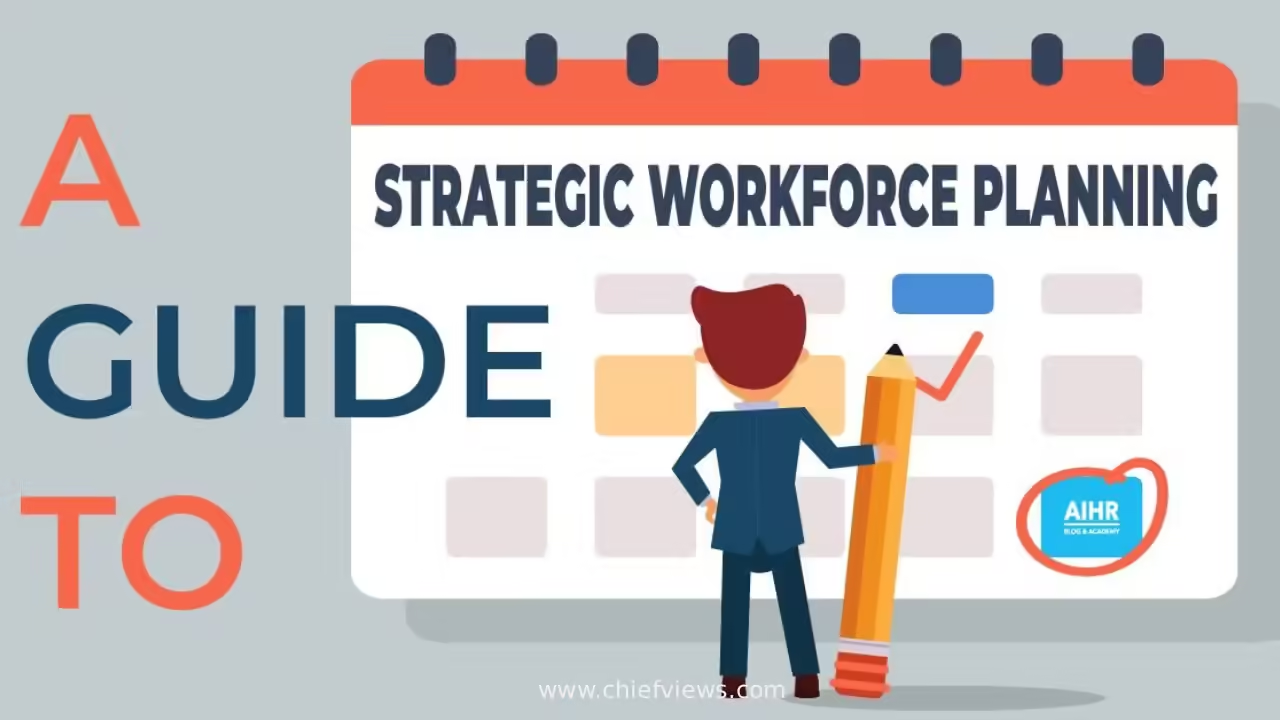
Step-by-Step Action Plan to Implement Strategic Workforce Planning Best Practices
If your current process is mostly operational, use this sequence.
- Secure leadership alignment on the purpose.
Define what success looks like for the business, not for HR. Get explicit agreement that the plan will drive decisions on investment, development, and sourcing. - Identify the critical outcomes and roles.
Focus first on the work that creates the most strategic value. Map the skills those outcomes require. - Assess current supply.
Build a practical skills inventory for the priority areas. Combine system data, manager input, and simple assessments. Perfection is not required on day one. - Forecast demand under multiple scenarios.
Link demand to business drivers—revenue targets, new products, market expansion, technology shifts. Model at least three plausible futures. - Close the gaps with clear choices.
For each priority gap, decide whether to develop internal talent, redeploy existing people, hire, contract, or automate. Document the rationale and owners. - Install a lightweight operating rhythm.
Review progress against the plan on a fixed cadence. Adjust when business conditions change. Keep the conversation focused on outcomes and capability, not just open roles. - Measure what matters.
Track capability coverage for critical skills, internal fill rates for key roles, time from identified need to productive capacity, and the percentage of the plan that actually influenced decisions.
Start with one business unit or one high-stakes capability area. Prove the value. Then expand. Trying to convert the entire enterprise in a single cycle usually creates resistance without delivering insight.
Common Mistakes and How to Fix Them
Mistake: Treating the plan as an HR deliverable.
When business leaders see it as “HR’s document,” they ignore it.
Fix: Make business leaders co-owners of both the plan and the outcomes. Shared accountability changes behavior.
Mistake: Over-engineering the data before acting.
Waiting for a perfect skills taxonomy or fully integrated systems delays useful decisions.
Fix: Use the data you have, make directional calls, and improve the foundation in parallel.
Mistake: Planning only for permanent employees.
Ignoring contractors, freelancers, and AI capacity creates blind spots.
Fix: Adopt a total workforce lens from the start. The question is capability coverage, not headcount purity.
Mistake: Running the process once a year and filing it.
Conditions change too fast for static documents.
Fix: Build a continuous or rolling process with shorter review cycles for the highest-priority areas.
Mistake: Measuring only cost and fill rates.
Those metrics encourage the wrong trade-offs.
Fix: Add capability coverage, internal mobility for critical skills, and time-to-productivity as primary indicators.
Connecting Planning to Orchestration
Strategic workforce planning best practices create the foundation. Chief Talent Officer strategic workforce orchestration turns that foundation into daily and weekly decisions about how work actually gets resourced. Planning identifies the gaps and the preferred interventions. Orchestration executes those interventions in real time as conditions shift.
The two reinforce each other. Strong planning gives the Chief Talent Officer clearer priorities and better data. Effective orchestration feeds real-world results and new signals back into the next planning cycle.
For deeper reading, explore Deloitte’s series on reinventing workforce planning, KPMG’s perspective on strategic workforce planning with AI agents, and SHRM’s guidance on modernizing workforce planning.
Key Takeaways
- Strategic workforce planning best practices begin with business strategy and critical outcomes, not with headcount forecasts.
- Skills and work—not rigid job titles—should drive the analysis and the decisions.
- A total workforce view (employees, external talent, and technology) produces better coverage at lower risk.
- Continuous or rolling cycles outperform annual static plans in volatile environments.
- Shared ownership between HR, business leaders, and finance is non-negotiable.
- Start narrow, prove value on high-impact gaps, then scale the process.
- The plan only creates value when it directly influences build-buy-borrow and development decisions.
The companies that treat strategic workforce planning as a living decision system stay ahead of capability gaps. The ones that treat it as an annual compliance exercise keep reacting. Choose the approach that matches the speed of your market.
FAQs
What is the difference between operational and strategic workforce planning?
Operational planning focuses on near-term staffing needs and fill rates. Strategic workforce planning looks further ahead, links talent decisions to business strategy, and emphasizes skills and capability coverage over pure headcount.
How often should organizations update their strategic workforce plan?
Annual plans are no longer sufficient for most businesses. Leading teams review priority areas quarterly or more frequently and maintain a rolling view of critical capabilities.
How do strategic workforce planning best practices support Chief Talent Officer strategic workforce orchestration?
Planning identifies the priority gaps and preferred interventions. Orchestration then executes those decisions in real time—redeploying people, activating external talent, or adjusting the human–AI mix as conditions change.

