










AI agent management skills for managers are now the difference between AI that looks impressive in demos and AI that actually moves the needle on outcomes. Most managers already supervise people. The new demand is supervising hybrid systems—people plus autonomous or semi-autonomous agents that plan, act, and hand work back and forth. Without these skills, agents create noise, cost overruns, and quiet quality leaks.
Quick overview of what AI agent management skills for managers really cover and why they matter in 2026:
- Managers must treat agents like team members that need clear goals, boundaries, performance reviews, and escalation paths.
- The highest-value skills center on framing work, setting decision limits, verifying outputs, and governing the overall system—not writing better prompts.
- Organizations that skip these skills see agents proliferate without ownership, driving rework and risk.
- These capabilities sit directly on top of redesigning work and roles around AI automation; you cannot manage agents effectively if the underlying roles and workflows remain unchanged.
- The payoff is measurable: lower rework rates, clearer accountability, and capacity that actually shifts to higher-judgment work.
In my experience, the managers who adapt fastest stop treating agents as “tools” and start treating them as digital coworkers with defined scope. That mental shift changes everything.
Why traditional management skills fall short with AI agents
Managing humans relies on motivation, coaching, feedback conversations, and career development. Agents do not care about any of that. They respond to precise objectives, explicit constraints, data access rules, and measurable success criteria. When those are missing, agents either underperform or overstep.
Survey data from 2026 shows the anxiety is real. A large share of people managers worry they will not be effective at supervising AI-augmented teams, and most expect the job to get harder. The skills gap is not primarily technical. It sits in framing, supervision, verification, and ongoing governance.
This is why AI agent management skills for managers must be built alongside redesigning work and roles around AI automation. If roles still assume pure human execution, agents get bolted on as afterthoughts. When roles are deliberately rebuilt so certain tasks move to agents, managers then need the skills to own the hybrid system.
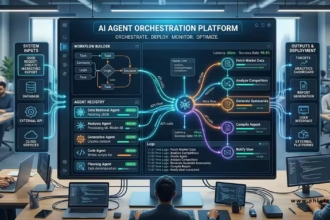


Core AI agent management skills for managers
Here are the practical capabilities that separate effective managers from those still experimenting:
1. Framing and objective setting
Define the business outcome in plain language, not prompt language. Specify what “done” looks like, the decision rights the agent holds, and the hard limits (budget, data access, risk categories). A one-page agent brief prevents most downstream problems.
2. Boundary and escalation design
Decide what the agent can do autonomously, what requires human review, and the exact conditions that trigger escalation. Name the human reviewer. Vague “human-in-the-loop” language is not enough.
3. Performance monitoring and verification
Track the metrics that matter: task completion rate, accuracy or rework rate, cycle time, cost per outcome, escalation frequency, and downstream impact. Sample outputs systematically rather than trusting the agent by default.
4. Governance and risk ownership
Own the agent’s lifecycle—onboarding, permission changes, quarterly reviews, and retirement when it no longer creates value. Treat abandoned agents as liabilities.
5. System-level orchestration
Shift focus from individual task completion to how the entire human-agent workflow performs. Managers increasingly get evaluated on system outcomes, not just personal or team output.
These skills build directly on the foundation of redesigning work and roles around AI automation. Once you have broken jobs into tasks and reassigned ownership, managers need the ongoing ability to keep the new configuration healthy.
Comparison: Traditional people management vs. AI agent management
| Dimension | Traditional People Management | AI Agent Management Skills for Managers |
|---|---|---|
| Core relationship | Motivational and developmental | Instructional and supervisory |
| Goal setting | Conversational and iterative | Precise, written, measurable with explicit limits |
| Performance review | Feedback conversations and development plans | Metrics on accuracy, cost, rework, and system outcomes |
| Escalation | Judgment-based and relational | Pre-defined rules and named reviewers |
| Accountability | Shared between manager and employee | Clear ownership of agent outcomes plus human judgment |
| Continuous improvement | Coaching and training | Brief refinement, data quality, and workflow redesign |
Step-by-step action plan to build AI agent management skills for managers
Start small and make it operational:
- Pick one high-volume or high-visibility process that already has an agent (or is about to).
- Write a one-page agent brief covering objective, definition of done, decision limits, data access, and budget.
- Map the escalation path and name the human who owns exceptions.
- Establish four baseline metrics and track them for 30 days: cycle time, rework rate, escalation rate, and a simple staff experience signal.
- Hold a short weekly review focused on the system, not individual heroics. Adjust the brief or boundaries based on real data.
- Expand the practice to a second process once the first is stable. Document the method so other managers can copy it.
AI agent management skills for managers What I would do if I were a mid-level manager starting this week: finish the brief for the single most active agent under my scope by Friday. Then spend the next two weeks measuring instead of adding more agents.
Common mistakes in AI agent management—and how to fix them
Mistake 1: Treating agents as set-and-forget tools.
Agents drift. Data changes. Business rules change. Fix: Assign a named owner and schedule quarterly reviews that include the option to pause or retire the agent.
Mistake 2: Measuring only speed or volume.
Fast wrong answers create more work downstream. Fix: Pair efficiency metrics with accuracy, rework, and outcome quality from the start.
Mistake 3: Leaving managers without decision rights.
If a manager cannot pause an agent or change its scope, ownership is fiction. Fix: Give operational managers clear authority over the agents that affect their outcomes.
Mistake 4: Ignoring the human side of hybrid teams.
People need clarity on what still belongs to them and how their judgment is valued. Fix: Explicitly redesign the remaining human work so it feels more valuable, not residual.
Mistake 5: Scaling agents before the management system exists.
More agents without ownership multiplies risk. Fix: Build the brief-inventory-metrics cadence first, then scale.
These mistakes become far more expensive when organizations have not first invested in redesigning work and roles around AI automation. The two efforts reinforce each other.
Key Takeaways
- AI agent management skills for managers focus on framing, boundaries, verification, and system performance rather than pure technical prompting.
- Every agent needs a written brief, a named owner, defined escalation rules, and a short set of tracked metrics.
- Managers move from supervising tasks to orchestrating hybrid human-agent systems.
- These skills deliver value only when built on top of deliberate role and workflow redesign.
- Start with one agent, one brief, and four metrics. Expand only after the system is stable.
- Ownership without the authority to pause or change an agent is empty.
- Continuous review and the willingness to retire underperforming agents separate mature teams from experimental ones.
- The managers who develop these capabilities early will shape how hybrid work actually functions in their organizations.
The managers who treat AI agents as another class of team member—with clear goals, limits, and accountability—will pull ahead. Those who keep adding agents without the management layer will spend their time cleaning up after them.
Begin with the agent that already touches the most work in your area. Write the brief. Name the owner. Track the numbers. That sequence beats any amount of tool rollout without management discipline.
FAQs
What are the most important AI agent management skills for managers in 2026?
The highest-leverage skills are framing clear objectives and limits, designing escalation paths, verifying outputs against business outcomes, owning agent performance metrics, and governing the lifecycle of each agent. Technical prompting sits lower on the list than most people expect.
How do AI agent management skills for managers connect to redesigning work and roles around AI automation?
Role redesign decides which tasks move to agents and which stay human. Management skills then keep that new configuration working: maintaining boundaries, measuring the hybrid system, and adjusting as conditions change. One without the other leaves value on the table.
Do managers need to become technical experts to manage AI agents effectively?
No. They need enough literacy to understand failure modes, data dependencies, and cost drivers, plus strong domain judgment and the discipline to set and enforce limits. Deep technical work belongs to specialists; managers own outcomes and the system.

