






AI agent orchestration platforms have become the control plane that decides whether your agents scale cleanly or create operational chaos. In 2026, the question is no longer whether you need one. It is which type fits your stack and how tightly it supports the resilience practices that keep agentic systems trustworthy.
Here is the quick overview:
- AI agent orchestration platforms coordinate multiple agents, tools, models, and human checkpoints under shared governance, state, and observability.
- They range from open-source frameworks (LangGraph, CrewAI) to managed hyperscaler runtimes (Amazon Bedrock AgentCore, Microsoft Foundry Agent Service, Google Gemini Enterprise) and integration-first platforms (Tray.ai, Workato).
- Strong platforms deliver durable execution, per-agent identity, runtime policy enforcement, evaluation loops, and cost tracking.
- Choosing poorly locks you into one model provider or leaves recovery and audit gaps that surface only under load.
- The best platforms support the same resilience patterns outlined in broader CTO strategies for building resilient AI systems 2026—modularity, least privilege, tested recovery paths, and architectural choice.
What AI Agent Orchestration Platforms Actually Do
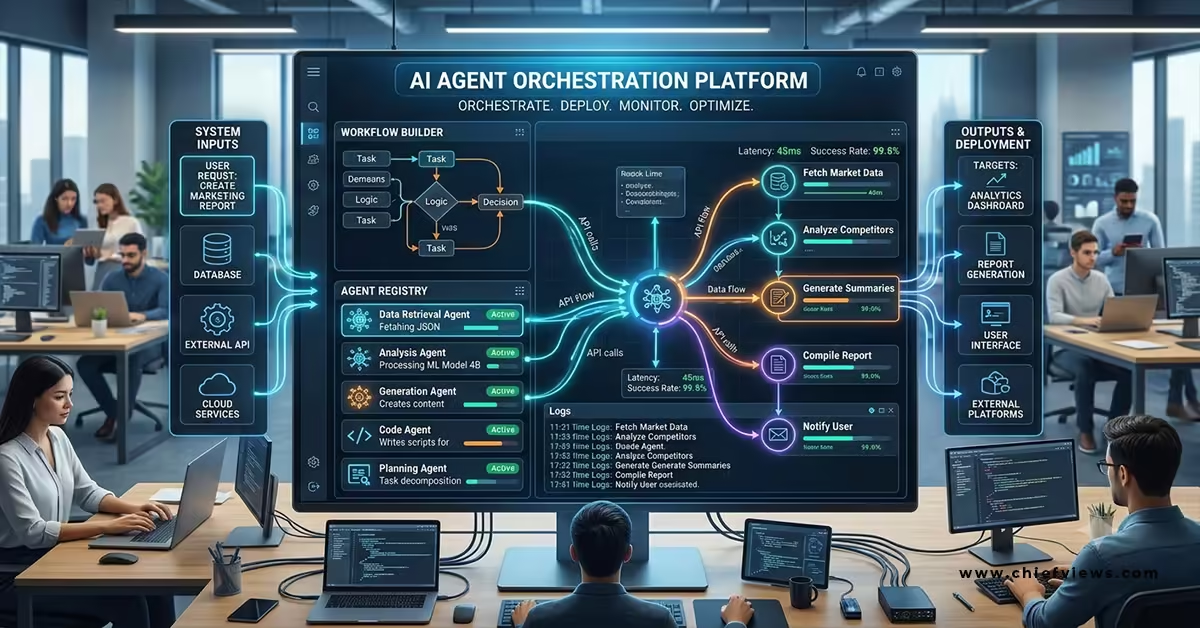
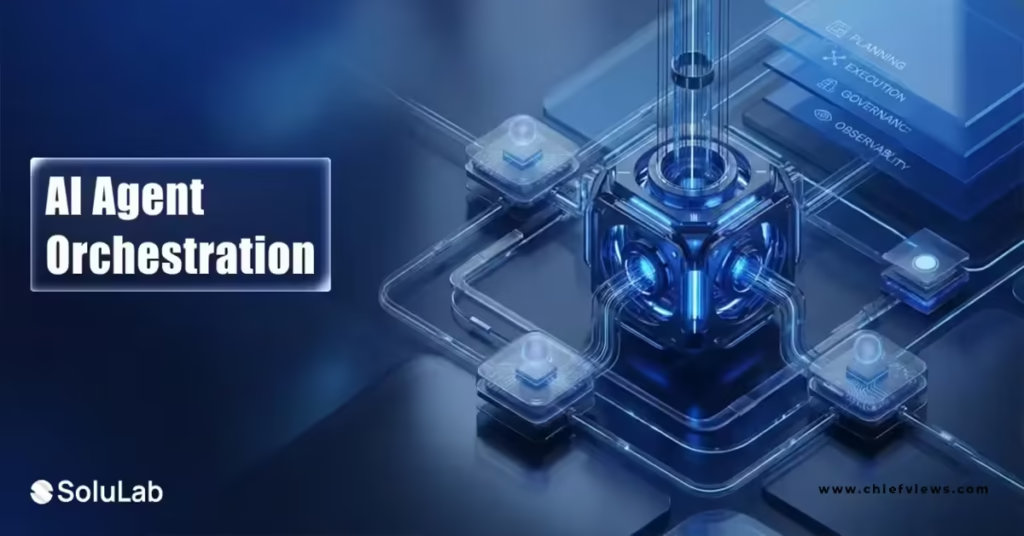
Think of an orchestration platform as the conductor, not the musicians. Individual agents handle specific tasks. The platform manages sequencing, handoffs, state, tool access, retries, human escalation, and logging.
In practice this means:
- Defining workflows as graphs, crews, or sequential/concurrent patterns
- Routing work between specialized agents
- Enforcing permissions and spend limits at runtime
- Persisting state so long-running processes survive failures
- Providing a single place for observability, evaluations, and audit trails
Without this layer, teams end up stitching agents together with custom scripts. That works for a handful of agents. It collapses once you reach dozens or hundreds.
Key Capabilities That Separate Strong Platforms from the Rest
Look for these capabilities in 2026:
Durable execution and recovery. The platform must resume from the last completed step rather than restarting from scratch. Completed model calls should not be re-billed on retry. This is foundational for any serious production use.
Agent identity and least privilege. Every agent needs a distinct identity, scoped permissions, and a clear revocation path. Runtime policy enforcement that evaluates context—not just static roles—is now table stakes.
Evaluation and continuous testing. Platforms that only run agents are incomplete. You need built-in or tightly integrated eval engines that score accuracy, safety, and business outcomes before and after deployment.
Cost and value tracking (“tokenomics”). Visibility into both spend and business impact across agents is essential. Platforms that surface this data help avoid AI cost debt.
Interoperability. Support for open protocols such as MCP (Model Context Protocol) and A2A (agent-to-agent) reduces lock-in and lets agents work across frameworks and clouds.
Human-in-the-loop and circuit breakers. First-class pause/resume, approval gates, and automatic degradation modes keep systems controllable.
These features map directly onto the resilience requirements that CTOs prioritize when building production AI systems.
Comparison of Leading AI Agent Orchestration Platforms in 2026
| Platform Type | Examples | Strengths | Trade-offs | Best Fit |
|---|---|---|---|---|
| Hyperscaler Managed Runtimes | Amazon Bedrock AgentCore, Microsoft Foundry Agent Service, Google Gemini Enterprise Agent Platform | Deep cloud integration, identity, scaling, consumption pricing | Ecosystem gravity, variable multi-cloud support | Teams already committed to one major cloud |
| Open-Source Frameworks | LangGraph, CrewAI, Microsoft Agent Framework, Google ADK | Flexibility, portability, lower cost of entry | You own operations, observability, and production hardening | Engineering-heavy teams that want control |
| Integration-First Platforms | Tray.ai, Workato, Boomi | Strong connectors, unified governance across systems and agents | May be less flexible for pure multi-agent research patterns | Cross-system business processes |
| Enterprise Application Embedded | Salesforce Agentforce, ServiceNow AI Agents, UiPath | Native data and process context | Strongest inside their own ecosystem | CRM, ITSM, or RPA-centric organizations |
No single category wins for every use case. Most mature teams run a mix: a primary managed runtime plus selective open-source frameworks for specialized workloads.
Step-by-Step Action Plan for Evaluating Platforms
- Inventory your current and planned agents, the systems they touch, and the business outcomes they drive.
- Define non-negotiable requirements: multi-cloud support, on-prem options, specific compliance needs, or existing identity providers.
- Score platforms on the six resilience elements—durable execution, identity, evals, cost tracking, interoperability, and recovery controls.
- Run a short proof-of-value with one real multi-agent workflow that includes failure injection and human escalation.
- Measure total cost of ownership, including model tokens, platform fees, engineering time, and operational overhead.
- Confirm the platform can support the modularity and recovery practices you already use (or plan to adopt) under your broader CTO strategies for building resilient AI systems 2026.
Start small. One well-instrumented production workflow reveals more than months of feature-matrix debates.
Common Mistakes and How to Fix Them
Mistake: Treating orchestration as pure developer tooling.
Fix: Involve operations, security, and the business early. Governance and recovery paths must be designed with them, not bolted on later.
Mistake: Choosing solely on model quality or demo polish.
Fix: Prioritize durable execution, auditability, and the ability to reconstruct agent actions across systems.
Mistake: Ignoring lock-in.
Fix: Prefer platforms that support open protocols and multiple model providers. Preserve the ability to move agents or change underlying models.
Mistake: Skipping evaluation loops.
Fix: Require continuous evals and clear success metrics before expanding agent autonomy.
In my experience, teams that skip the recovery and identity work early pay for it later in incident response time and eroded trust.
How Orchestration Supports Broader Resilience Goals
AI agent orchestration platforms are not isolated tools. They are the practical layer that makes larger resilience strategies executable. When you design for modularity, least privilege, tested recovery, and architectural choice, the orchestration platform is where those principles show up in daily operations. Selecting and configuring one well is one of the highest-leverage moves available to technology leaders in 2026.
Key Takeaways
- AI agent orchestration platforms have moved from experimental to essential infrastructure for any organization running more than a handful of agents.
- Durable execution, agent identity, runtime governance, evaluation, and cost visibility are the capabilities that matter most.
- Hyperscaler runtimes, open-source frameworks, and integration platforms each solve different problems—most teams will use a combination.
- Evaluate platforms against your actual recovery and audit requirements, not just feature lists.
- A short, realistic proof-of-value that includes failure scenarios beats months of abstract comparison.
- Strong orchestration directly enables the modularity, control, and recoverability that define effective CTO strategies for building resilient AI systems 2026.
- Start with inventory and one production workflow. Expand only after the control plane proves it can keep agents safe and observable.
The teams that treat orchestration as a first-class reliability layer—not just a convenience—will scale agents with far less drama. Pick the platform that lets you enforce the controls you already know you need, then instrument it thoroughly.
FAQs
What is the main difference between an AI agent orchestration platform and a simple agent framework?
Frameworks help you build individual agents or small teams. Orchestration platforms add the production control plane: state management, governance, multi-agent coordination, observability, cost tracking, and recovery across many agents and systems.
How do AI agent orchestration platforms improve resilience?
They provide durable execution, runtime policy enforcement, evaluation loops, and the ability to reconstruct and contain agent actions—exactly the mechanisms needed when agents operate with real permissions in production.
Should we prefer open-source or managed AI agent orchestration platforms in 2026?
It depends on your team’s operational maturity and cloud strategy. Many organizations run open-source frameworks inside managed runtimes to get flexibility plus operational support. The right answer is the combination that preserves choice while meeting your recovery and governance standards.
