







CTO strategies for building resilient AI systems 2026 start with a hard truth most teams still miss: resilience is not a model property. It is a system property. You design it around the model, not inside it. In 2026, agentic systems sit in production workflows, and a single quiet failure can cascade faster than any traditional outage.
Here is the quick overview of what matters right now:
- Treat AI recovery the same way you treat disaster recovery—scheduled drills, clear objectives, measured results.
- Design identity, permissions, and observability specifically for agents, not just human users.
- Keep architectural choice open across models, data, and compute so you can swap components without rewriting the business.
- Build degradation paths and circuit breakers that kick in when confidence drops or outputs look wrong.
- Test the full recovery path, including reconstructing what an agent did and restoring a trusted business state.
These moves separate the CTOs who sleep at night from those who keep getting surprise 2 a.m. calls.
Why Most AI Systems Still Break Under Pressure
What usually happens is this. Teams ship a strong model, add basic monitoring, and call it production-ready. Then the model drifts, an agent takes an unexpected action with valid credentials, or a third-party model endpoint slows down. The infrastructure stays up. The data looks fine. Yet the business outcome is wrong.
Reliability must come from the system around the model. Timeouts, circuit breakers, bulkheads, and graceful degradation still apply. They simply need to catch failures that look like success—low-confidence answers, subtle data shifts, or agents acting within their permissions but outside intent.
In my experience, the organizations that treat AI like just another microservice end up rewriting large pieces of their stack within 18 months. The ones that treat it as a probabilistic actor with its own recovery needs stay ahead.

Core CTO Strategies for Building Resilient AI Systems 2026
Start with modularity. Separate models from orchestration, data services, and business applications. That single decision lets you change models without rebuilding workflows. Forrester analysts have been clear on this point: the winning strategy preserves choice across data, models, compute, deployment environments, and governance controls.
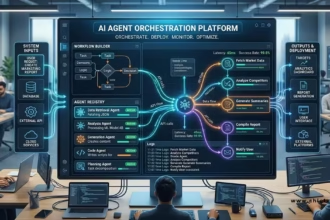
Next, apply least privilege to every agent the same way you do for human users. Give each agent a distinct identity, narrowly scoped permissions, continuous monitoring, and a fast path to revoke authority. AI does not leak data on its own. Access does.
Build AI-specific recovery goals. Backups alone are not enough. Define recovery time, recovery point, and recovery quality objectives for models, pipelines, and the business decisions that depend on them. Then test those objectives with the same discipline you use for traditional disaster recovery.
Finally, instrument for agentic recovery. You need the ability to reconstruct what an agent did across systems, contain further action, reverse or compensate for bad outcomes, and restore a trusted business-process state. Few organizations have actually run these exercises yet. That gap is the real risk.
Step-by-Step Action Plan for Beginners
If you are still early in production AI, follow this sequence. It keeps the work manageable and forces prioritization.
- Inventory every AI dependency. Map models, data sources, APIs, permissions, workflows, and third-party services. Treat each hop in an agent chain as a potential single point of failure.
- Define degradation modes before you need them. Agree with the business on what “reduced,” “deterministic,” “assisted,” or “safe hold” looks like for each critical workflow. Encode those rules.
- Stand up basic circuit breakers that trip on validation failures and low-confidence results, not just timeouts or HTTP errors.
- Implement agent identity and least-privilege access. Rotate credentials, log every action, and make revocation one command away.
- Run a controlled game day. Turn the AI off or force a bad decision with legitimate credentials. Watch how the team detects, contains, reconstructs, and recovers. Fix the gaps that surface.
- Embed the NIST AI Risk Management Framework into your pipelines so policy checks happen at machine speed before any model deploys.
Do the first three steps in the next 30 days. The rest can follow in the subsequent quarter.
Comparison of Resilience Approaches
| Approach | Strength | Weakness | Best Fit |
|---|---|---|---|
| Single-model with basic monitoring | Fast to launch | High lock-in, weak recovery | Early pilots only |
| Multi-model with fallbacks | Flexible, lower risk of total outage | Higher orchestration complexity | Most production systems |
| Full modular + agent identity + tested recovery | Highest resilience and control | Upfront design effort | Business-critical agentic workflows |
| Pure rules + human escalation | Predictable and auditable | Limited capability | High-stakes decisions where AI is advisory only |
The middle two rows are where most mid-market and enterprise teams should land in 2026.
Common Mistakes & How to Fix Them
Mistake one: assuming the model will behave. Fix it by treating every AI call as potentially wrong and designing the surrounding system to catch and contain that.
Mistake two: skipping agent-specific recovery testing. Most teams have never exercised a full agent incident scenario. Schedule one. Give an agent valid access, let it make a bad decision across systems, and practice the full response.
Mistake three: locking into a single provider or proprietary stack. Preserve the ability to switch models and move workloads. Architectural decisions that reduce future choice become expensive constraints later.
Mistake four: measuring only uptime and latency. Track reconstruction capability, time to trusted state, and the percentage of agent actions that can be fully audited and reversed.
What I’d do if I walked into a new CTO role tomorrow: freeze new agent deployments for two weeks, run the inventory and one game day, then reopen the pipeline with the new controls in place. The short pause almost always saves months of cleanup.
External Resources Worth Bookmarking
The NIST AI Risk Management Framework remains the structural backbone many mature teams embed directly into pipelines. Review the official guidance on the NIST AI Risk Management Framework.
For practical fault-tolerance patterns that extend classic distributed-systems techniques to AI, the IEEE Computer Society piece on building fault-tolerant AI systems is direct and usable: When AI Fails: Building Fault-Tolerant AI Systems.
Forrester’s analysis on preserving choice across the AI stack is worth reading if you are making architecture decisions this quarter: TalosCon 2026: The Winning AI Strategy Is To Preserve Choice.
Key Takeaways
- Resilience lives in the system around the model, not inside the model itself.
- Design agent identity, least privilege, and continuous monitoring as first-class requirements.
- Define and test AI-specific recovery objectives the same way you test traditional disaster recovery.
- Keep architectural choice open so you can change models, providers, or environments without rewriting the business.
- Build explicit degradation modes and circuit breakers that trigger on confidence and validation, not just hard failures.
- Run regular game days that exercise full agentic recovery, including reconstruction of actions and restoration of trusted business state.
- Start with inventory and one controlled failure exercise. Everything else builds from there.
The CTOs who treat resilient AI systems as an ongoing engineering discipline rather than a one-time architecture decision will ship more aggressively and sleep better. The next step is simple: pick one critical workflow this week, map its AI dependencies, and schedule the first game day. That single action forces clarity on everything else.
FAQs
What are the highest-impact CTO strategies for building resilient AI systems 2026 for teams just moving beyond pilots?
Focus first on modularity, agent identity with least privilege, and one full recovery game day. Those three moves surface the real gaps faster than any framework document.
How do CTO strategies for building resilient AI systems 2026 differ from traditional high-availability design?
Traditional HA assumes deterministic failures. AI introduces probabilistic failures that can look like success. You need confidence thresholds, output validation, and the ability to reconstruct and reverse agent actions across systems.
Where should a CTO begin if the organization already has multiple AI agents in production?
Inventory dependencies immediately, define degradation modes with the business owners, and run a controlled incident exercise within 30 days. The gaps that appear will tell you exactly where to invest next.

