




Building a continuous learning culture is one of the smartest moves a business owner can make when technology keeps shifting the ground under everyone’s feet. You have watched teams struggle when new tools arrive overnight. Staff feel behind, managers scramble for quick fixes, and the same training day gets repeated every year with little lasting effect. That cycle drains time and energy.
In this article, we’re going to be taking a look at building a continuous learning culture, and how you can turn everyday work into steady skill growth that supports how CHRO can upskill workforce for AI and automation era. If you would like to find out more, feel free to read on.
Pic – CC0 License
Make learning part of the daily routine
A continuous learning culture does not live in a once-a-year workshop. It lives in the small habits people repeat. Start by protecting short blocks of time each week for skill practice. Fifteen or twenty minutes is enough if it happens regularly.
Encourage managers to open team meetings with one quick share: a tool tip, a process improvement, or a lesson from a recent project. When people see learning as normal conversation instead of extra homework, they lean in. Companies that treat development as an ongoing conversation rather than a calendar event see higher engagement and faster adaptation, according to guidance from SHRM on building AI-ready cultures.

Give people ownership of their growth
You cannot force curiosity. You can create the conditions for it. Offer clear skill maps so staff know which abilities matter most for their role and for the company’s next steps. Then let them choose how they build those skills—short online modules, peer coaching, or project-based practice.
When employees set their own learning goals and track progress, they take more responsibility. This approach fits neatly with the practical steps needed for how CHRO can upskill workforce for AI and automation era. People feel less like they are being trained and more like they are investing in themselves.
Use peer networks instead of top-down lectures
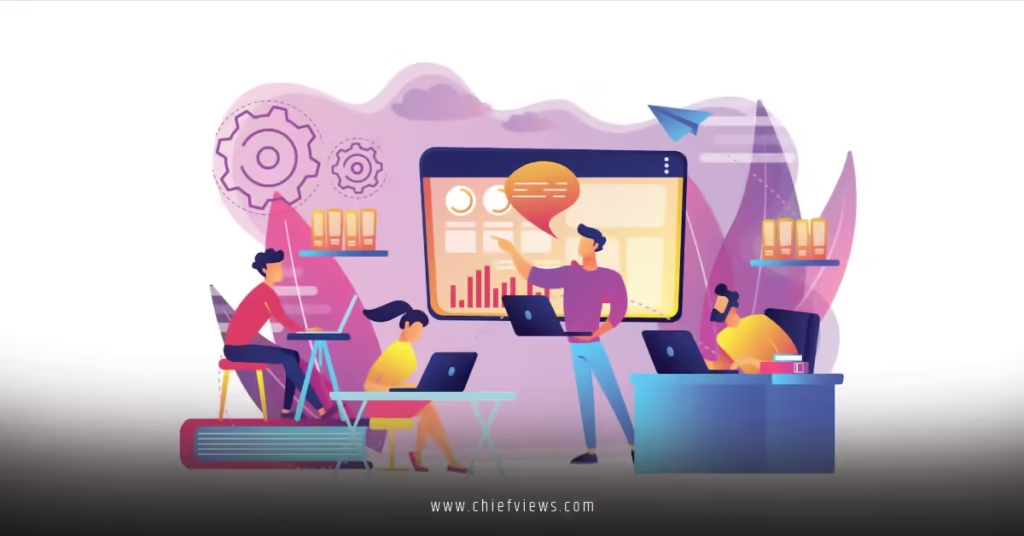
Some of the best learning happens sideways. Identify the people already experimenting with new tools—the quiet experts on your team—and give them space to teach others. Reverse mentoring works especially well: junior staff show seniors the latest digital shortcuts while seniors share business judgment.
Peer-to-peer networks scale better than formal courses and feel more personal. The World Economic Forum’s Future of Jobs insights highlight that technological skills grow fastest when learning is social and repeated, not one-off.
Measure progress without creating bureaucracy
Track a few simple signals. How many people complete short learning modules each month? How often do teams apply a new skill on the job? Do managers notice fewer repeated mistakes or faster problem-solving?
Share the results openly. Celebrate teams that experiment and improve. When people see that learning leads to visible results—better output, more interesting work, clearer career paths—they keep going. Workday’s advice for leaders stresses that sustained reskilling succeeds when it is measured lightly and celebrated often.
Link learning to real business needs
Connect every learning activity back to actual work. If your company is introducing new automation, design practice sessions around the exact tasks that will change. If customer service is shifting, train on the human skills that still matter most.
This keeps motivation high and waste low. Staff understand why the effort matters, and leaders see a direct return. A continuous learning culture built this way becomes the foundation that makes how CHRO can upskill workforce for AI and automation era practical and lasting rather than theoretical.
We hope that you have found this article enlightening in some way and that it gives you concrete steps you can start using this month. Begin with one small weekly habit, protect the time, and watch the culture shift from occasional training days to steady, shared growth.