







CTO guide to modern tech stack and legacy modernization starts with a hard truth most tech leaders learn the expensive way: your legacy systems are not just old code. They are the silent tax on every new feature, every security patch, and every competitive move your company tries to make.
In my experience working with U.S. enterprise teams, that tax shows up as slower releases, higher ops costs, and talent that quietly starts looking elsewhere. A solid CTO guide to modern tech stack and legacy modernization cuts through the noise and gives you a practical path forward without the usual vaporware promises.
- It maps the shift from aging monoliths and on-prem stacks to cloud-native, AI-ready architectures that actually ship value.
- It prioritizes business outcomes over technology fashion so you modernize what matters and leave the rest alone.
- It treats AI as a force multiplier for discovery and refactoring rather than a magic rewrite button.
- It keeps risk visible and controlled through phased, testable steps instead of big-bang bets.
- Done right, it frees engineering capacity for product work instead of endless maintenance.
Why the Old Stack Stops Working in 2026
Legacy systems still run critical revenue processes at most mid-size and large U.S. companies. The problem is not that they crash every day. The problem is that every change feels like surgery.
Tight coupling means a small UI tweak can break an obscure batch job. Documentation is missing or wrong. The people who understood the original business rules have moved on. Security patches take weeks because the runtime is long out of support. Meanwhile, competitors release weekly and experiment with agents and real-time data.
I have watched teams burn quarters trying to “just keep it running.” The kicker is that the real cost is opportunity. Every sprint spent fighting the old system is a sprint not spent on customer-facing work.
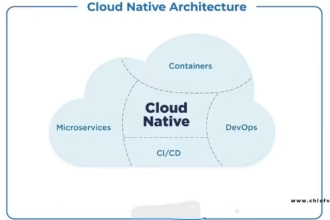
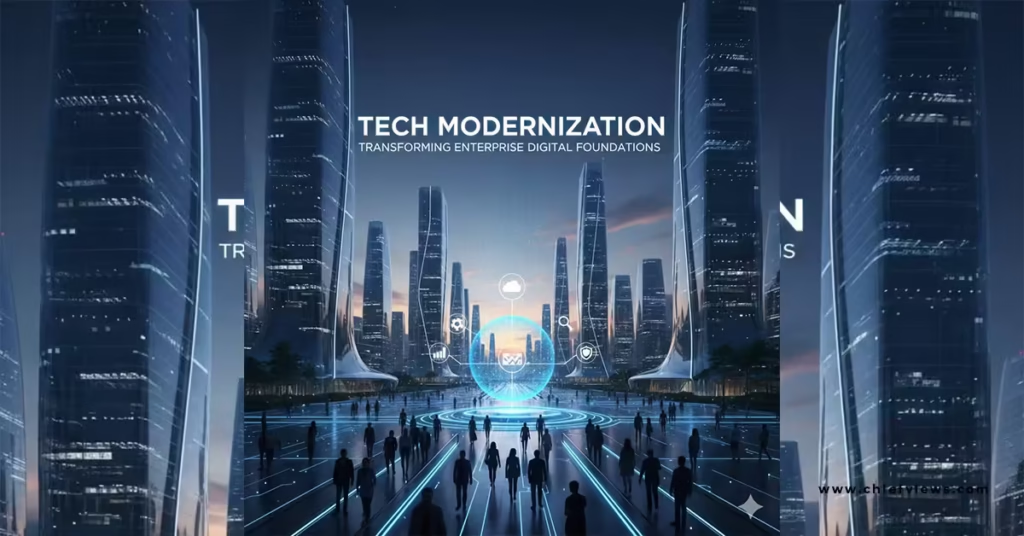
Modern tech stacks in 2026 look different. Cloud-native foundations (containers, Kubernetes, managed services) sit underneath. Event-driven and modular designs replace the giant monolith. Data platforms that support both analytics and AI agents become non-negotiable. Observability and automated testing are built in from day one, not bolted on later.
Think of the old stack as a 30-year-old warehouse with no loading docks, no inventory system, and corridors that only the longest-tenured workers can navigate. You can keep shipping product out of it. Or you can redesign the flow so trucks load in minutes and new products move without rewriting the floor plan every time.
Choosing the Right Path: The Practical 7 Rs
Not every system needs the same treatment. The 7 Rs framework (still the clearest decision tool available) forces you to match effort to value:
| Approach | Best When | Effort Level | Risk Profile | Typical Outcome |
|---|---|---|---|---|
| Retire | System delivers little business value | Low | Low | Cost removal |
| Retain | Stable, low-change, still fit for purpose | Very Low | Low | Status quo with monitoring |
| Rehost | Infrastructure is the constraint, code is fine | Low-Medium | Medium | Faster ops, same app |
| Replatform | Runtime or platform limits scaling | Medium | Medium | Better performance without full rewrite |
| Refactor | Code quality blocks change velocity | Medium-High | Medium | Cleaner internals, same external behavior |
| Rearchitect | Architecture itself limits independence and scale | High | Higher | Modular, cloud-native services |
| Replace | Off-the-shelf or SaaS now does the job better | Variable | Medium-High | New product, integration work |
In my experience the biggest early win often comes from a targeted rehost or replatform of a high-pain system while you plan deeper work on the true revenue cores. Trying to rearchitect everything at once is how budgets disappear.
CTO Guide to Modern Tech Stack and Legacy Modernization: Building the Target Architecture
A modern stack in the U.S. enterprise context usually includes:
- Cloud platforms (AWS, Azure, or GCP) with strong managed services for databases, messaging, and compute.
- Containers and orchestration so services scale independently.
- API-first or event-driven boundaries that let you strangle the old system piece by piece.
- Data layer that supports both transactional needs and the retrieval patterns AI agents require.
- Observability that surfaces latency, error rates, and cost in the same view.
- Security and identity controls that work across hybrid environments.
The goal is not the coolest new framework. The goal is a system where a small team can ship a change safely in days instead of months.
Step-by-Step Action Plan for Beginners and Intermediate CTOs
Here is what I would do if I walked into a typical mid-market or enterprise environment tomorrow.
- Inventory reality, not the slide deck. Pull 30 days of actual usage logs, dependency maps, and incident history. Rank systems by business impact and technical pain. Documentation is usually incomplete; observed behavior is not.
- Score the portfolio. Use a simple business-value versus technical-health matrix. High-value/high-pain systems go first. Low-value systems get retired or retained with a clear sunset date.
- Pick one bounded capability. Choose something with clear edges and measurable outcome. Avoid the most tangled core on day one.
- Extract knowledge before rewriting. Use current AI tools to map business rules, data flows, and dependencies. Have domain experts validate the output. This step alone prevents most “we forgot the quarterly reset logic” disasters.
- Decide the R for that capability and set executable acceptance tests. Write the tests against the live legacy behavior so the new code has a ground-truth oracle.
- Deliver behind a facade or feature flag. Run old and new in parallel. Compare results. Cut over only when the numbers match and rollback is proven.
- Measure and repeat. Track release lead time, incident rate, and maintenance hours. Feed the learning into the next slice.
This incremental path is slower on the PowerPoint timeline and dramatically faster on the “still have a business” timeline.
Common Mistakes and How to Fix Them
Big-bang rewrites remain the classic failure mode. Teams underestimate hidden coupling and institutional knowledge. Fix: insist on parallel run and capability-by-capability cutover.
Treating modernization as a pure technology project ignores the business process knowledge locked in the old code. Fix: put domain experts on the discovery work from week one.
Underestimating data migration and test coverage. Code is the easy part. Data quality and regression safety are where schedules die. Fix: allocate explicit budget and time for both before coding starts.
Choosing the flashiest stack without matching it to team skills and operational maturity. Fix: prefer boring, well-supported technologies that your current people can operate.
Skipping governance on AI-assisted refactoring. AI can accelerate discovery and first drafts; it cannot own the final correctness or compliance decisions. Keep human review gates.
CTO Guide to Modern Tech Stack and Legacy Modernization in Practice
One pattern that consistently works is the strangler approach combined with AI-assisted discovery. You wrap the legacy system with modern APIs or event interfaces. New capabilities are built outside. Traffic shifts gradually. The old code shrinks over time instead of being flipped in a single risky weekend.
For deeper guidance on cloud migration patterns that support this approach, review the official AWS application modernization resources that map the Rs to concrete services.
McKinsey’s work on technical debt continues to show that unmanaged debt can consume a substantial share of the technology budget—often cited in the 20-40 percent range—making the business case for disciplined modernization clearer each year.
NIST’s cybersecurity framework remains a useful reference when you need to demonstrate that the modernized environment actually improves the security posture rather than simply moving the same risks to a new platform.
Key Takeaways
- Start with observed usage and business value, not technology preferences.
- Match each system to the lightest R that delivers the needed outcome.
- Use AI for mapping and first-pass refactoring; keep humans accountable for correctness and cutover.
- Deliver in small, testable slices with parallel run and proven rollback.
- Measure release speed, reliability, and maintenance cost from the first pilot.
- Treat institutional knowledge recovery as a first-class workstream.
- Prefer architectures that let future teams change one piece without touching everything else.
- Modernization is finished only when the old system can be turned off without anyone noticing.
The real payoff of a disciplined CTO guide to modern tech stack and legacy modernization is not a prettier architecture diagram. It is the ability to move at the speed the market now demands while the systems that still pay the bills keep running.
Pick one high-pain, high-value capability this quarter. Inventory it properly. Extract the rules. Ship a modern slice behind a flag. Measure the difference. That single successful loop does more to change the organization’s confidence than any three-year roadmap ever will.
FAQs
What should a CTO guide to modern tech stack and legacy modernization prioritize first?
Business value and risk reduction over technology novelty. Inventory actual usage, score the portfolio, and start with one bounded high-impact capability.
How does AI change a CTO guide to modern tech stack and legacy modernization in 2026?
It accelerates discovery, documentation, and first-draft refactoring. It does not remove the need for human validation, parallel testing, or clear architectural decisions.
Is a full rewrite ever the right move under a CTO guide to modern tech stack and legacy modernization?
Rarely as the opening move. Full rewrites carry the highest risk and longest time-to-value. Most successful programs combine rehost/replatform for quick wins with selective rearchitect or replace for the true cores.
