



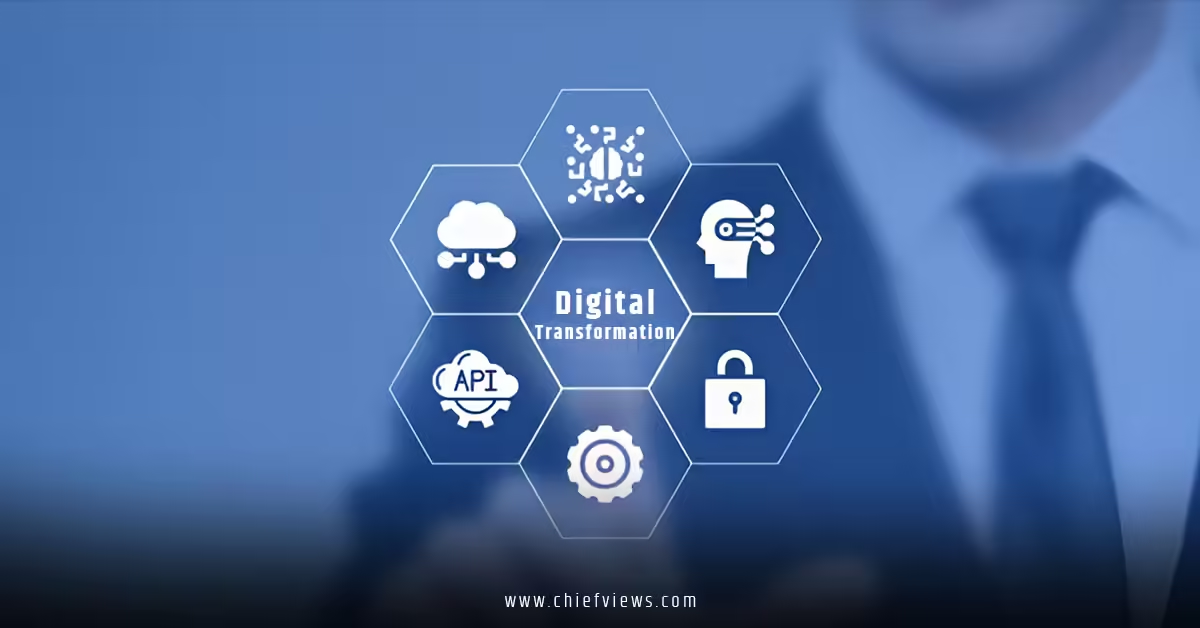
Digital Transformation Strategy 2026 isn’t about chasing trends. It’s about building resilient operations that deliver measurable edge in an AI-first world. Companies that get this right move faster, serve customers better, and protect margins. Those that don’t? They bleed efficiency and relevance.
- AI at the core: Agentic systems and multi-agent collaboration drive autonomous decisions.
- Hyperautomation everywhere: Beyond RPA into intelligent process orchestration.
- Data-first culture: Real-time insights replace gut feel.
- People + tech alignment: Change leadership determines winners.
- Sustainable, secure scaling: Cloud 3.0 with built-in governance and ethics.
The difference between leaders and laggards comes down to execution. Not ambition.
Why Digital Transformation Strategy 2026 Matters More Than Ever
Spending keeps climbing. Global digital transformation investments are projected to hit massive scale, with market size estimates exceeding $1.5 trillion in 2026 alone. Yet success rates hover stubbornly around 30-35%. Most efforts deliver partial results at best.
Here’s the thing. Technology is no longer the bottleneck. Leadership, culture, and integration are. Organizations that treat transformation as a continuous capability — not a project — pull ahead.
What I’d do if building a 2026 strategy from scratch: Start with ruthless prioritization. Pick three high-impact use cases that tie directly to revenue, cost, or customer experience. Everything else waits.

Key Trends Shaping Digital Transformation Strategy 2026
Digital Transformation Strategy 2026:Gartner highlights AI-native platforms, multiagent systems, physical AI, and preemptive cybersecurity as major forces.
Agentic AI and Autonomous Systems
AI agents don’t just assist. They act. Multi-agent setups handle complex workflows end-to-end. Expect this to reshape everything from supply chains to customer service.
Hyperautomation and Intelligent Orchestration
Combine RPA, AI, workflows, and event-driven systems. The goal: minimal human touch for routine work, maximum focus on high-value judgment.
Cloud 3.0 and Real-Time Data Platforms
Unified data layers power instant decisions. Edge computing reduces latency. Serverless architectures slash time-to-market.
Confidential Computing and Digital Provenance
Trust becomes non-negotiable. Security moves from reactive to preemptive. Data lineage and verifiable origins matter in regulated industries.
Low-Code, Human-AI Collaboration, and Sustainability
Business teams build faster. Employees work alongside AI. Green tech and ethical AI factor into every roadmap.
Leaders invest heavier in AI. 76% of digital leaders plan increases versus laggards.
Digital Transformation Strategy 2026 vs. Previous Years
| Aspect | Pre-2025 Approach | 2026 Strategy Focus |
|---|---|---|
| AI Usage | Pilots and experiments | Agentic, production-scale autonomy |
| Automation | Task-level RPA | End-to-end intelligent orchestration |
| Data | Batch reporting | Real-time, unified platforms |
| Leadership | CIO/CDO led | Cross-functional with dedicated transformation ownership |
| Success Metric | Go-live dates | Sustained ROI and business outcomes |
Step-by-Step Action Plan for Building Your Digital Transformation Strategy 2026
- Assess Ruthlessly (Weeks 1-3): Map current maturity across tech, data, processes, and culture. Identify quick wins and big bets.
- Define North Star Outcomes: Tie every initiative to specific KPIs — revenue lift, cost savings, customer scores. Get CEO and board alignment early.
- Prioritize and Sequence: Focus on 2-3 transformative initiatives. Layer in supporting tech like unified data platforms.
- Build Governance and Skills: Establish clear decision rights. Invest in training and change programs. Bring in or develop transformation talent.
- Execute in Waves with Measurement: Launch pilots, scale winners, kill losers fast. Review quarterly with real business impact data.
- Institutionalize Continuous Change: Embed habits so transformation becomes how you operate, not a temporary program.
What usually happens is teams overload the roadmap. Don’t. Momentum beats perfection.
A strong Chief Transformation Officer role in digital change management often makes the difference between stalled projects and sustained value. This leader orchestrates the messy human and strategic elements that pure tech roles can’t own.
Common Mistakes & How to Fix Them
- Boiling the ocean: Fix by ruthless focus on highest-ROI areas first.
- Tech-first, people-last: Fix by integrating change management from day zero. Address “what’s in it for me?”
- No clear ownership: Fix with dedicated leadership accountability.
- Ignoring governance: Fix with built-in AI ethics, security, and compliance.
- Chasing shiny objects: Fix by tying every investment to measurable outcomes.
Fix these early and you avoid the 70% failure trap.
For proven frameworks, see Gartner’s Top Strategic Technology Trends for 2026 and TEKsystems State of Digital Transformation 2026 report.
Key Takeaways
- Digital Transformation Strategy 2026 centers on scalable AI, hyperautomation, and real-time data.
- Success rates remain low — strong execution and leadership close the gap.
- Prioritize outcomes over technology for a change.
- Agentic AI and multi-agent systems represent the next competitive frontier.
- Culture and skills investment determine long-term wins.
- Measure sustained impact, not just deployment.
- Treat transformation as continuous capability building.
The organizations winning in 2026 won’t have the most tools. They’ll have the best-integrated strategies and the strongest ability to adapt.
Start today. Audit one core process. Identify where AI or automation can deliver immediate value. Then build from there with discipline. The gap between leaders and everyone else is widening fast.
FAQs
What should a Digital Transformation Strategy 2026 prioritize?
Agentic AI, hyperautomation, unified real-time data platforms, and strong change leadership. Focus on measurable business outcomes rather than technology for technology’s sake.
How does the Chief Transformation Officer role in digital change management fit into a 2026 strategy?
This role provides dedicated ownership for execution, culture, and cross-functional alignment — turning ambitious tech plans into actual results where many initiatives otherwise stall.
How do you measure success in a Digital Transformation Strategy 2026?
Track sustained ROI, adoption rates, efficiency gains, revenue impact, and customer experience improvements over 12+ months, not just project completion.