




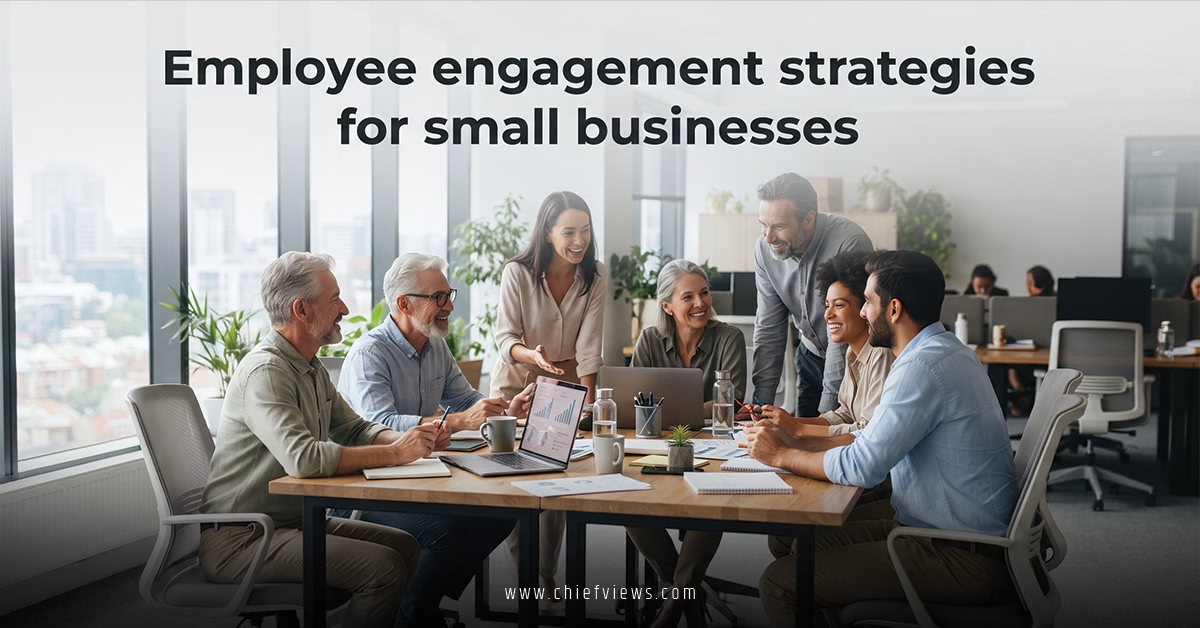
Employee engagement strategies for small businesses start with noticing what actually keeps people motivated when the team is small and every role counts. You cannot hide behind big budgets or layers of management. When someone is switched off, the whole operation feels it. The good news is that the most effective moves are practical, low-cost and within your control.
In this article, we’re going to be taking a look at Employee engagement strategies for small businesses, and how you can lift involvement and reduce the quiet drift that costs time and talent. If you would like to find out more, feel free to read on.
Pic – CC0 License
Clear Expectations and Regular Feedback
Employee engagement strategies for small businesses People stay engaged when they know what good work looks like and hear about it while it is still fresh. In a small business this means short, frequent conversations rather than formal annual reviews that feel distant.
Set out the three or four results that matter most for each role. Then check in every couple of weeks with a simple question: What is going well and what is getting in the way? Keep the tone practical. Praise specific actions, not vague personality traits. When something needs correcting, do it quickly and privately. This rhythm builds trust and stops small frustrations from growing.
These conversations work best when they sit inside a wider approach to employee experience design leadership. The daily interactions become part of a designed experience rather than random management moments.


Give People Real Say in How Work Gets Done
Engagement rises when staff can influence the tools, processes and priorities that shape their day. In a small team you can do this without complicated suggestion schemes.
Ask the person doing the job how a process could run smoother. Trial their idea for a fortnight. If it works, keep it. If it does not, explain why and try the next idea. Visible action on their input matters more than collecting a long list of suggestions that never go anywhere.
Employee engagement strategies for small businesses UK firms of all sizes have found that this kind of practical involvement cuts wasted effort and raises ownership. Resources from bodies such as the Chartered Institute of Personnel and Development show that employees who feel listened to are far more likely to recommend their workplace and stay longer.
Growth Paths That Fit a Small Business
Not every role leads to a promotion, and that is fine. Engagement still needs a sense of progress. Map simple skill steps for each person: a new responsibility, a short course, or the chance to train a colleague.
Protect a little time each month for learning. It does not have to be expensive. Peer teaching, free online modules, or a shared problem-solving session can be enough. When people see that their skills are growing, they invest more energy in the work.
This focus on development links directly back to employee experience design leadership. The experience is not complete if people feel stuck. Designing clear, realistic growth moments keeps the day-to-day experience feeling forward-looking.

Recognition That Feels Genuine
Public praise works when it is specific and timely. A quick note in the team chat, a mention in a meeting, or a small thank-you that matches the person’s preference all land better than generic awards.
In a small business the most powerful recognition is often simply noticing effort that others miss. The late finish to help a customer, the quiet process fix that saved everyone time, the extra patience with a new starter. Call those moments out. People remember being seen.
Employee engagement strategies for small businesses Pair recognition with fair pay and reasonable hours. Engagement strategies fall flat if the basics of reward and workload are neglected. ACAS guidance continues to underline that clear, consistent treatment on pay and hours underpins any wider engagement effort.
Simple Ways to Measure and Adjust
You do not need complex surveys. Track three signals: how often people raise ideas, how quickly internal gaps get filled, and a short monthly pulse question such as “Do you feel able to do your best work here?”
Review the answers with the team. Share what you heard and what you will change. Closing the loop turns measurement into another engagement tool rather than a tick-box exercise.
Keep the process light. Over-measuring can itself become a drain. The aim is enough information to steer, not a full research project.
Making It Stick as You Grow
Employee engagement strategies for small businesses As headcount rises it is easy for the personal touch to fade. Protect the habits that worked when the team was smaller: the regular check-ins, the willingness to try staff ideas, and the habit of noticing good work.
Review the employee journey once or twice a year the same way you review sales or cash flow. Ask whether new systems still support engagement or have started to create friction. Involve managers early so they carry the same approach rather than invent their own.
Strong employee engagement strategies for small businesses rest on consistent attention rather than big programmes. When you treat people’s time and ideas with care, they respond with energy and loyalty that larger competitors find hard to match.
We hope that you have found this article enlightening in some way and that one or two of these steps feel ready to try this week. Start small, stay consistent, and the results compound.