









How CHRO can operationalize AI with human accountability is the question keeping HR leadership up at night right now — and for good reason. AI tools are already touching hiring, performance reviews, and promotions across American companies. The problem isn’t the AI. It’s what happens when nobody can explain why the algorithm said no.
Here’s the fast version, built for anyone scanning before they read:
- Operationalizing AI with human accountability means pairing every AI-driven HR decision with a named human who can explain, override, and own the outcome.
- It matters because laws like NYC’s Local Law 144 and Illinois’s HB 3773 already require employers to disclose and audit automated hiring tools.
- SHRM’s 2026 research found only 39% of organizations have implemented AI in HR, and 56% don’t formally measure its success — a governance gap, not a tech gap.
- CHROs who build accountability in now avoid the “the algorithm did it” defense, which legal experts and regulators no longer accept.
- The fix isn’t banning AI. It’s building a chain of custody for every decision it touches.
Why This Is Suddenly a CHRO-Level Problem
Three years ago, AI in HR meant a chatbot answering benefits questions. Now it’s screening resumes, flagging performance risks, and recommending who gets promoted. That’s a different animal entirely.
The legal ground shifted fast. New York City’s Local Law 144 has required independent bias audits for automated employment decision tools since July 2023, and enforcement scrutiny only grew after a 2025 state comptroller audit found gaps in how it’s policed. Illinois followed with HB 3773, effective January 1, 2026, folding AI-assisted hiring and promotion decisions directly into its existing Human Rights Act. Colorado’s SB 26-189 — the rewrite of its original AI Act — takes effect January 1, 2027.
None of these laws let a company point at software and shrug. They point at the employer. That’s the whole ballgame.


What “Operationalizing AI With Human Accountability” Actually Means
Let’s be blunt: this phrase gets thrown around like a mission statement, but it’s actually an operating mechanism. It means three things working together, every time:
- A human owns the decision, not just the deployment.
- There’s a documented reason a human can give if challenged.
- Someone can override the AI’s output — and that override is tracked, not buried.
Think of AI in HR like a co-pilot, not an autopilot. A co-pilot reads instruments, flags risk, and speeds things up — but the captain still signs the flight log. Hand over the controls entirely and you’ve got no one accountable when turbulence hits.
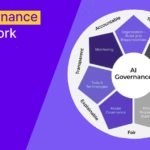
How CHRO Can Operationalize AI With Human Accountability at the Policy Level
This starts with governance, not tools. In my experience, the companies that get burned are the ones that bought software first and wrote policy later — backwards, every time.
A real governance structure needs:
- A cross-functional AI oversight committee (HR, legal, IT, a line manager who actually uses the tool).
- A risk tier for every AI use case — hiring and compensation sit in “high risk,” scheduling nudges don’t.
- A documented human-review checkpoint before any adverse action tied to an AI recommendation.
NIST’s AI Risk Management Framework gives a solid, vendor-neutral starting point here, specifically its guidance on defining human oversight processes within the “Govern” and “Map” functions. You don’t need to adopt it wholesale. Borrow the skeleton.
How CHRO Can Operationalize AI With Human Accountability Day-to-Day
Policy on paper is cheap. Operational accountability shows up in the daily workflow — who reviews what, who signs off, who gets notified when a model flags something unusual.
What usually happens is this: a hiring manager gets an AI-ranked shortlist, trusts the ranking blindly, and never checks whether the model systematically down-ranks a protected group. That’s not malice. It’s workflow failure. The fix is a mandatory “human rationale” field before any AI-influenced decision becomes final — a one-line note explaining why the human agrees or overrides.
Step-by-Step Action Plan for CHROs (Beginner-Friendly)
If you’re starting from near zero, don’t try to govern everything at once. Sequence it.
- Inventory every AI tool already touching HR decisions. Most CHROs are surprised by what’s already live — ATS ranking features, performance-review sentiment scoring, chatbot-driven scheduling.
- Classify each tool by decision impact. High impact (hiring, pay, termination) gets human-in-the-loop review. Low impact (meeting scheduling) doesn’t.
- Assign a human owner per high-impact tool. Not a committee. One name, one accountable person.
- Build the override and documentation workflow. Every AI-influenced adverse decision needs a written human rationale on file.
- Run a bias and disparate-impact check before launch, then annually. Local Law 144 already mandates this for covered tools; treat it as the floor, not the ceiling.
- Train managers on what the AI actually does — and doesn’t — measure. A model trained on resume keywords isn’t measuring judgment or potential.
- Set a review cadence. Quarterly for high-risk tools, annually for everything else, with a kill switch if metrics drift.
Common Mistakes and How to Fix Them
| Mistake | Why It Happens | The Fix |
|---|---|---|
| Treating AI vendor compliance as the company’s compliance | Vendors say “we’re compliant,” HR assumes that covers them | Employers, not vendors, hold legal responsibility under laws like Local Law 144 and Illinois HB 3773 — get your own audit |
| No documented human override process | Speed gets prioritized over paper trail | Require a one-line human rationale field on every AI-influenced adverse decision |
| AI success measured only by speed/cost savings | Easiest metrics to report to the board | Add fairness and accuracy metrics — SHRM’s 2026 data shows 56% of HR functions skip formal success measurement entirely |
| HR excluded from enterprise AI strategy | IT and legal often own AI rollout by default | Secure a formal HR seat on the AI steering committee before tools reach HR workflows |
| One-time bias audit, then forgotten | Audits feel like a compliance checkbox | Rerun audits on a schedule and after any model update, not just once at launch |

A Quick Pros and Cons Gut-Check
| Approach | Pros | Cons |
|---|---|---|
| Full AI autonomy in hiring decisions | Fast, scalable, consistent at volume | No one to explain a bad outcome; highest legal exposure |
| Human-only review, no AI | Clear accountability, familiar legal footing | Slower, more inconsistent, misses pattern-level insights |
| Human-in-the-loop (recommended) | AI speeds up screening, human owns the final call and the record | Requires real process discipline and training time upfront |
The kicker is that human-in-the-loop isn’t the “safe but slow” option anymore. It’s the only version that actually scales without blowing up your legal budget.
Where CHROs Tend to Overcorrect
Some leaders panic and ban AI outright after one scary headline about a biased hiring algorithm. That’s an overcorrection, and it costs real competitive ground — SHRM’s 2026 research found 87% of HR functions using AI are seeing measurable performance gains. Banning the tool doesn’t remove the risk; it just removes the upside while the risk shows up some other way.
The opposite mistake is worse, though: treating AI output as gospel because “the model is objective.” Models reflect their training data. Training data reflects history. History isn’t always fair. Is a hiring algorithm really neutral if nobody’s checked what it learned?
Key Takeaways
- How CHRO can operationalize AI with human accountability boils down to naming a human owner for every high-impact AI decision.
- Legal exposure is real and current: NYC Local Law 144, Illinois HB 3773, and Colorado SB 26-189 all put the compliance burden on employers, not software vendors.
- NIST’s AI Risk Management Framework offers a free, credible structure for defining oversight roles before problems surface.
- SHRM’s 2026 data shows most organizations are deploying AI in HR without measuring outcomes — that’s the gap to close first.
- A documented override and rationale process turns “the algorithm decided” into an actual, defensible paper trail.
- Human-in-the-loop isn’t a compromise position. It’s the version that holds up in an audit, a lawsuit, or a board meeting.
- Review cadence matters as much as initial rollout — bias doesn’t announce itself, drift does.
Getting this right isn’t about slowing AI down. It’s about making sure a human can always stand behind the decision it helped make. Start with the inventory, assign the owners, and build the override workflow before your next AI rollout — not after something goes wrong.
FAQs
Does operationalizing AI with human accountability slow down hiring or HR processes?
Not meaningfully, if built right. The human-review checkpoint for how CHRO can operationalize AI with human accountability typically adds minutes, not days, when it’s baked into the workflow rather than bolted on afterward.
Is a CHRO personally liable if an AI tool produces a biased outcome?
Liability generally lands on the employer, not an individual executive, under current laws like Illinois HB 3773 and NYC Local Law 144 — but a CHRO who ignored known risk signals faces much harder internal and reputational consequences.
What’s the single best first step for a CHRO just starting to think about AI accountability?
Run the tool inventory first. You can’t operationalize AI with human accountability for tools you don’t even know are already making decisions in your organization.
