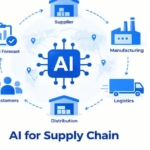





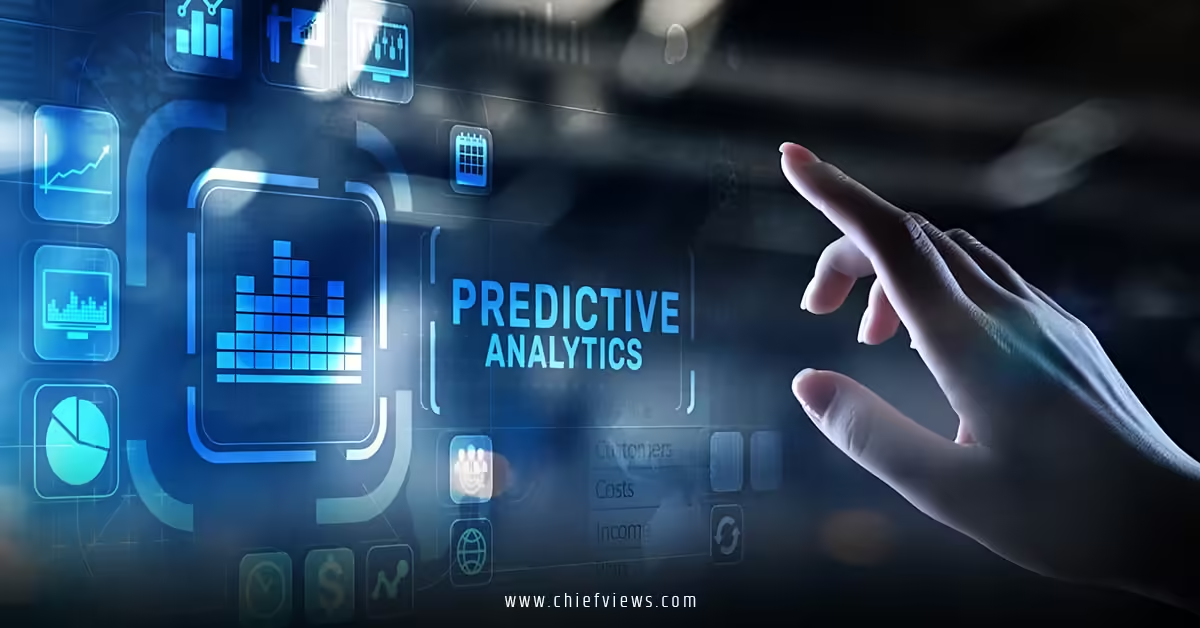
Predictive analytics for supply chain disruptions isn’t just another buzzword thrown around in boardrooms — it’s the difference between a business that panics when a port in Asia shuts down and one that already rerouted shipments three weeks earlier. If you’ve ever watched your inventory dry up because of a hurricane, a strike, or a random ship getting stuck in the Suez Canal (yes, we all remember that one), you know how fast chaos can hit profits. The good news? You can see most of it coming — if you’re looking in the right direction.
In this monster guide, we’re diving deep into everything you need to know about predictive analytics for supply chain disruptions: what it really means, why it matters more in 2025 than ever, how the smartest companies are using it, and — most importantly — how you can start tomorrow without a PhD in data science.
What Exactly Is Predictive Analytics for Supply Chain Disruptions?
Let’s keep it simple. Predictive analytics for supply chain disruptions uses historical data, real-time feeds, machine learning, weather patterns, geopolitical signals, social media chatter, and about a hundred other sources to forecast when, where, and how badly your supply chain is about to get punched in the face.
Think of it like the weather app on your phone — but instead of telling you to bring an umbrella, it tells you that a factory fire in Thailand next month will delay 40% of your semiconductor parts. And because it’s 2025, it doesn’t just say “rain coming.” It tells you exactly which suppliers are at risk, which SKUs will stock out, and how much extra it’ll cost if you wait versus acting now.
Why Traditional Supply Chain Planning Is Officially Dead
Remember when companies used Excel spreadsheets and “safety stock = 30 days” as their master strategy? Cute.


That worked when disruptions were once-a-decade events. Today? We’ve got climate chaos, trade wars, labor strikes, cyberattacks, and — let’s be honest — more pandemics waiting in the wings. The average company now faces a major disruption every 3.7 months (yes, someone actually measured that).
Relying on gut feel or last year’s numbers is like driving while looking only in the rearview mirror. Predictive analytics for supply chain disruptions flips the script: you’re looking through a crystal-clear windshield with night-vision goggles.
The Core Building Blocks of Predictive Analytics for Supply Chain Disruptions
1. Data — The More Messy, The Better
Garbage in, garbage out still applies, but modern systems love messy data. You’ll feed it:
- ERP and WMS data
- Supplier performance histories
- Ocean freight tracking (yes, down to the container level)
- Weather and climate forecasts
- News and social media sentiment
- Geopolitical risk indices
- Even satellite imagery of factory parking lots (seriously — empty lots = trouble brewing)
2. Machine Learning Models That Actually Learn
Forget static rules. Today’s best predictive analytics platforms for supply chain disruptions use models that get smarter every time a disruption happens. A model that saw the 2021 Texas freeze now instantly recognizes similar weather patterns and flags every supplier in the southern U.S.
3. Risk Scoring — Your New Best Friend
Every supplier, lane, part, and warehouse gets a dynamic risk score that updates daily — sometimes hourly. Score goes from green to yellow? You get a nudge. Hits red? The system can automatically trigger contingency plans.
Real-World Examples That’ll Make You Jealous
How Nike Used Predictive Analytics for Supply Chain Disruptions During Vietnam Factory Closures
When COVID delta variant lockdowns hit Vietnam in 2021, most apparel brands were blindsided. Nike, however, had been running predictive analytics for supply chain disruptions for over a year. Their system flagged rising case counts + government chatter two weeks before lockdowns were announced. Result? They shifted 30% of production to Indonesia and Mexico before anyone else even realized there was a problem.
The Semiconductor Giant That Predicted the Taiwan Drought
In early 2021, a major chip manufacturer’s predictive analytics platform noticed reservoir levels dropping faster than normal in Taiwan + social media posts from farmers about water rationing. Six weeks before the official drought declaration, they locked in extra wafer capacity in South Korea and the U.S. Competitors waited in line for 18 months. They didn’t.
How to Implement Predictive Analytics for Supply Chain Disruptions (Without Losing Your Mind)
Step 1: Stop Trying to Boil the Ocean
You don’t need perfect data across your entire tier-3 supplier base on day one. Start with your top 20% of spend that causes 80% of the pain. That’s usually 50-200 critical parts or suppliers.
Step 2: Choose the Right Tool (2025 Edition)
The landscape has exploded. Some leaders right now:
- FourKites Visibility + Predictive Insights — killer for real-time freight
- Resilinc AI — the gold standard for sub-tier mapping and risk scoring
- Elementum — gorgeous UI and fast deployment
Step 3: Build the Habit of “What-If” Scenarios
The real magic happens when you ask questions like:
- “What if Shanghai locks down again for 21 days?”
- “What if the Red Sea remains blocked through Q3?”
- “What if my top bearing supplier in Germany has a two-week strike?”
Predictive analytics for supply chain disruptions answers these in minutes, not months.
The ROI Is Stupidly Good (Yes, Really)
Companies using mature predictive analytics for supply chain disruptions are seeing:
- 30-60% reduction in disruption-related costs
- 15-25% lower inventory carrying costs (because you’re not hoarding “just in case”)
- 90%+ improvement in on-time delivery during crises
- Some are even turning disruptions into competitive advantage (buying distressed inventory cheap while competitors panic)
A 2024 Gartner report said companies with advanced predictive capabilities recovered from disruptions 2.5x faster than peers.
Common Mistakes That’ll Waste Your Money
- Treating it like a “set it and forget it” tool — it needs love and governance.
- Feeding it crappy data and blaming the software when predictions suck.
- Ignoring the human element — your buyers need to trust and act on the alerts.
- Starting with the cheapest tool instead of the one your team will actually use.
The Future: Predictive Analytics for Supply Chain Disruptions on Steroids
By 2027, we’re looking at:
- Digital twins of entire supply chains that simulate thousands of futures per day
- Generative AI that doesn’t just predict — it writes the contingency plan and emails your suppliers
- Blockchain + IoT sensors giving true real-time visibility into containers stuck at anchor
- Climate models accurate enough to predict which specific banana farm in Ecuador will flood next season
Getting Started Tomorrow Morning
You don’t need a $10 million budget. Here’s the dead-simple path:
- Audit your last three disruptions — what blindsided you?
- Pick one critical commodity or supplier group.
- Run a 90-day pilot with a modern platform (most offer them).
- Measure how many fires you avoid. Scale from there.
Conclusion: Stop Reacting, Start Anticipating
Predictive analytics for supply chain disruptions isn’t a luxury anymore — it’s table stakes for staying in business through the 2020s. The companies that master it won’t just survive the next black swan; they’ll eat their competitors’ lunch while everyone else is still figuring out what happened.
The technology is here. The data is here. The only question left is: are you still going to be the one frantically calling suppliers when the next crisis hits, or the one sipping coffee while your system already fixed it?
Your move.
FAQs About Predictive Analytics for Supply Chain Disruptions
1. How accurate is predictive analytics for supply chain disruptions really?
In mature implementations, leading platforms now achieve 75-90% accuracy for high-impact events when given 2-6 weeks of lead time. The key is quality data + continuous model retraining.
2. Can small companies afford predictive analytics for supply chain disruptions?
Absolutely. Cloud-based platforms start at a few thousand dollars a month. Many SMBs see ROI within the first major disruption avoided.
3. Is predictive analytics for supply chain disruptions the same as demand forecasting?
No! Demand forecasting predicts what customers will buy. Predictive analytics for supply chain disruptions predicts when you won’t be able to make or deliver it.
4. How long does it take to implement predictive analytics for supply chain disruptions?
Basic visibility + early warning: 60-90 days. Full multi-tier risk scoring and automated orchestration: 9-18 months for large enterprises.
5. Will AI eventually replace supply chain planners completely?
Not a chance. The best setups use predictive analytics for supply chain disruptions to give planners superpowers — not to remove the human judgment that still wins during true black swans.